Interior vs Exterior Plywood: MR, BWR or BWP for Indian Weather
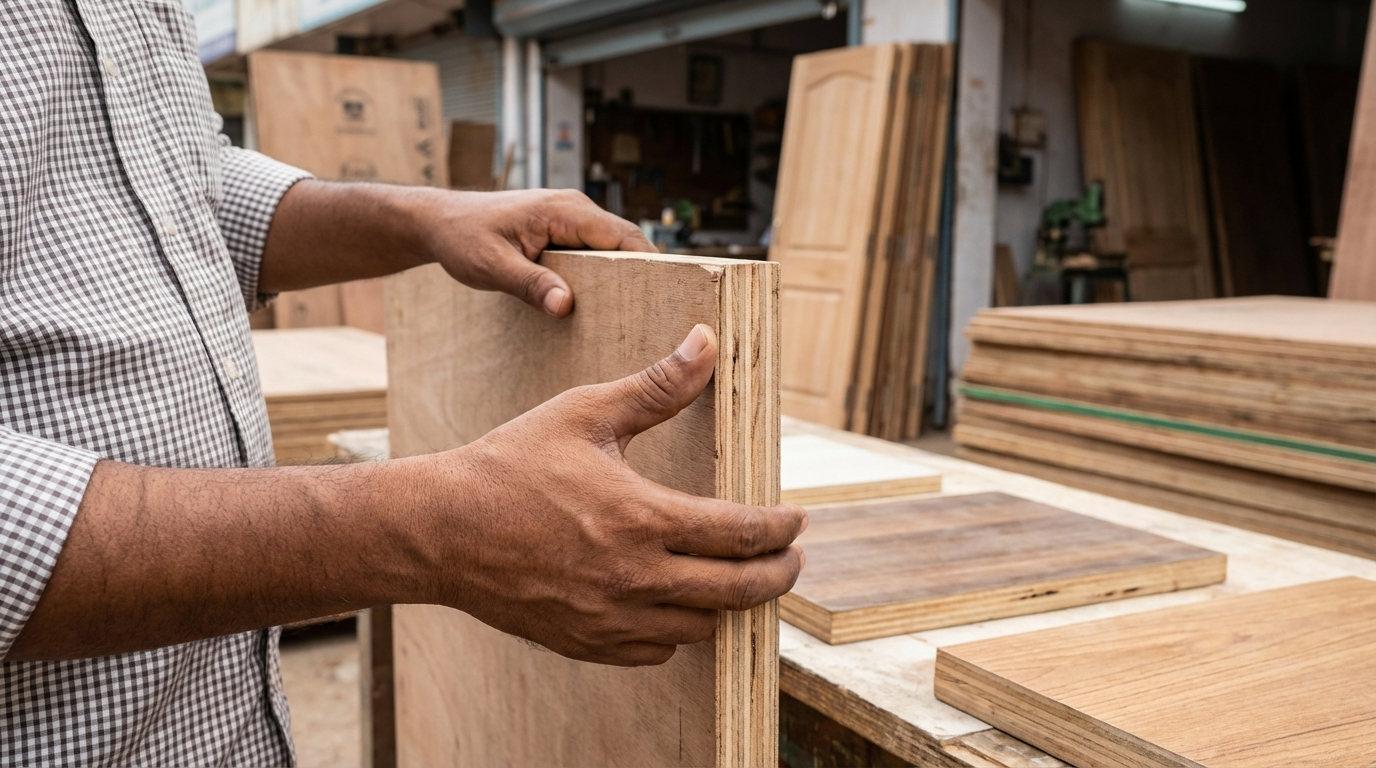
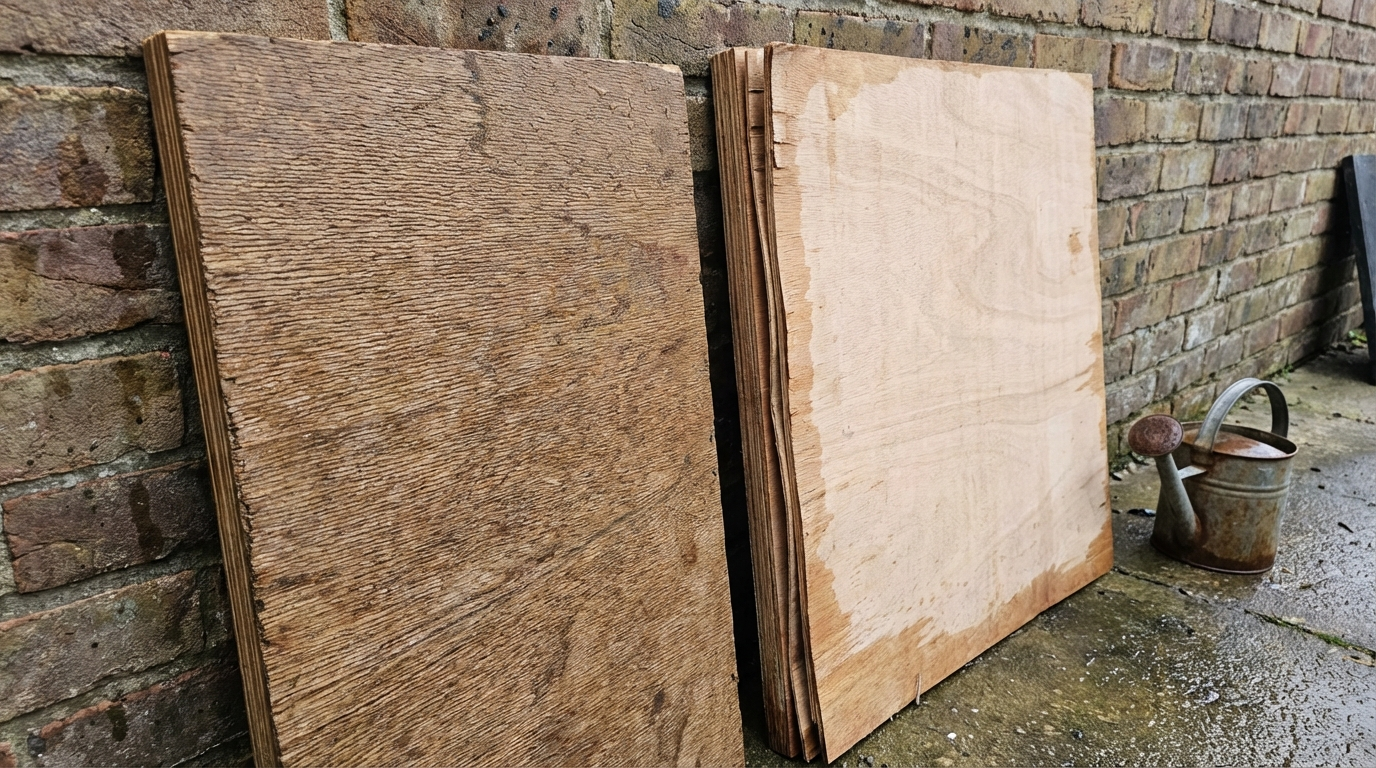
Interior plywood (MR grade) is made for dry indoor use and delaminates when exposed to rain and moisture cycles, while exterior BWP plywood uses stronger adhesives built for prolonged exposure. BWR is the middle ground for semi-exposed areas.
Last updated: . Grades and standards checked against current BIS standards.
Why Interior Plywood Fails Dramatically in Exterior Conditions
In India's diverse climates—from relentless monsoons in Mumbai to scorching summers in Delhi—using the wrong plywood grade can lead to warping, delamination, and costly repairs within months. Homeowners and contractors often overlook this, assuming all plywood behaves similarly under paint or polish. The reality: interior-grade MR plywood lacks the adhesives and treatments to withstand moisture cycles, while exterior BWP plywood is engineered for prolonged exposure. This guide breaks down the structural and chemical differences, helping you match plywood to real-world use cases without overpaying or risking structural failure.
Plywood Grading Basics: MR, BWR, and BWP Explained
Plywood grades in India follow ISI standards, primarily IS 303 for interior types and IS 710 for marine/exterior variants. These aren't arbitrary labels but reflect adhesive formulations and boiling water tests that simulate humidity and rain exposure.
- MR (Moisture Resistant): Uses urea-formaldehyde glue, suitable for dry interiors. Tested by three cycles of 3-hour soaks in 60°C water, not by boiling.
- BWR (Boiling Water Resistant): Urea-formaldehyde with additives for semi-exposed areas. Passes three cycles of 8-hour boiling and 16-hour drying but not ideal for direct weather.
- BWP (Boiling Water Proof): Phenol-formaldehyde resin, fully waterproof. Passes a 72-hour boil test, plus fungal and insect resistance.
From a first-principles view, adhesives determine longevity: MR bonds weaken above 20-25% moisture (common in humid Indian homes), while BWP maintains integrity up to 50%+ saturation. Architects specify these based on exposure risk, not aesthetics.
How Indian Manufacturing Influences Grade Reliability
Most plywood comes from mills in Uttar Pradesh, Kerala, and Andhra Pradesh, where core veneers (poplar or eucalyptus) vary by region. Northern mills prioritize cost-effective MR for bulk interior supply, while coastal producers emphasize BWP for export-quality durability. Dealer networks often mix grades, so verify BIS certification stamps—fake holograms are rampant in tier-2 markets.
Structural Differences: What Sets Interior from Exterior Plywood
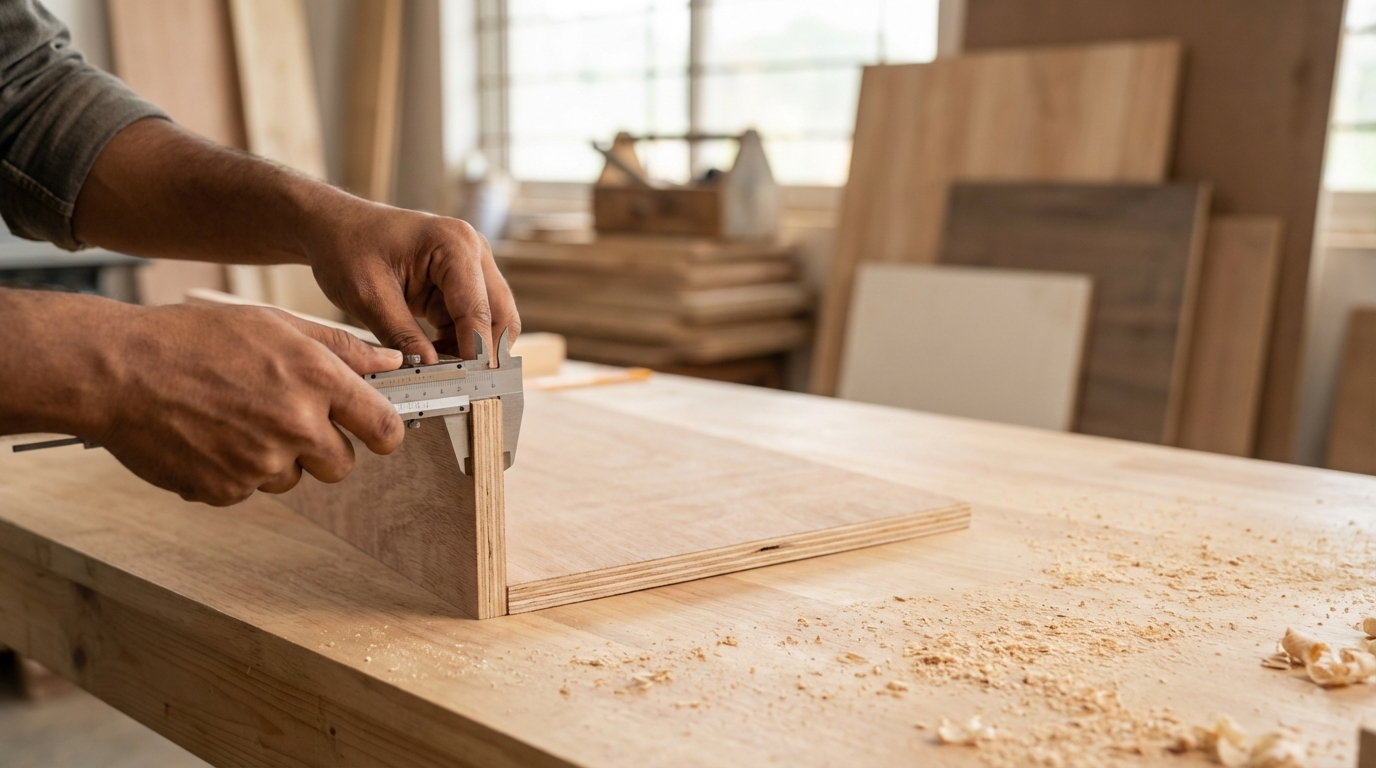
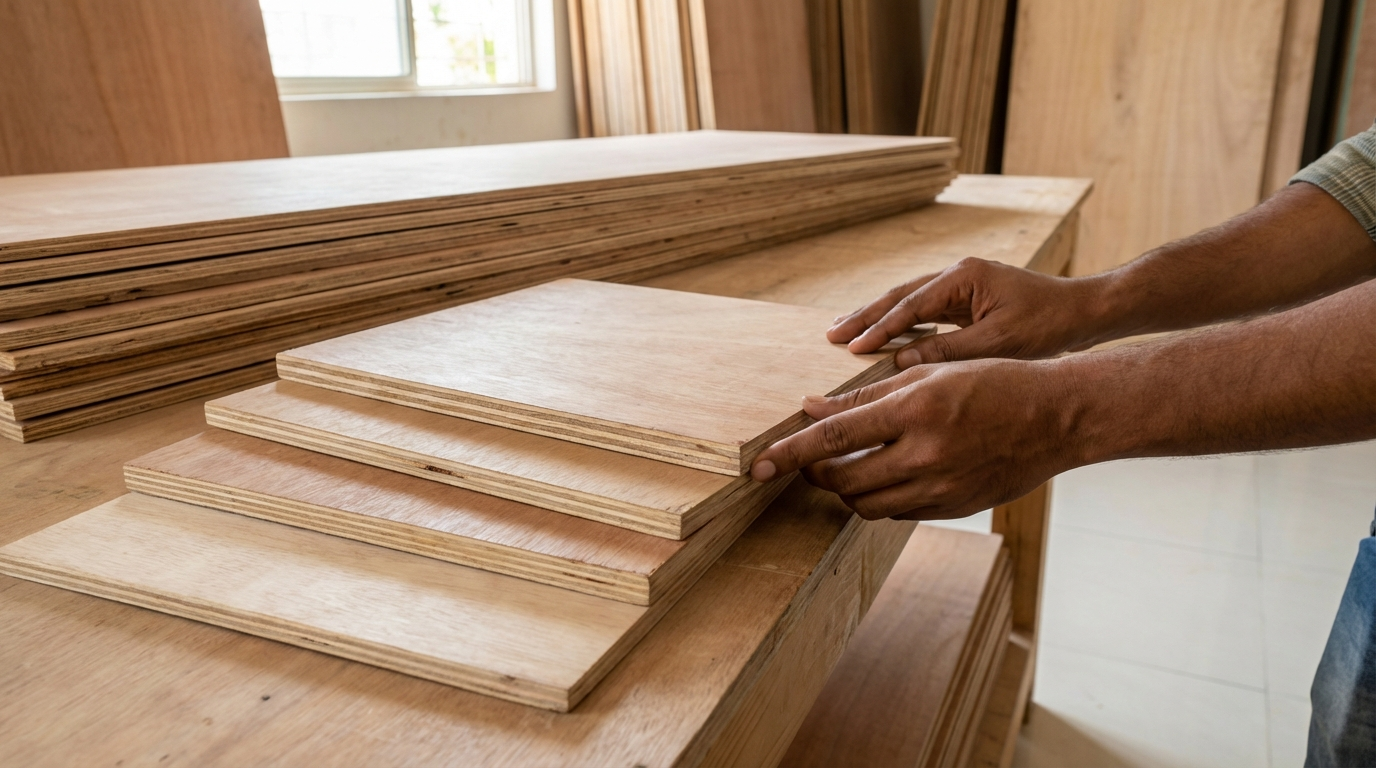
Beyond glue, layers matter. All plywood sandwiches veneers, but exterior grades use thicker faces (1.5-3mm vs 1-1.5mm in MR) and cross-grain orientation for dimensional stability.
| Aspect | Interior MR Plywood | Exterior BWP Plywood |
|---|---|---|
| Adhesive Type | Urea-Formaldehyde (UF) | Phenol-Formaldehyde (PF) |
| Boiling Test | Delaminates in 2-4 hrs | No delamination after 72 hrs |
| Moisture Tolerance | Up to 25%; warps easily | Up to 50%; stable |
| Face Thickness | Thin (prone to dents) | Thicker (impact-resistant) |
| Core Material | Poplar/eucalyptus, untreated | Treated for insects/fungi |
| Weight (per sqm, 18mm) | Lighter (easier handling) | Heavier (added resins) |
Contractors note BWP's rigidity reduces callbacks, as MR flexes under humidity swings, cracking laminates or paints.
Performance in Indian Weather: Real-World Exposure Tests
India's microclimates demand grade-specific choices. In coastal Kerala (90%+ humidity), MR plywood in kitchens swells 10-15% within a year. Rajasthan's dry heat stresses MR less but monsoon flashes still delaminate it.
Interior Applications: Where MR Shines
Confined to humidity-controlled spaces:
- Wardrobes and cabinets: Low moisture from occasional spills.
- False ceilings: No direct water contact.
- Partitions in air-conditioned homes.
Logic for buyers: If enclosed and painted, MR saves 20-30% upfront without durability trade-offs.
Exterior and Semi-Exposed: BWP's Domain
Mandatory for:
- Balconies, verandas, and elevations: Rain splashes and UV degrade MR adhesives.
- Bathrooms/showers: Steam cycles mimic boiling tests.
- Shuttering in ongoing construction: Wet concrete exposure.
Field data from contractors: BWP in Mumbai high-rises lasts 10+ years unpainted; MR equivalents fail in 2-3 seasons.
Semi-Exposed Scenarios: BWR as a Middle Ground
For covered patios or kitchens with exhaust fans, BWR bridges the gap—resists brief wettings but costs less than full BWP.
Cost Drivers: Why Exterior Plywood Costs More (And When It's Worth It)
MR starts lower due to cheaper glue and thinner faces, but total ownership flips with repairs. Regional dealer pricing varies: Kerala BWP commands premiums from coastal demand, while UP MR floods Lucknow markets.
| Thickness | MR Price Range (Rs/sheet) | BWP Price Range (Rs/sheet) | Cost Ratio |
|---|---|---|---|
| 6mm | Lower tier | 1.5-2x higher | - |
| 12mm | Mid-range | 1.4-1.8x higher | - |
| 18mm | Standard | 1.3-1.7x higher | - |
Factors inflating BWP: PF resin (30% of cost), longer pressing cycles, and BIS testing overheads. Homeowners calculate ROI: MR repairs add 50%+ over 5 years in humid zones.
Buyer Decision Framework: Matching Plywood to Your Project
Architects use a risk matrix: exposure level x climate zone x budget.
- Assess Exposure: Direct rain? BWP. Enclosed humidity? MR suffices.
- Climate Check: Coastal/humid (Kerala, WB)—lean BWP. Arid interiors (Rajasthan)—MR viable outdoors if sheltered.
- Load and Use: Flooring needs 18mm BWP; shelves can take 12mm MR.
- Finishing Plans: Laminates hide MR flaws short-term, but veneers expose weaknesses faster.
Contractors advise: Sample test—wet a corner overnight. MR edges bubble; BWP holds.
Homeowner vs Contractor vs Designer Logic
- Homeowners: Prioritize enclosed spaces to cut costs; upgrade bathrooms to BWP for resale value.
- Contractors: Stock BWR for versatility; specify BWP in contracts to avoid liability.
- Designers: Balance aesthetics—MR under laminates; BWP for raw or exposed grains.
Common Pitfalls: When "Good Enough" Plywood Backfires
Top errors from site visits:
- Using MR under roofing sheets: Delhi winters + leaks = total failure.
- Ignoring thickness: 6mm MR warps even indoors; pair with frame supports.
- Dealer "upgrades": Unmarked BWR sold as BWP—demand test certificates.
- Overlooking edges: Seal MR with putty; BWP needs minimal prep.
In tier-3 towns, substandard cores (recycled wood) amplify issues—probe with a screwdriver for density.
Testing Plywood Yourself: Practical Checks Before Buying
BIS labs are ideal, but field proxies work:
- Knock Test: Solid thud = uniform core; hollow = voids.
- Water Drop: MR darkens/absorbs in minutes; BWP repels.
- Edge Scrutiny: Even glue lines in BWP; patchy in cheap MR.
- Certification Hunt: ISI mark + batch number; scan QR if present.
For exteriors, request vendor boiling test videos—reputable dealers comply.
Alternatives to Traditional Plywood for Mixed Exposures
HDHMR emerges for humid interiors (better than MR, cheaper than BWP). Blockboard suits heavy loads but hates moisture. Marine plywood (BWP subset) for boats/high-humidity. Weigh density: Plywood at 500-700 kg/m³ vs particleboard's lightness.
Long-Term Maintenance: Extending Plywood Life in India
MR: Annual polish, silica dehumidifiers. BWP: UV paints for elevations, ventilation in baths. Both benefit from elevated framing to avoid ground moisture wicking.
Final Verdict: Grade Selection by Project Type
| Project | Recommended Grade | Why | India Climate Fit |
|---|---|---|---|
| Wardrobe | MR | Dry, enclosed | All zones |
| Kitchen Cabinets | BWR or HDHMR | Steam/spills | Humid areas |
| Balcony Shutters | BWP | Rain/UV | Coastal/monsoon |
| Bathroom Partitions | BWP | Constant damp | Everywhere |
| Exterior Cladding | BWP + treatment | Full exposure | All |
Choosing correctly averts 80% of plywood complaints. Consult local architects for hybrid builds, and always source from BIS-verified mills via trusted dealers.
Related guides on PlyPrice
Want Plywood Suggestions?
Share a few details and a PlyPrice specialist will suggest suitable brands and connect you to responsive dealers.