Plywood for Custom Furniture
Creating custom furniture? Tips on selecting ply that carpenters love. Ease of cutting, screw holding, and finishing for bespoke pieces.
Why Plywood Selection Defines Custom Furniture Outcomes
In India's diverse climate, where humidity swings from coastal monsoons to dry inland heat, custom furniture demands plywood that withstands real-world stresses without warping or delaminating. Homeowners commissioning wardrobes, beds, or kitchen cabinets often overlook how material choice influences carpenter efficiency and end durability. Carpenters prioritize plywood that cuts cleanly, holds screws firmly under repeated use, and accepts finishes evenly—qualities that reduce rework and elevate craftsmanship.
From first principles, plywood's layered veneer structure provides strength over solid wood's tendency to split, but performance hinges on glue type, face quality, and core density. For bespoke pieces like modular storage or carved headboards, mismatched ply leads to callbacks: loose fittings from poor screw grip or blotchy veneers from uneven sanding. This guide breaks down carpenter-preferred traits, drawing from workshop realities across Mumbai ateliers to Delhi carpentry hubs.
Core Workability Traits Carpenters Demand in Furniture Plywood
Carpenters evaluate plywood not by brand hype but by hands-on metrics: how it behaves under saw, drill, and polish. In custom work, where pieces fit precisely without factory tolerances, these traits determine project timelines and client satisfaction.
Ease of Cutting: Minimizing Tear-Out and Splintering
Clean cuts prevent edge fraying, crucial for miter joints in cabinetry or intricate shelving. High-density hardwoods like poplar or eucalyptus cores slice smoothly with circular saws or jigsaws, resisting fiber pull-out better than soft pine mixes common in cheaper grades.
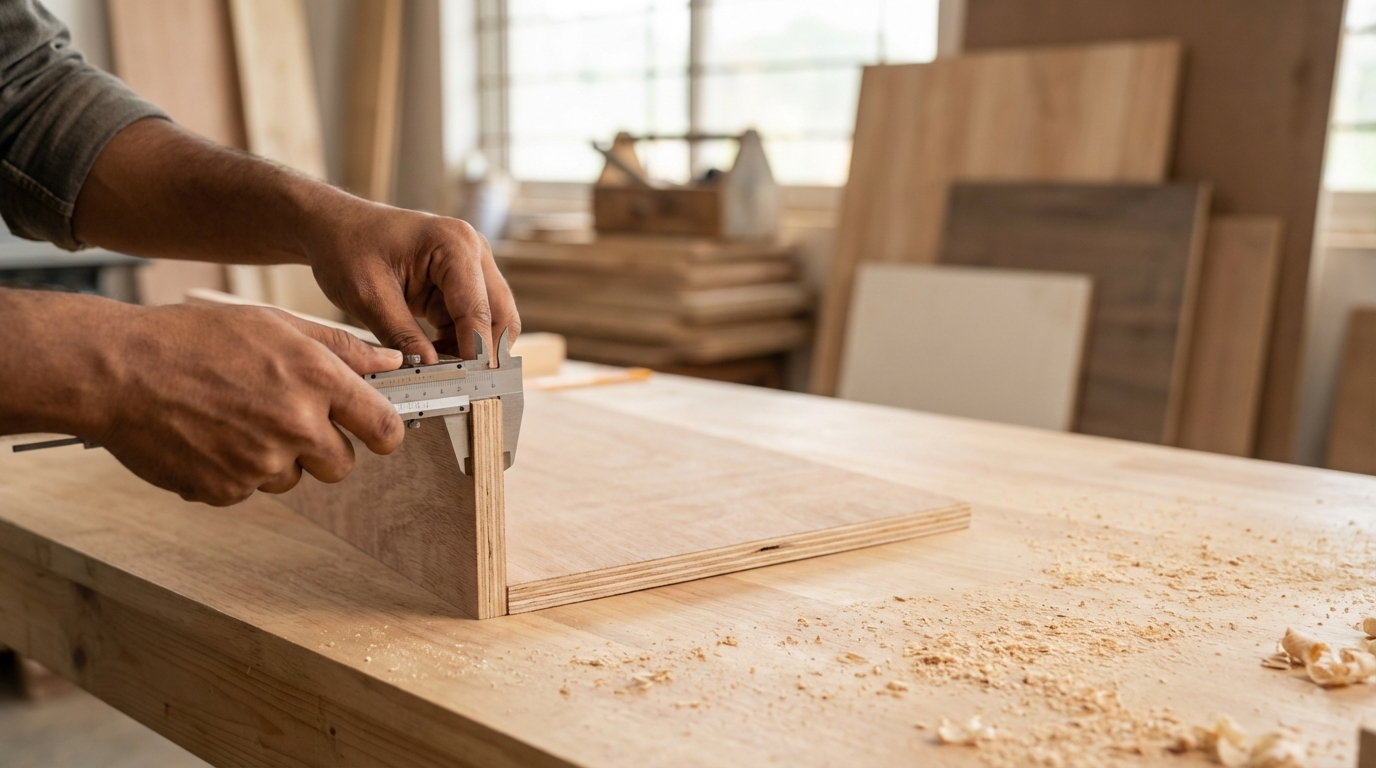
India's humid conditions exacerbate splintering if glue lines weaken; carpenters test by scoring a sample—tight bonds yield crisp edges. For custom furniture, opt for 5.5mm to 18mm thicknesses where carbide blades glide without burning. Avoid undercutting: thin plies under 6mm flex excessively during routing, leading to wavy profiles on table edges.
Screw Holding Strength: The Anchor for Modular Designs
Custom furniture relies on screws for disassembly—think flat-pack wardrobes or adjustable bunk beds. Weak grip causes hinges to loosen over time, especially under drawer slides bearing 20-30kg loads.
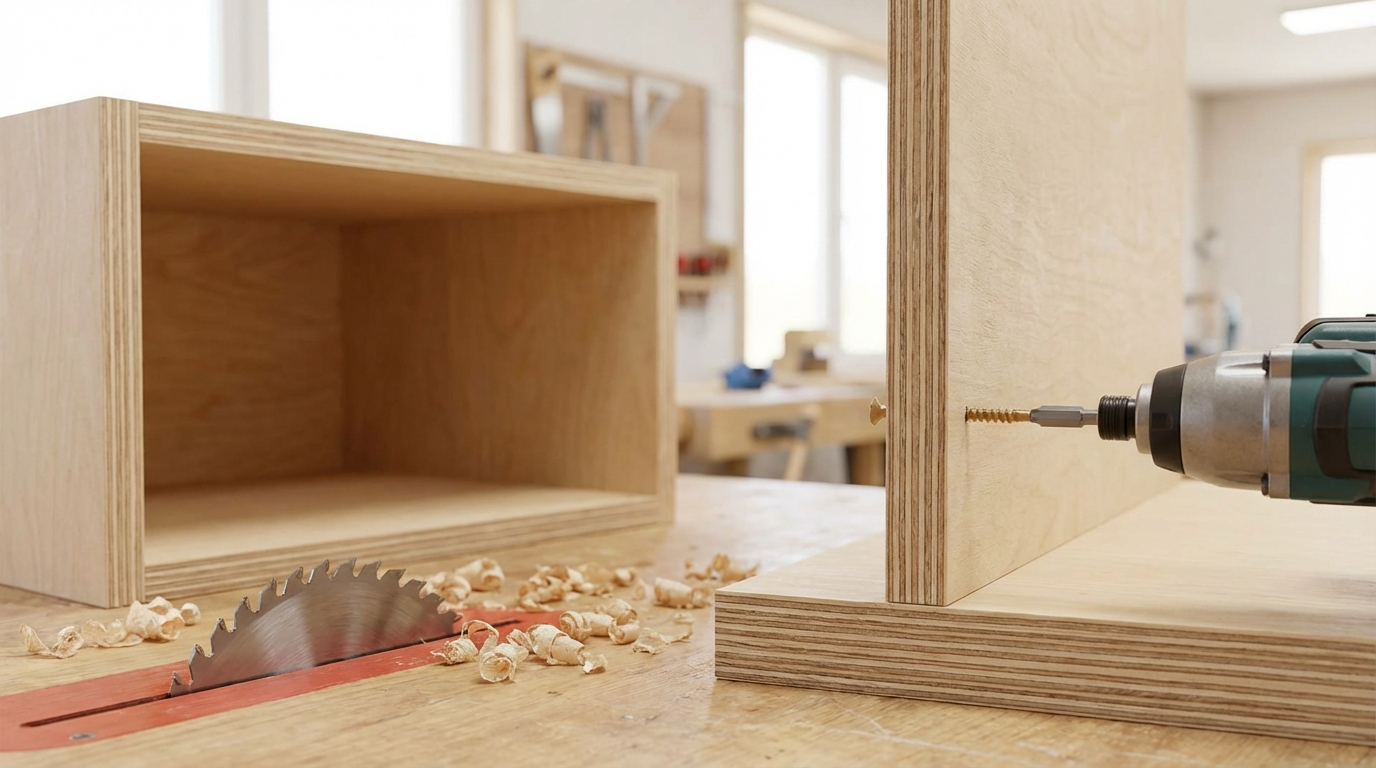
Density drives this: HDHMR or hardwood cores outperform particleboard cores by 30-50% in pull-out tests, per informal workshop benchmarks. In layered plywood, cross-grain veneers distribute force, preventing pilot hole enlargement. Carpenters favor MR-grade with urea-formaldehyde glue for interiors, as it balances cost and 500-800N holding power per screw—sufficient for most home setups.
Regional note: In Rajasthan's dry zones, even MR holds well; coastal Kerala demands BWR for subtle moisture from AC condensation.
Finishing Quality: Smooth Surfaces for Stains and Laminates
A flawless finish amplifies design intent, from teak veneers mimicking solid wood to PU-polished laminates. Plywood faces must sand flat without telegraphing core voids, which show as dimples post-varnish.
Carpenters inspect face veneers: B/BB or higher grades offer uniform thickness (0.6-1.2mm), accepting spray paints evenly. Porous cores absorb fillers unevenly, causing orange-peel textures. For bespoke pieces, pre-sanded surfaces cut prep time by half, ideal for high-volume interior designers handling 10-15 projects monthly.
Plywood Grades Tailored for Custom Furniture Applications
ISI standards classify plywood by glue and face quality: MR (moisture-resistant), BWR (boiling water-resistant), BWP (boiling water-proof). For furniture, MR suffices 80% of the time, but logic shifts by exposure.
| Grade | Best For | Workability Strengths | Limitations in Custom Work | Climate Suitability (India) |
|---|---|---|---|---|
| MR | Indoor cabinets, beds, shelves | Good screw hold; easy to cut; affordable finishing | Softens in high humidity; not for kitchens | Inland cities (Delhi, Bangalore) |
| BWR | Semi-exposed wardrobes, TV units | Superior glue bonds; resists delam in monsoons | Higher cost; denser, needs sharp tools | Coastal/moderate humidity (Mumbai, Chennai) |
| BWP | High-end kitchens, humid basements | td>Max durability; excellent all-round workabilityPremium pricing; overkill for dry interiors | Marine/high-moisture zones (Kerala, Goa) |
Decision logic: Match grade to usage duration and environment. A Pune homeowner's bedroom set thrives on MR, saving 20-30% vs BWR, while Hyderabad's steamy kitchens justify BWP to avoid warping callbacks.
Thickness Choices: Balancing Strength, Weight, and Cost
Custom furniture spans 3mm (back panels) to 25mm (table tops). Thicker plies add rigidity but inflate budgets and complicate handling for solo carpenters.
- 3-6mm: Partitions, drawer bottoms—lightweight, cuts like paper, but pair with edge banding to hide thin edges.
- 9-12mm: Carpenter favorite for carcasses; optimal screw hold without sagging shelves under 15kg.
- 18mm+: Legs, frames; heavy-duty but demands reinforced joints.
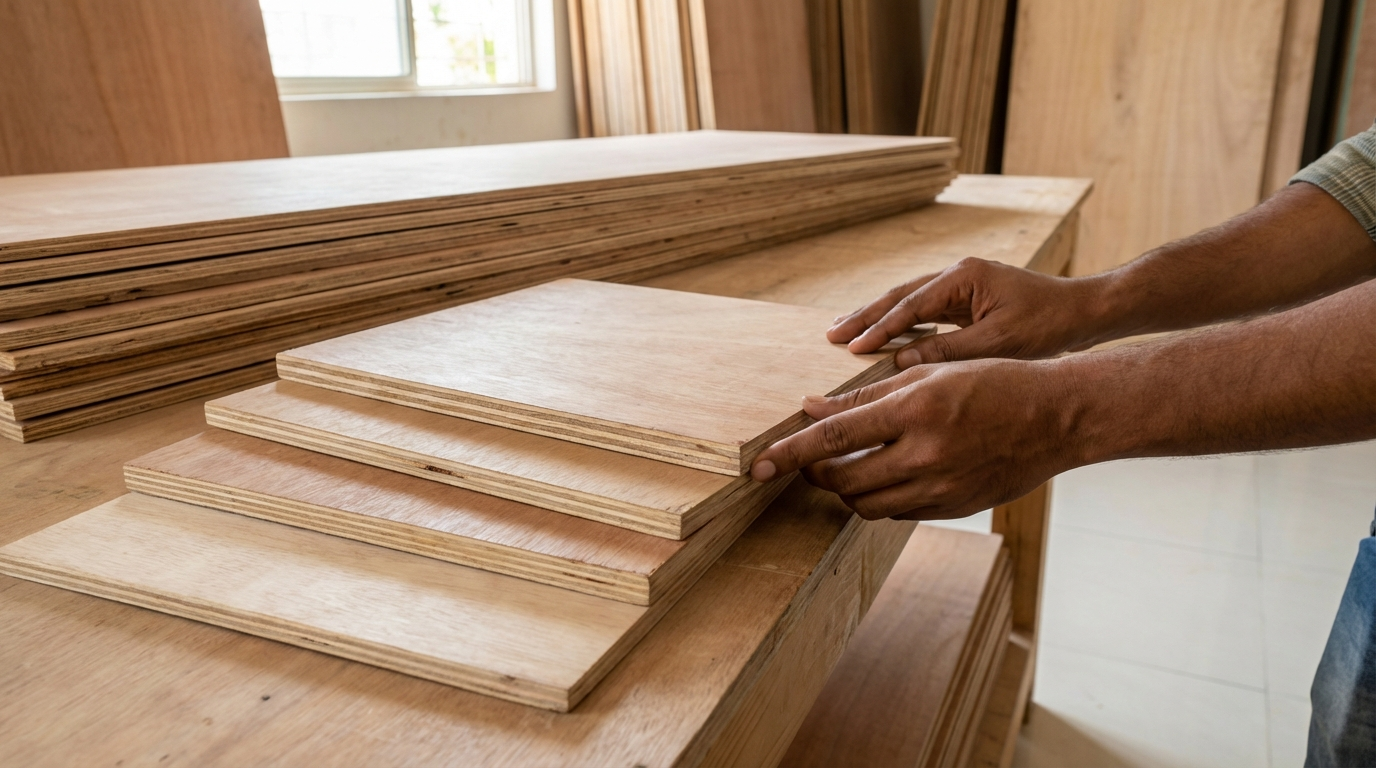
Cost drivers: Thicker = exponentially higher material use. Dealers in Tier-2 cities quote 15-25% less for standard thicknesses due to bulk milling efficiencies. Test: Stack samples—9mm MR feels substantial yet portable for site installs.
Face Veneers and Surface Treatments for Design Flexibility
Veneer dictates aesthetics: Commercial (1.0mm thick) for painting; decorative (0.3-0.6mm) for natural grains. In custom work, uniformity trumps variety—patchy faces ruin laminate adhesion.
India's market favors eucalyptus or gurjan faces for balance: Warm tones stain richly without blotching. Avoid knotty pine veneers; knots bleed resin under heat from iron-on edges. For laminates, mirror-polish faces ensure bubble-free bonding, key for glossy white modulars popular in urban apartments.
Core Composition Impacts: Hardwood vs Engineered Alternatives
Core defines backbone. Hardwood core (poplar/eucalyptus) excels in screw retention; softwood risks crumbling under hinges. HDHMR—high-density HDF with MR glue—emerges as carpenter darling: Uniform density mimics solid cores at lower weight.
| Core Type | Cutting Ease | Screw Hold (Rating) | Finishing | Cost Relative to Base |
|---|---|---|---|---|
| Hardwood | High | Excellent (9/10) | Smooth | Baseline |
| HDHMR | Very High | Very Good (8/10) | Excellent | +10-20% |
| Particleboard | Moderate | Poor (5/10) | Patchy | -20-30% |
Workshop insight: HDHMR's consistency shines in CNC routing for parametric designs, reducing bit wear in high-output shops.
Practical Tests Every Buyer Should Run Before Bulk Purchase
Dealers showcase stacks, but verify:
- Glue Bond: Boil scrap in water 2 hours—intact layers signal BWR/BWP.
- Screw Test: Drill 4mm pilot, insert 50mm screw, pull perpendicular. No spin = reliable.
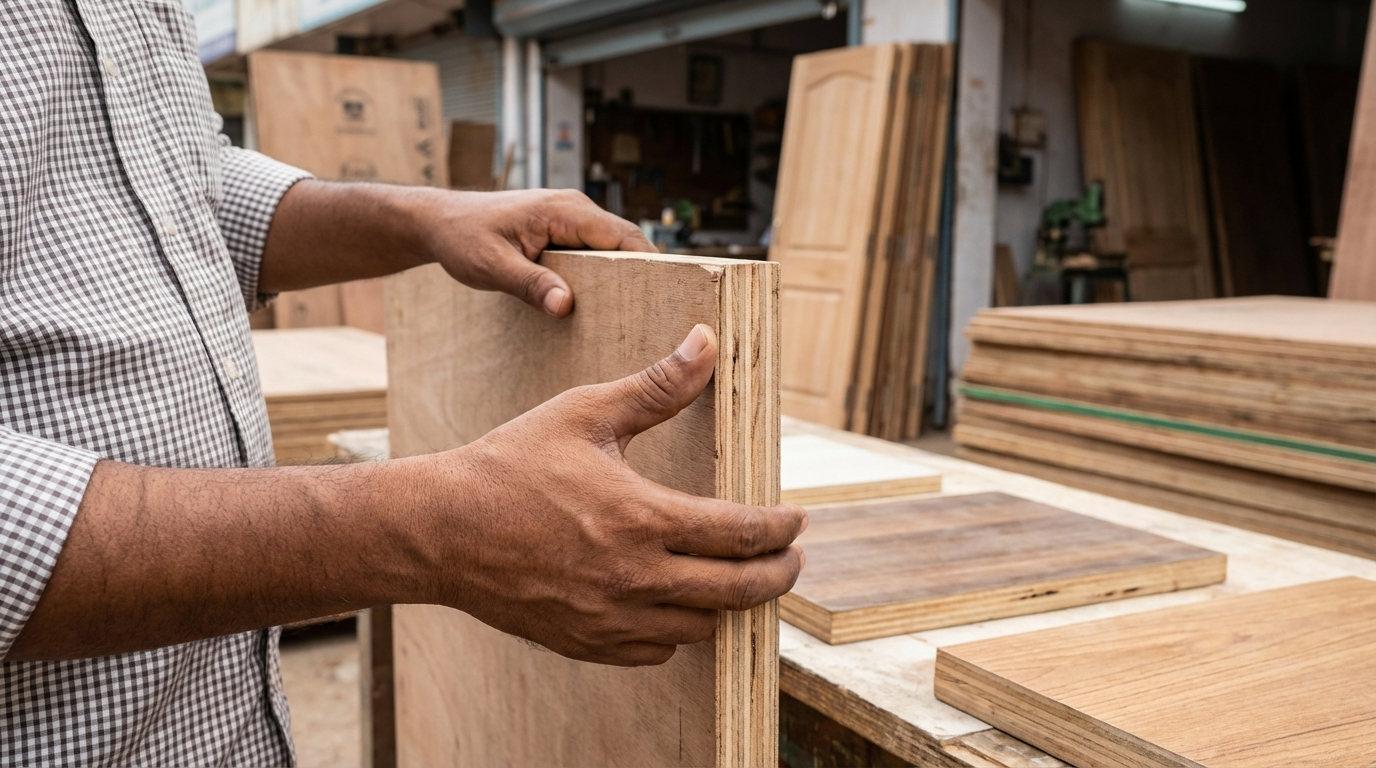
- Cut/Sand: Cross-cut with handsaw; sand 80-grit. Feel for snags.
- Weight Check: Heft 1 sqm—dense feels premium without excess heft.
These 15-minute checks, rooted in carpentry logic, filter subpar stock prevalent in unorganized markets.
Navigating India's Dealer Ecosystem for Best Value
Pricing varies: Retail 20-40% above dealer rates due to markups. Mumbai wholesale yards offer volume discounts; interior hubs like Jodhpur bundle with fittings.
Logic: Buy from certified dealers displaying ISI marks—avoids fakes with diluted glue. Regional swings: North India favors cheaper MR; South premiums BWP. Negotiate slabs over cut-to-size to inspect cores. For projects over 50 sheets, insist on milling reports for veneer count.
Common Pitfalls in Custom Furniture Plywood Choices
Overlooking Edge Treatments
Thin edges chip; always plan banding or solid wood lips for exposed profiles.
Ignoring Load Dynamics
Heavy top shelves need 12mm+; test deflection by loading samples.
Climate Mismatch
MR in kitchens fails seasonally—upgrade selectively.
Face vs Core Disconnect
Glossy faces hide weak cores; drill test exposes truth.
Integrating Plywood with Design and Hardware
Architects pair ply with soft-close hinges (requiring firm screw holds) and LED strips (needing flat backs). For minimalist Scandi styles, smooth HDHMR veneers take matte lacquers flawlessly. Traditionalists layer with sheesham inlays on stable BWR bases.
Transition tip: Use 9mm carcasses with 18mm tops for balanced weight distribution in movable pieces like sofa-cum-beds.
Long-Term Performance: What Buyers Experience Post-Install
Well-chosen ply lasts 10-15 years indoors, with screw holds enduring 5-7 cycles of disassembly. Humidity control via dehumidifiers extends life in Mumbai flats. User logic: Invest in workability upfront to sidestep 10-20% rework costs.
Final Carpenter Recommendations for Bespoke Success
Prioritize 12mm MR hardwood core with B/BB faces for 70% of custom jobs—versatile, workable, value-driven. Scale to BWR for exposure. Source locally, test rigorously, and collaborate with carpenters on specs. This approach yields furniture that fits lives, not just spaces.
Want Plywood Suggestions?
Share a few details and a PlyPrice specialist will suggest suitable brands and connect you to responsive dealers.