Moisture Resistant Plywood Guide
Everything about MR Grade Plywood (IS:303). Learn where to use it (bedrooms) and where to avoid it (kitchens) for long-lasting interiors.
What Defines Moisture Resistant (MR) Plywood in Indian Standards?
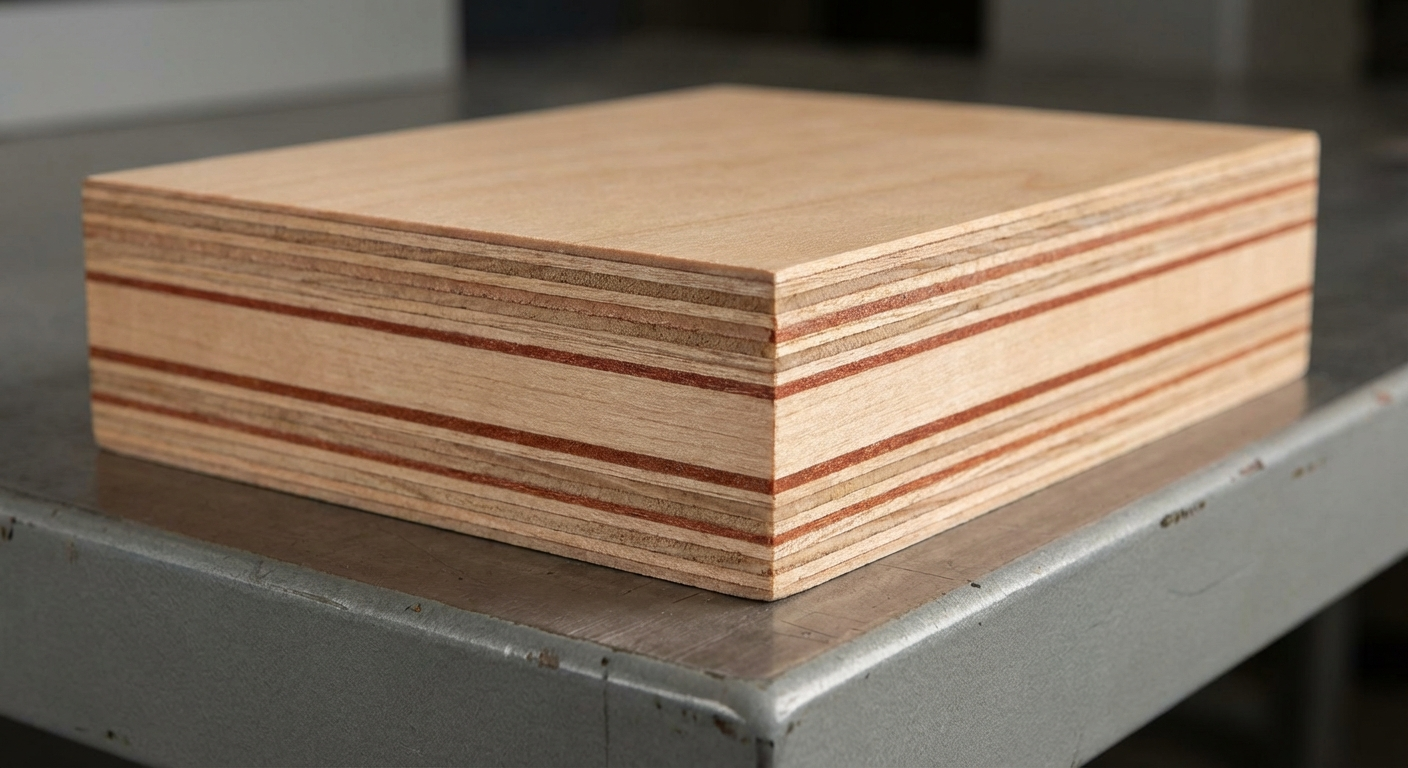
Moisture resistant plywood, commonly abbreviated as MR grade, refers to engineered wood panels formulated to withstand moderate humidity levels prevalent in many Indian households. Governed by the Indian standard IS:303, this grade uses urea-formaldehyde (UF) resins in its glue line, which provide basic protection against swelling or delamination when exposed to dampness up to around 20-25% moisture content in the environment.
From a first-principles perspective, plywood's moisture resistance stems from its layered construction: thin veneers of hardwood or softwood glued cross-grain for strength. In MR variants, the adhesive's chemical bonding resists hydrolysis—the breakdown caused by water molecules—better than plain interior grades but falls short in prolonged wet conditions. Indian manufacturers source veneers from species like poplar, eucalyptus, or mango, kiln-dried to 8-12% moisture before assembly, ensuring dimensional stability in dry-to-moderately humid settings.
IS:303 specifies tests for bond strength, tensile strength, and water immersion limits (typically 24 hours without more than 10% thickness swell). This makes MR plywood a baseline choice for cost-conscious interiors, but buyers must recognize its boundaries shaped by India's diverse climates—from Rajasthan's aridity to Kerala's coastal humidity.
How MR Plywood Behaves Under India's Varied Humidity Challenges
India's construction landscape demands materials attuned to regional microclimates. In northern plains during monsoons, ambient humidity spikes to 80-90%, testing plywood's glue integrity. MR grade panels endure short-term exposure here, with glue lines retaining 70-80% of dry strength post-drying, per standard delamination tests.
Key performance metrics include:
- Thickness Swelling: Limited to 8-12% after 24-hour boiling water test (far less in real-world use).
- Mycelium Resistance: Moderate protection against fungal growth in 60-70% RH, but not sterile.
- Edge Sealing Dependency: Unsealed edges absorb moisture 2-3x faster, emphasizing proper finishing.
For homeowners in Mumbai apartments or Delhi row houses, MR plywood maintains flatness in air-conditioned spaces (40-50% RH). However, in unconditioned godowns or coastal godowns, repeated cycles accelerate wear, underscoring its "moderate" rating.
Prime Applications: Bedrooms and Dry Interior Zones
MR plywood shines in low-moisture-risk areas, aligning with typical Indian home layouts prioritizing affordability without over-specifying. Bedrooms exemplify this: wardrobes, bed frames, and loft storage face occasional humidity from laundry or open windows but rarely direct splashes.
Consider a standard 2BHK flat in Bengaluru—MR panels for flush doors or partition walls offer sufficient rigidity (modulus of elasticity around 4,000-5,000 MPa) and screw-holding power for fittings. Architects favor 18mm thickness here for load-bearing shelves, as it supports 50-70 kg per sqm uniformly.
Other suitable zones include:
- Living room false ceilings and TV units, away from cooking vapors.
- Office cubicles or study nooks in humid metros, laminated for aesthetics.
- Balcony enclosures in dry seasons, with edge painting.
Contractors report 8-10 year service life in these spots when paired with melamine polish, making it a pragmatic pick for middle-income renovations.
Real-World Bedroom Scenario: Wardrobe Durability
Picture a Pune family installing MR plywood wardrobes. Post-monsoon, humidity hits 75%; unsealed panels might warp 1-2mm, but sealed ones hold shape. First-principles logic: Cross-veneer orientation distributes swelling stress, unlike solid wood's anisotropic expansion.
Critical No-Go Zones: Kitchens, Bathrooms, and High-Wet Areas
Direct water contact or steam defines MR plywood's limits—IS:303 caps its immersion tolerance at levels unsuitable for kitchens. Cooking splatters, sink proximity, or steam from pressure cookers introduce 40-50% surface moisture, triggering glue failure within 6-12 months.
In Indian modular kitchens, grease-laden vapors hydrolyze UF bonds, leading to bubbling or layer separation. Bathrooms amplify this: shower humidity exceeds 90% RH, fostering mold on MR faces (formalhyde off-gassing worsens in confinement). Avoid it entirely here to prevent callbacks—dealers note 30-40% of complaints stem from misuse in wet zones.
Alternatives dominate these spaces:
- Boiling water resistant (BWR, IS:710) for semi-wet kitchens.
- Boiling water proof (BWP, IS:710) for marine or bath areas.
Logic for avoidance: Water's capillary action penetrates micropores, exceeding MR's 25% equilibrium moisture content threshold, unlike phenolic resins in higher grades.
MR Plywood vs BWR and BWP: Side-by-Side Breakdown
Grading hinges on adhesive type and test severity. MR (IS:303) uses UF for interiors; BWR/BWP (IS:710) employ PF or MF for exteriors. Here's a comparison tailored to Indian buyer decisions:
| Aspect | MR (IS:303) | BWR (IS:710) | BWP (IS:710) |
|---|---|---|---|
| Adhesive | Urea Formaldehyde (UF) | Melamine Formaldehyde (MF) | Phenolic + MF |
| Max Humidity Tolerance | 20-40% RH | 40-70% RH | 70-95% RH |
| Water Immersion Limit | 24 hrs (cold), 10% swell | 72 hrs (boil), 12% swell | 72 hrs (boil), 5% swell |
| Ideal Use | Bedrooms, furniture | Kitchens, laundry | Bathrooms, outdoors |
| Cost Relative to MR | Baseline | 20-40% higher | 40-70% higher |
| Typical Lifespan (Bedroom) | 8-12 years | 10-15 years | 15+ years |
This table reflects dealer yard averages; BWP's edge justifies premiums in wet zones, but overkill costs 1.5x more for dry areas.
Thickness Selection: Matching Load and Span
MR plywood comes in 3-25mm thicknesses, but Indian interiors standardize on 6mm (doors), 12mm (cabinets), and 18mm (flooring underlay). Thicker panels resist deflection better—18mm spans 600mm unsupported with <1mm sag under 100kg load.
Buyer logic:
- Homeowners: 12mm for lightweight wardrobes to cut weight (density ~550kg/cum).
- Contractors: 18mm for commercial partitions needing screw retention.
- Architects: 9mm laminates for veneered panels.
Regional note: Southern dealers push thinner imports; northern prefer denser local stock for winter dryness.
Quality Indicators: Spotting Genuine IS:303 Compliance
BIS certification (CM/L number) confirms lab-tested batches, but field checks matter more. Press palm against face—if cool/clammy, high moisture (>14%). Tap edges: Dull thud signals voids; crisp ring indicates tight glue.
Advanced vetting:
- Screw test: 6x75mm screws hold 80-100kg pullout in quality MR.
- Knife scratch: Uniform shaving, no fiber pullout.
- Label scrutiny: Avoid "MR+" claims without IS mark—often marketing for standard UF.
Dealer ecosystems vary: Tier-1 cities offer branded stock; Tier-2 rely on unbranded mills. Insist on test certificates for bulk buys.
Cost Drivers and Regional Pricing Patterns
MR plywood's price hinges on veneer quality, thickness, and origin. Baseline 18mm commercial grade starts lower than branded softwood, escalating with hardwood faces or laminates.
Key influencers:
- Raw Material: Poplar (cheaper, lighter) vs gurjan (denser, pricier).
- Regional Freight: North India (UP mills) 10-20% below coastal imports.
- Volume: Dealers discount 15-25% for 50+ sheets.
- Add-ons: Pre-lamination adds 20-30%.
Expect 1.5-2x markup from mill to retail; monsoon shortages inflate 10-15%. Compare per sqm: Thinner grades economize non-structural uses.
Purchasing Decision Framework
| Scenario | Recommended Thickness | Budget Tier | Key Check |
|---|---|---|---|
| Bedroom Wardrobe (Homeowner) | 12-18mm | Low-Medium | Face smoothness |
| False Ceiling (Contractor) | 6-9mm | Low | Weight per sheet |
| Partition Wall (Architect) | 18mm | Medium | Screw hold |
Installation Best Practices for Longevity
Proper setup extends MR life 20-30%. Acclimatize sheets 48 hours on-site. Use stainless screws (rust accelerates moisture ingress). Seal all edges with 2-3 coats of synthetic enamel—unsealed lose 40% resistance.
Indian pitfalls: Avoid direct floor contact (capillary rise); elevate 10-15cm. For humid areas, ventilate with exhaust fans despite MR rating.
Maintenance Routines to Combat Wear
Dry wipe spills immediately; annual polish repels dust. Monitor for edge fraying—sand and reseal. In monsoons, dehumidifiers maintain 50% RH, preserving bond integrity.
Debunking MR Plywood Myths
Myth 1: "MR handles kitchens fine." Reality: Steam delaminates UF faster than BWR.
Myth 2: "Thicker always better." Reality: Overkill adds dead weight/cost without proportional gains.
Myth 3: "All MR is BIS-certified." Reality: 40-50% market is sub-grade; verify stamps.
These stem from dealer oversell; base choices on use-case physics.
Future Trends in MR Plywood for Indian Markets
Low-formaldehyde UF variants address VOC concerns under evolving green norms. Hybrid MR-HDHMR blends gain traction for mid-tier wet-dry transitions, balancing cost and performance amid urbanization.
Want Plywood Suggestions?
Share a few details and a PlyPrice specialist will suggest suitable brands and connect you to responsive dealers.