How to Store Plywood: Stacking, Moisture Control and Site Handling
Store plywood flat and evenly supported, away from damp and rain, because uneven moisture absorption makes one face swell and the sheet warps. Monsoon storage and site stacks need moisture barriers and regular checks.
Why Plywood Warps and How Storage Prevents It
Plywood, composed of thin wood veneers glued under pressure, reacts predictably to environmental changes. In India's diverse climates—from coastal humidity in Mumbai to dry heat in Rajasthan—uneven moisture absorption causes the top layers to expand while inner or bottom layers remain stable, leading to warping or bending. This isn't a material flaw but a response to hygroscopic nature: wood fibers swell with water vapor.
Contractors on tight budgets lose value when sheets bend; a stack mishandled during monsoons can render 20-30% unusable. Homeowners storing for renovations face similar issues in garages exposed to rain. Proper storage equalizes exposure, maintaining flatness for precise cutting and installation. BWP-grade (boiling water proof) resists better than MR (moisture resistant), but no plywood is immune without controls.
Key Factors Driving Warping in Indian Conditions
- Humidity fluctuations: Monsoon RH above 80% swells edges; sudden drying cracks surfaces.
- Temperature swings: Night chills in Delhi winters contract fibers unevenly.
- Mechanical stress: Poor stacking twists sheets under weight.
- Direct exposure: Sunlight UV degrades glue lines, worsening bends.
Decision point for buyers: Assess site humidity before purchase. Opt for higher-grade if storage can't be controlled, as initial cost offsets replacement losses.
Essential Stacking Methods for Flat Plywood
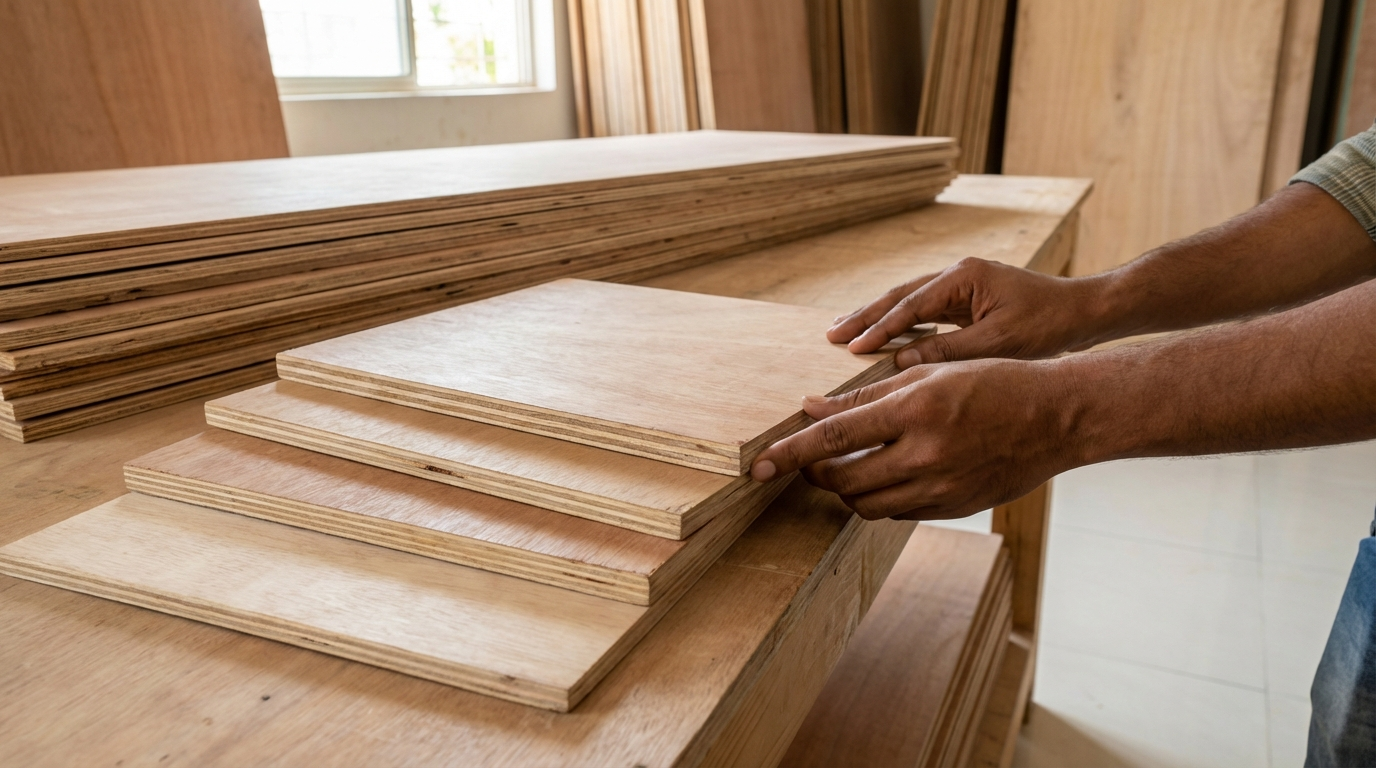
Stacking distributes weight evenly, preventing sagging middles or edge curls. Unlike loose piling, structured stacks mimic factory conditions, using spacers for air circulation.
Step-by-Step Stacking Guide
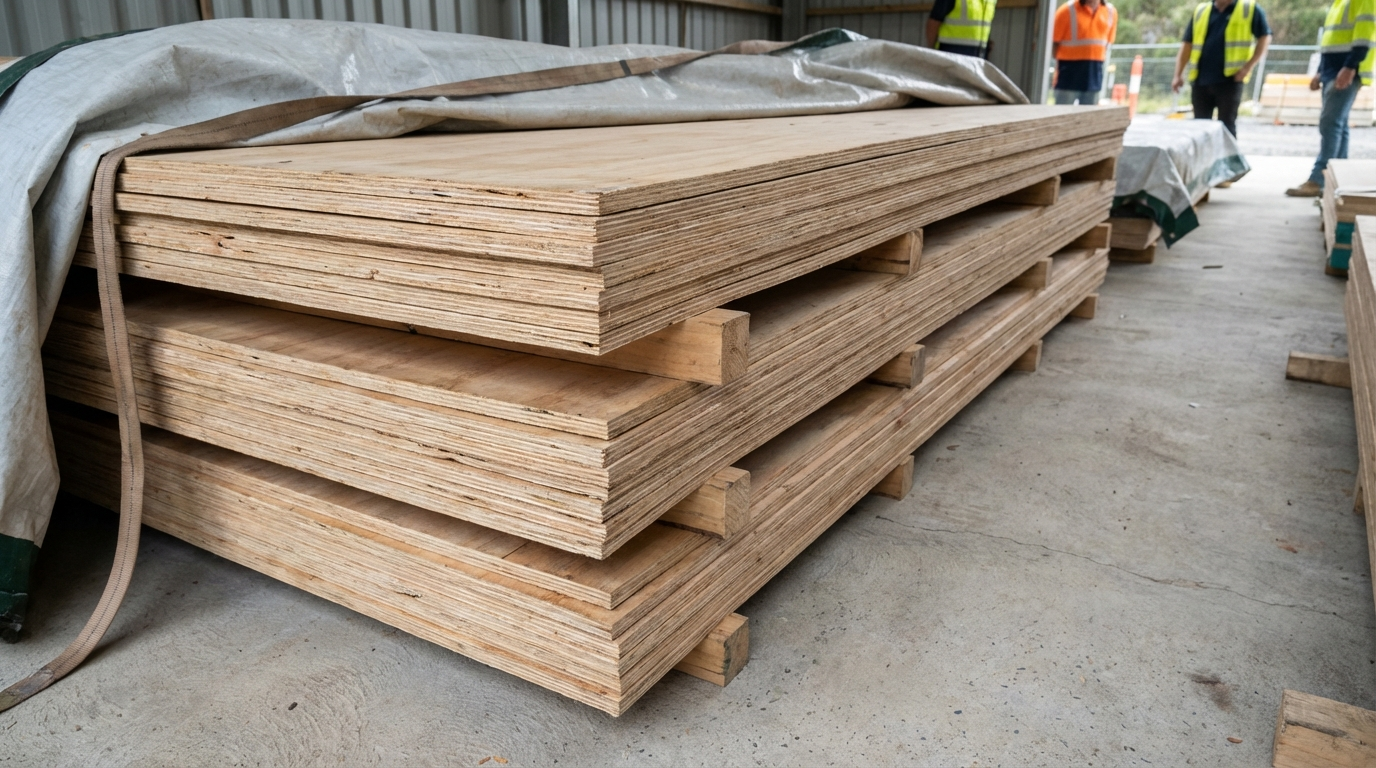
- Prepare flat base: Use leveled concrete or wooden pallets raised 150-200mm off ground to avoid ground moisture. In godowns, avoid earthen floors.
- Align sheets: Place first sheet face-up (exposed veneer out) on bearers spaced 400-600mm apart, matching sheet width.
- Add spacers: 20-25mm thick straight timber sticks between layers, aligned perfectly to transfer load vertically.
- Build vertically: Limit height to 1.5-2m for 18mm sheets; lighter grades stack higher but risk toppling.
- Secure perimeter: Bind with straps or polythene cover, loose enough for ventilation.
| Sheet Thickness | Max Stack Height | Bearer Spacing | Spacer Thickness |
|---|---|---|---|
| 6-12mm | 2.5m | 500mm | 20mm |
| 15-18mm | 2m | 600mm | 25mm |
| 25mm+ | 1.5m | 700mm | 30mm |
For construction sites, use A-frames for smaller quantities: Lean sheets at 15-20° angle against walls, tops tied, bottoms on pallets. This method suits urban sites with space constraints, common in Bengaluru apartments.
Adapting Stacks for Plywood Types
MR plywood, popular for interiors, warps fastest—stack with extra spacers. BWR or marine grades tolerate taller stacks but still need covers during Andaman-like rains. Blockboard, denser, stacks like solid timber but risks delamination if spacers warp.
Moisture Control: The Core of Plywood Protection
India's average RH varies: 60-90% in coastal belts, spiking to 95% in Kerala monsoons. Plywood equilibrium moisture content (EMC) should stay 10-12%; above 15% invites warp. Control via barriers and monitoring.
Practical Moisture Barriers
- Waterproof covers: UV-stabilized tarpaulin or polythene sheets (200 micron+), draped without sealing edges fully—traps condensation.
- Desiccants: Silica gel packets or charcoal bags between top layers; cost-effective for dealers' godowns.
- Ventilated sheds: Bamboo mats or GI sheets elevated, with side gaps for airflow.
- Site enclosures: Plastic sheeting on frames for open plots, avoiding direct rain.
Monitoring and Quick Fixes
Use a hygrometer (₹500-1000) in stacks; readings above 70% RH demand action. For minor exposure, wipe edges with mineral oil to seal pores temporarily. In humid Gujarat factories, dehumidifiers (₹20,000+) justify for bulk storage.
| Climate Zone | Ideal RH Range | Control Priority |
|---|---|---|
| Coastal (e.g., Chennai) | 50-65% | High - Tarps + desiccants |
| Inland Humid (e.g., Kolkata) | 55-70% | Medium - Ventilation |
| Dry (e.g., Jaipur) | 40-60% | Low - Dust covers |
Architects specifying for humid zones: Factor storage into timelines; delay pours if sheets show cupping.
Handling Guides: From Delivery to Installation
Mishandling during moves amplifies storage risks. Two-person lifts for 8x4 sheets prevent drops; edges bear impacts causing hidden splits.
Safe Lifting and Moving Techniques
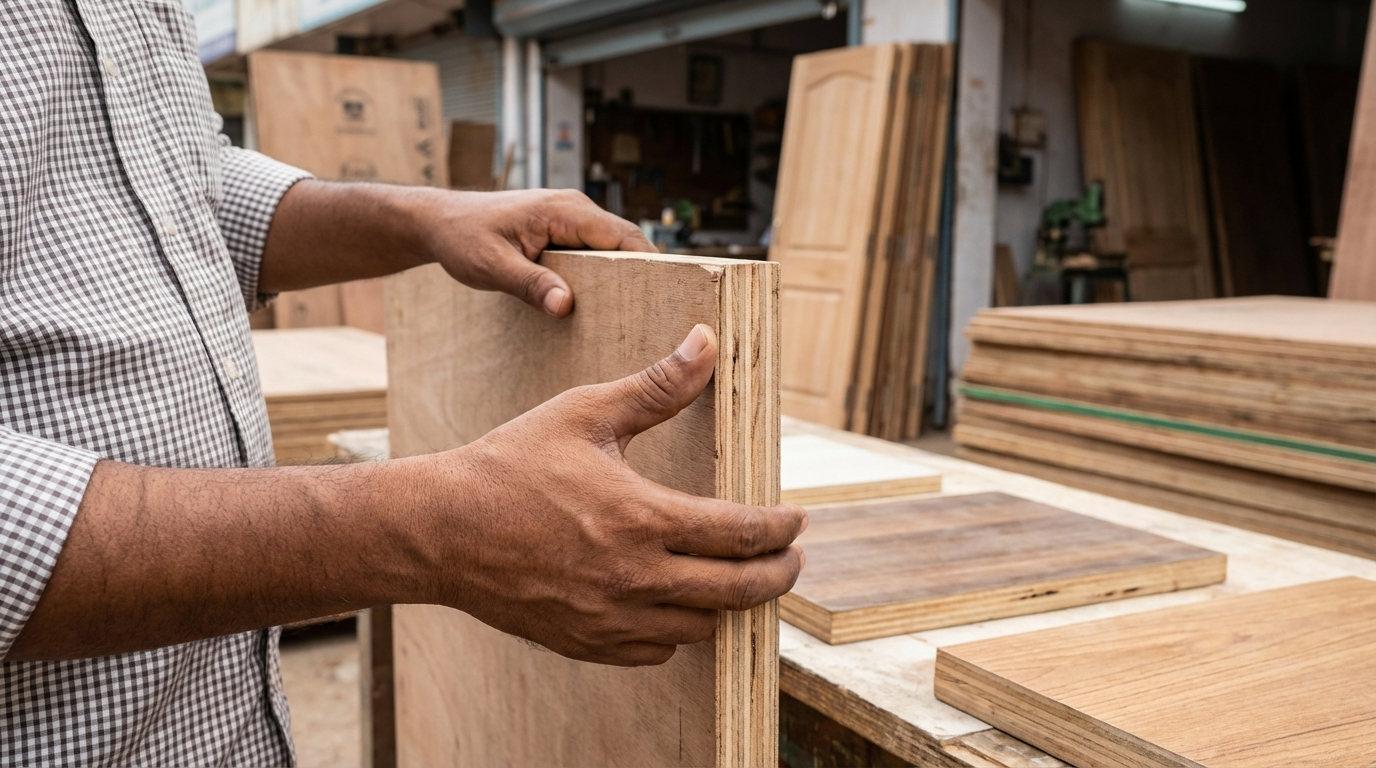
- Grip edges: Use suction lifters or corner clamps; avoid flat-hand pressure.
- Vertical carry: Sheets upright, never horizontal on shoulders—bends under flex.
- Vehicle loading: Flat on trucks with restraints; cover during transit to block highway spray.
- Unloading sequence: Bottom sheets first to avoid restacking stress.
For contractors: Train laborers; one warped sheet delays shuttering by hours. Homeowners: Rent trolleys for garage moves.
Tools for Efficient Handling
Basic: Sheet carriers (₹300/pair). Advanced: Hydraulic lifts for high-rises. In Pune's modular furniture units, conveyor systems minimize touch.
Construction Site Storage: Real-World Adaptations
Unlike controlled godowns, sites face dust, rain, and theft. Prioritize mobility and protection.
Site-Ready Setups
- Elevated platforms: Brick pillars + plywood base, 300mm high.
- A-frame or teepee stacks: 10-15 sheets per unit, roped at apex.
- Weatherproofing: Double-layer covers with gravel ballast against wind.
- Rotation policy: Use FIFO (first in, first out) to limit exposure time.
In Hyderabad high-rises, vertical racks on scaffolds save floor space. Monsoon protocol: Relocate to tents or pause deliveries.
Site-Specific Risks and Counters
| Risk | Impact | Countermeasure |
|---|---|---|
| Rain splash | Edge swelling | Ditched perimeter + raised stacks |
| Heavy machinery vibration | Micro-cracks | Insulated bearers (rubber pads) |
| Theft-prone areas | Partial losses | Locked enclosures or night watches |
Common Storage Mistakes and Costly Consequences
Dealers overload stacks, ignoring grade—MR on bottom crushes. Homeowners store horizontally in sheds, trapping humidity.
- No spacers: Load transfers unevenly, bowing middles.
- Sealed covers: Sweat inside like a greenhouse.
- Ground contact: Capillary rise wets bottoms fastest.
- Mixed grades: Flexible atop rigid causes shear.
Quantified loss: Contractor replacing 10% warped sheets adds 5-10% to material budget. Prevention ROI: Simple pallets pay back in one project.
Long-Term Storage for Dealers and Bulk Buyers
Beyond sites, godowns demand systems. Rotate stock quarterly; inspect quarterly for early warp signs like telegraphing (raised glue lines).
Fumigation post-storage prevents borers; stack rotation equalizes aging. For exporters in Kandla, climate-controlled units maintain ISI compliance.
Scaling up: Racking systems (₹5-10/sqft) vs. flat stacks—racks vent better but cost upfront.
Quick Checklist for Plywood Storage Success
- Site leveled and elevated?
- Spacers aligned, 25mm thick?
- Humidity monitored under 70% RH?
- Covers ventilated, UV-proof?
- Handling by edges, two-person?
- Stacks under height limits?
Print and site-post this for teams. Adjust for local weather—coastal needs tighter controls.
Choosing Plywood with Storage in Mind
Not all plywood stores equally. MR suits dry interiors with ideal conditions; BWP for unpredictable sites. Test dealer stacks on visit: Flat? Spaced? Covered? Infer quality from handling.
Budget logic: Invest 2-5% more in grade for 20% less waste. Architects: Specify storage notes in BOQs.
Related guides on PlyPrice
Want Plywood Suggestions?
Share a few details and a PlyPrice specialist will suggest suitable brands and connect you to responsive dealers.