Best Plywood for Wardrobe: How to Choose Grade and Thickness
For most wardrobes, use 18mm plywood for load-bearing shelves and 12mm for lightweight shutters, in MR grade for dry bedrooms or BWR where humidity runs high, as in Mumbai or Kerala. The wrong choice can mean sagging shelves within 2-3 years.
Last updated: . Grades and standards checked against current BIS standards.
Why Wardrobe-Specific Plywood Choices Prevent Long-Term Failures
In Indian homes, wardrobes endure daily loads from clothes, linens, and accessories while facing fluctuating humidity levels, especially during monsoons in regions like Mumbai or Kerala. Selecting the wrong plywood leads to sagging shelves after 2-3 years, delaminating doors, or termite infestations in untreated cores. The core decision hinges on grade (MR for dry interiors vs. BWR for moderate moisture) and thickness (18mm for load-bearing shelves vs. 12mm for lightweight shutters). This guide breaks down the physics of sag resistance, regional climate impacts, and buyer trade-offs to help homeowners, interior designers, and contractors specify plywood that lasts 10+ years without costly replacements.
Plywood Grades Demystified: From Core Glue to Moisture Resistance
Plywood grades classify based on glue adhesives and their boiling water resistance, directly affecting wardrobe longevity. Here's the first-principles reasoning: Glue lines between veneers must withstand shear forces from weight and humidity expansion/contraction. Lower-grade glues hydrolyze (break down) in moisture, causing layers to separate.
MR Grade: Suitable for Controlled Environments
MR (Moisture Resistant) uses urea-formaldehyde glue, passing three 3-hour soaks in 60°C water without failure in testing but degrading over repeated exposure. Ideal for air-conditioned bedrooms in dry climates like Delhi winters. However, in humid coastal areas, it risks swelling by 10-15% thickness, leading to wardrobe misalignment.
BWR Grade: Enhanced Defense Against Humidity Cycles
BWR (Boiling Water Resistant) employs phenolic resins that pass three cycles of 8-hour boiling and 16-hour drying, resisting delamination in 70-90% RH environments common in Indian apartments. For wardrobes, this means doors stay flat and shelves resist warping from steam-iron proximity or laundry proximity.
BWP and Others: Overkill or Essential?
BWP (Boiling Water Proof) with marine-grade PF glues suits kitchens/bathrooms but adds unnecessary cost for wardrobes unless in high-humidity zones like Chennai. Avoid softwood cores in favor of hardwoods like poplar or eucalyptus for better screw-holding in Indian plywood norms.
| Grade | Glue Type | Best Wardrobe Use | Humidity Tolerance | Cost Relative to MR | ISI Compliance Expectation |
|---|---|---|---|---|---|
| MR | Urea-Formaldehyde | Partitions, back panels in dry rooms | Low (up to 60% RH) | Baseline | IS:303 |
| BWR | Phenolic-Urea | Shelves, shutters in humid areas | Medium (60-90% RH) | 20-40% higher | IS:303 |
| BWP | Phenolic-Formaldehyde | Full carcass in coastal/high-moisture | High (90%+ RH) | 40-70% higher | IS:710 |
Note: Always verify ISI marks; non-compliant boards from unregulated mills fail faster under load.
Thickness Selection: Engineering Sag-Free Shelves and Sturdy Doors
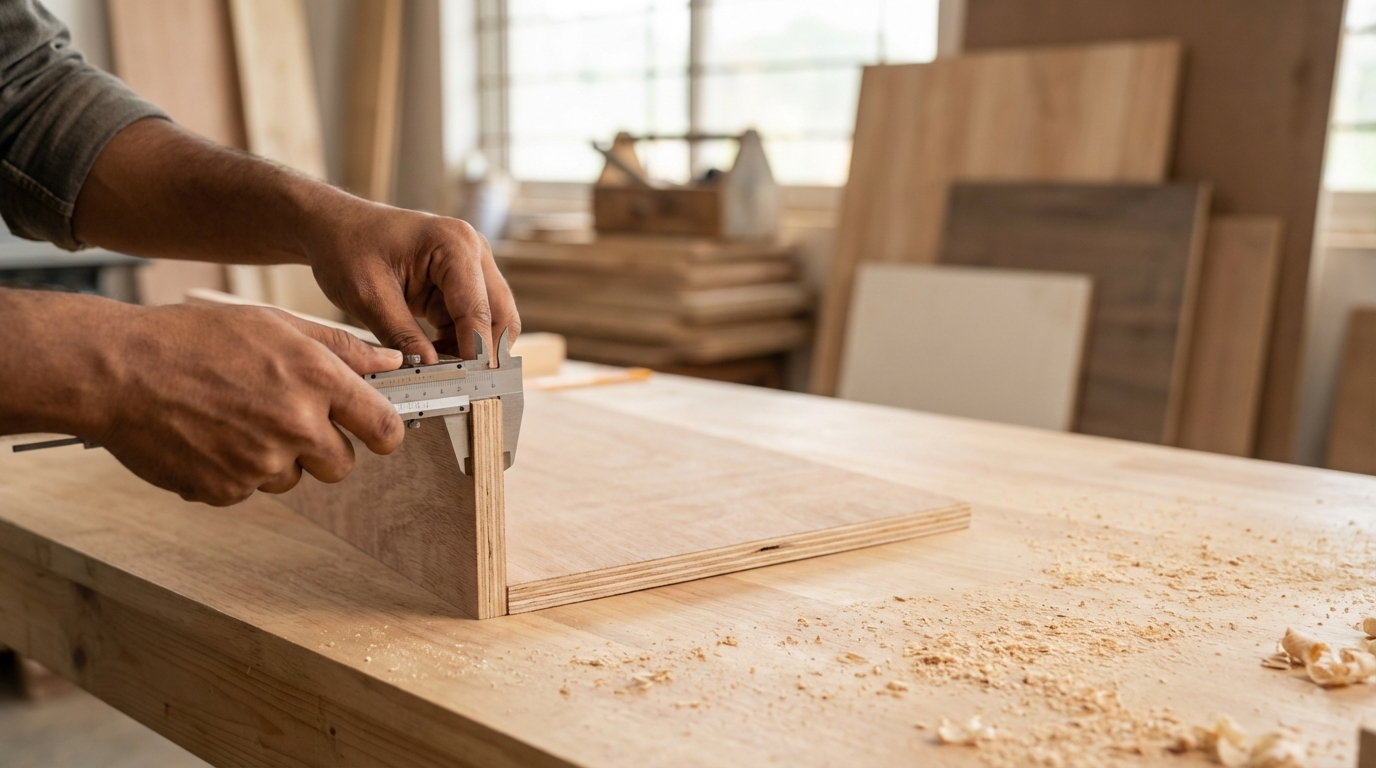
Thickness determines flexural strength—thicker ply resists bending under span (distance between supports) and load (e.g., 50-100kg uniform shelf load). Indian wardrobes typically span 600-900mm; thinner ply deflects 5-10mm visibly, accelerating fatigue cracks.
18mm vs. 12mm: Load Physics for Shelves
For adjustable shelves holding folded clothes or boxes:
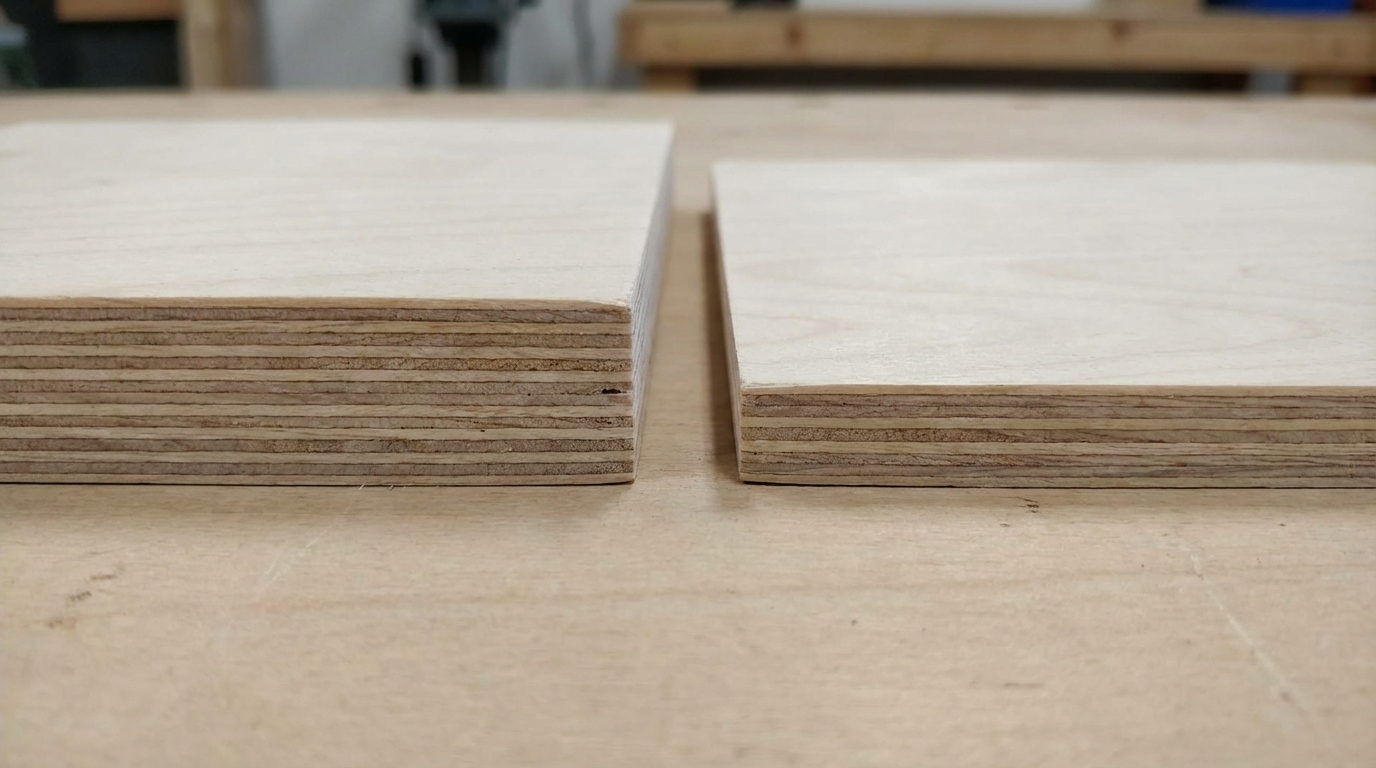
- 12mm: Maximum for spans under 600mm, light loads (<30kg). Prone to 3-5mm sag over 800mm, common in budget wardrobes.
- 16mm: Balanced for 700mm spans, moderate loads.
- 18mm (or 19mm): Standard for 900mm+ spans, heavy loads. Deflection under 1mm at 75kg, preventing particle board-like sagging.
Recommendation: Default to 18mm BWR shelves for family wardrobes; saves rework costs exceeding material premium.
Shutters and Carcass: Optimizing Weight vs. Durability
Doors (shutters) pivot on hinges, so 12-16mm suffices to minimize swing inertia. Partitions (carcass sides) use 12mm for stability without excess weight. Laminate compatibility drops with thickness—18mm needs skilled pressing to avoid telegraphing.
| Component | Recommended Thickness | Grade Pairing | Span/Load Consideration | Rationale for Indian Homes |
|---|---|---|---|---|
| Shelves | 18mm | BWR | 800-1000mm / 50-100kg | Prevents sagging from stacked winter woolens |
| Shutters/Doors | 12-16mm | BWR | Full height / Self-weight + handles | Reduces hinge stress in daily use |
| Partitions/Carcass | 12mm | MR/BWR | Vertical stability | Cost control without compromising alignment |
| Back Panels | 3-6mm | MR | N/A | Dust barrier only; thin to save 10-15% material |
MR vs. BWR Head-to-Head: Real-World Wardrobe Scenarios
Consider two identical 6x4ft wardrobes—one MR, one BWR—in Pune's humid summers vs. Bangalore's moderate climate.
Dry Bedroom (Bangalore-like): MR Wins on Cost
MR 18mm shelves handle 65% RH without issue, costing 25% less. Delamination rare if ventilated. Homeowners prioritize budget; contractors specify for quick turnarounds.
Humid or Laundry-Adjacent Room (Mumbai-like): BWR Essential
MR swells 8-12% after monsoons, causing shutter gaps. BWR maintains flatness, justifying premium. Architects specify for premium projects; end-users regret MR after 18 months.
Hybrid approach: MR carcass + BWR shelves/shutters balances at 15-20% total uplift.
Regional Climate and Usage: Tailoring Specs to Your Location
India's diversity demands nuance:
- North India (Delhi, UP): MR suffices; focus termite-proofing via preservatives.
- West/Coastal (Mumbai, Gujarat): BWR minimum; add HDHMR alternatives for zero-formaldehyde.
- South (Kerala, Chennai): BWR/BWP; prioritize poplar core over rubberwood for density.
- Apartment vs. Villa: AC apartments favor MR; natural ventilation pushes BWR.
Heavy users (large families) upscale to 19mm; minimalists downsize to 16mm with closer supports.
Core Material and Face Veneers: Hidden Durability Factors
Beyond grade/thickness, core dictates screw grip (min. 8-10 veneers for 18mm). Poplar cores (common in North) offer uniform density; avoid recycled softwoods prone to voids. Face veneers (0.6-1.2mm) must match laminate grain—quarter-cut for premium aesthetics, rotary for budget.
Termite and Formaldehyde Resistance
Indian BIS norms mandate preservatives; test via screw-pull (should hold 100kg+). Low-E1 emission glues prevent health issues in kids' rooms.
Cost Drivers: Why Wardrobe Plywood Isn't One-Price-Fits-All
Pricing varies 30-50% regionally due to transport (South plywood cheaper in East), dealer margins (retail 20% over wholesale), and specs:
- Base MR 18mm: Entry benchmark.
- +BWR upgrade: 25-35% add.
- Thicker/Imported faces: 15-25% more.
- Volume buys (contractors): 10-20% dealer discounts.
ROI calculation: BWR's 2x lifespan offsets premium in 4-5 years vs. MR replacements.
| Spec Combo | Durability Rating (1-10) | Cost Tier | Best Buyer |
|---|---|---|---|
| MR 12mm Full | 5 | Low | Budget homeowners |
| BWR 18mm Shelves + MR Rest | 8 | Medium | Contractors |
| BWR/BWP 18-19mm Full | 10 | High | Designers, coastal villas |
Quality Checks at Dealer: Avoid Counterfeit Pitfalls
Dealer-sourced plywood often lacks transparency. Hands-on tests:
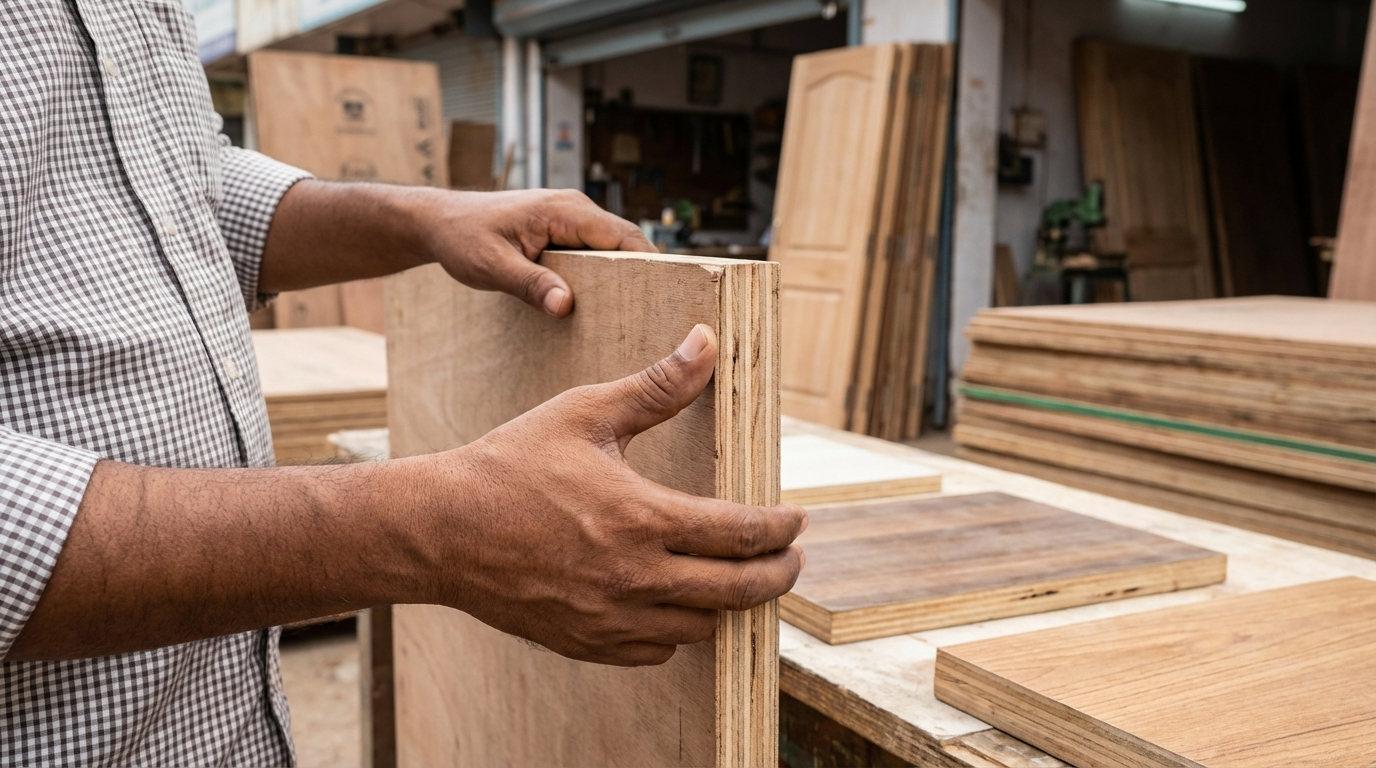
- Knock Test: Uniform thud = solid core; hollow = voids.
- Edge Inspection: Even glue lines, no gaps.
- Water Dab: No swelling after 30min (BWR ideal).
- ISI Verification: CM/L no. stamped, not stickers.
- Screw Test: Drills clean without crumbling.
Request third-party lab reports for high-value projects.
Integration with Laminates and Hardware: Spec Synergies
18mm ply bonds best with 1mm laminates under heat press (120°C). Match edge banding thickness to prevent peeling. Soft-closing hinges demand flat surfaces—BWR ensures this.
Alternatives to Plywood: When MDF/HDHMR Fits Better
For flush doors, 18mm HDHMR offers uniform screw hold sans grain telegraphing, though less impact-resistant. Blockboard for heavy shelves but absorbs moisture faster. Stick to plywood for curved elements.
Step-by-Step Decision Framework for Buyers
- Assess room humidity and wardrobe size/load.
- Map components: Shelves 18mm BWR, rest 12-16mm MR/BWR.
- Budget check: Allocate 40% premium for durability.
- Dealer visit: Test 3-5 samples.
- Specify in contract: Grade, thickness, ISI.
Frequently Overlooked Factors in Wardrobe Plywood Selection
Ventilation gaps reduce internal humidity by 20%; undersized shelves invite overload. Modular wardrobes amplify thickness needs due to fewer supports. Renovation buyers upgrade to BWR for resale value.
By prioritizing BWR 18mm for critical elements, Indian wardrobes transition from short-term furniture to heirloom durability, aligning specs with real-life demands over generic advice.
Related guides on PlyPrice
Want Plywood Suggestions?
Share a few details and a PlyPrice specialist will suggest suitable brands and connect you to responsive dealers.