Best Plywood for Kitchen: How to Choose Grade, Thickness and Brand
BWP plywood certified to IS:710 is the right choice for modular kitchens in India, because steam, spills and sink splashes make ordinary ply swell and delaminate. Pair it with the right thickness, proper edge banding and a dealer inspection checklist.
Last updated: . Grades and standards checked against current BIS standards.
Why Your Modular Kitchen Demands BWP Grade Plywood (IS:303)
In India's humid climates, from Mumbai's monsoons to Delhi's foggy winters, kitchens endure relentless moisture—steam from cooking, spills from daily prep, and splashes near sinks. Modular kitchens, now standard in urban homes and apartments, amplify these challenges with flush cabinets and seamless counter integrations. Ordinary plywood warps, delaminates, or swells under such exposure, leading to costly repairs within a year.
Enter BWP (Boiling Water Proof) grade plywood certified to IS:303, or marine plywood certified to IS:710. This isn't marketing hype; it's engineered for submersion in boiling water for hours without structural failure. For kitchens, BWP is non-negotiable because it resists the cumulative moisture cycles that MR (Moisture Resistant) or BWR (Boiling Water Resistant) grades can't handle long-term. Homeowners skipping BWP often face callbacks from carpenters, while contractors know it cuts warranty claims by prioritizing upfront durability.
IS:710 certification verifies glue-line strength and face-veneer quality through rigorous tests. Look for the BIS mark—genuine stamps include batch numbers for traceability. Without it, you're gambling on dealer claims, common in fragmented Indian markets where substandard imports flood tier-2 cities.
Moisture Dynamics in Indian Kitchens: A First-Principles Breakdown
Kitchens aren't dry spaces. Relative humidity spikes to 80-90% during cooking, with vapor condensing on cooler plywood surfaces. In coastal areas like Chennai or Kolkata, ambient humidity rarely dips below 70%. Traditional open kitchens vent better, but modular designs trap steam inside cabinets.
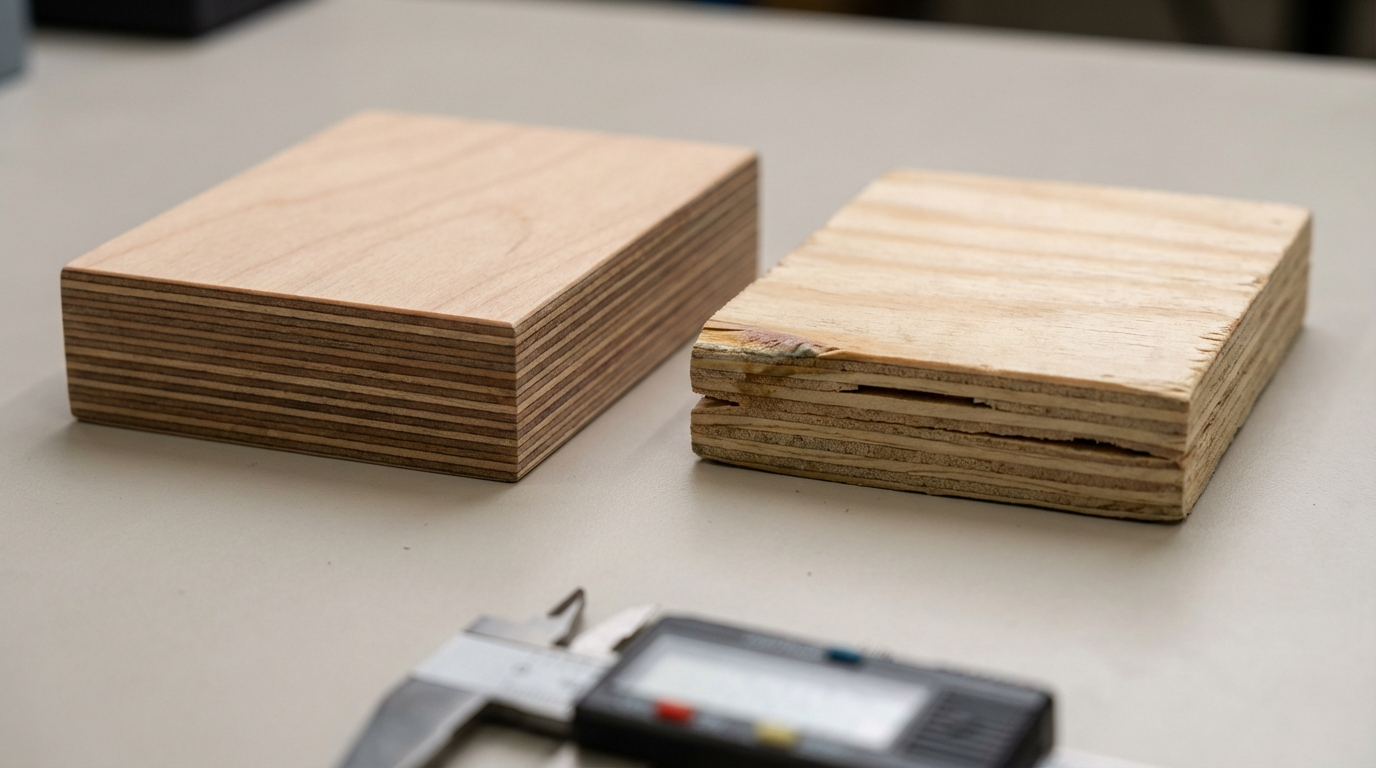
From basics: Plywood is cross-laminated veneers bonded with resins. Moisture penetrates edges and cores, causing swelling (up to 20% volume increase in non-BWP). BWP uses phenolic resins that cross-link under heat/pressure, forming a hydrophobic barrier. This explains why IS:710 plywood survives 72-hour boiling tests—real-world equivalent to years of kitchen abuse.
Selecting the Right Thickness: Balancing Strength, Weight, and Cost
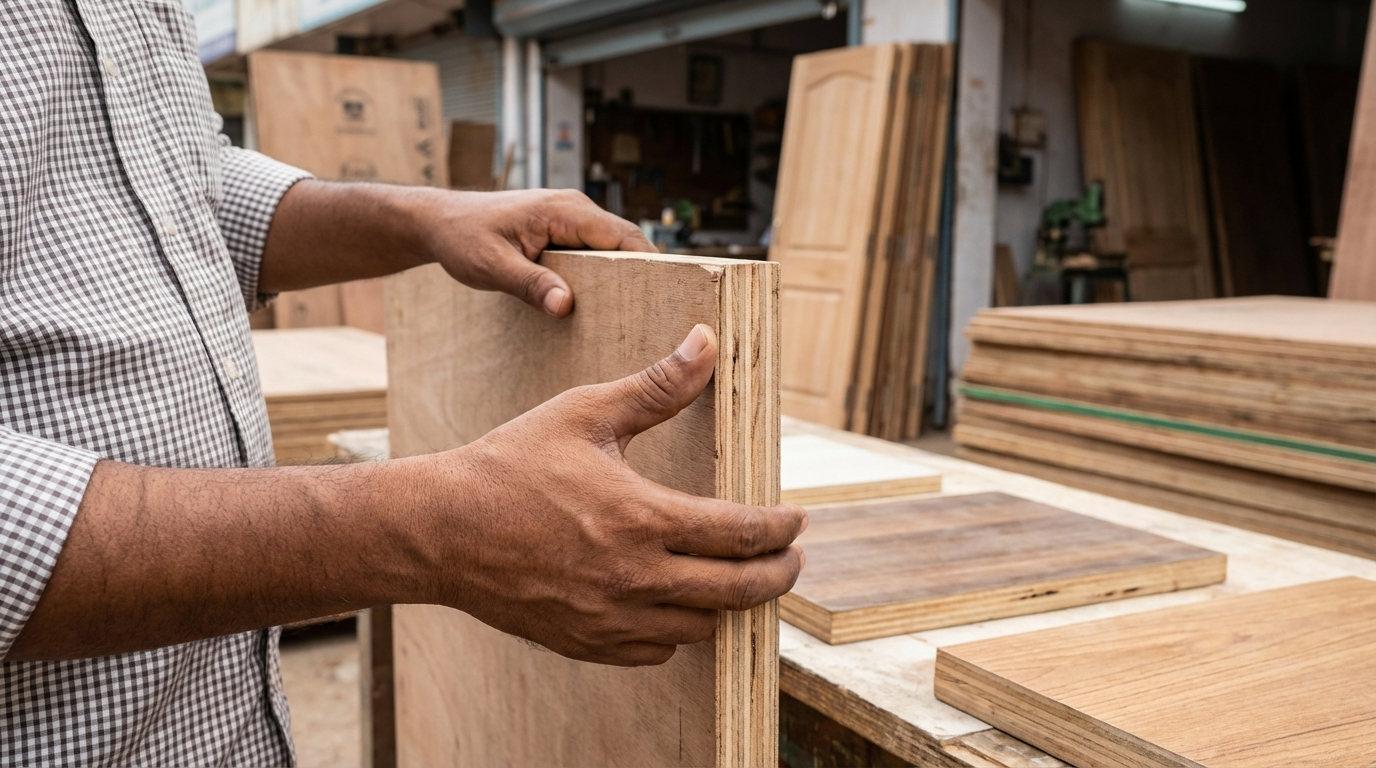
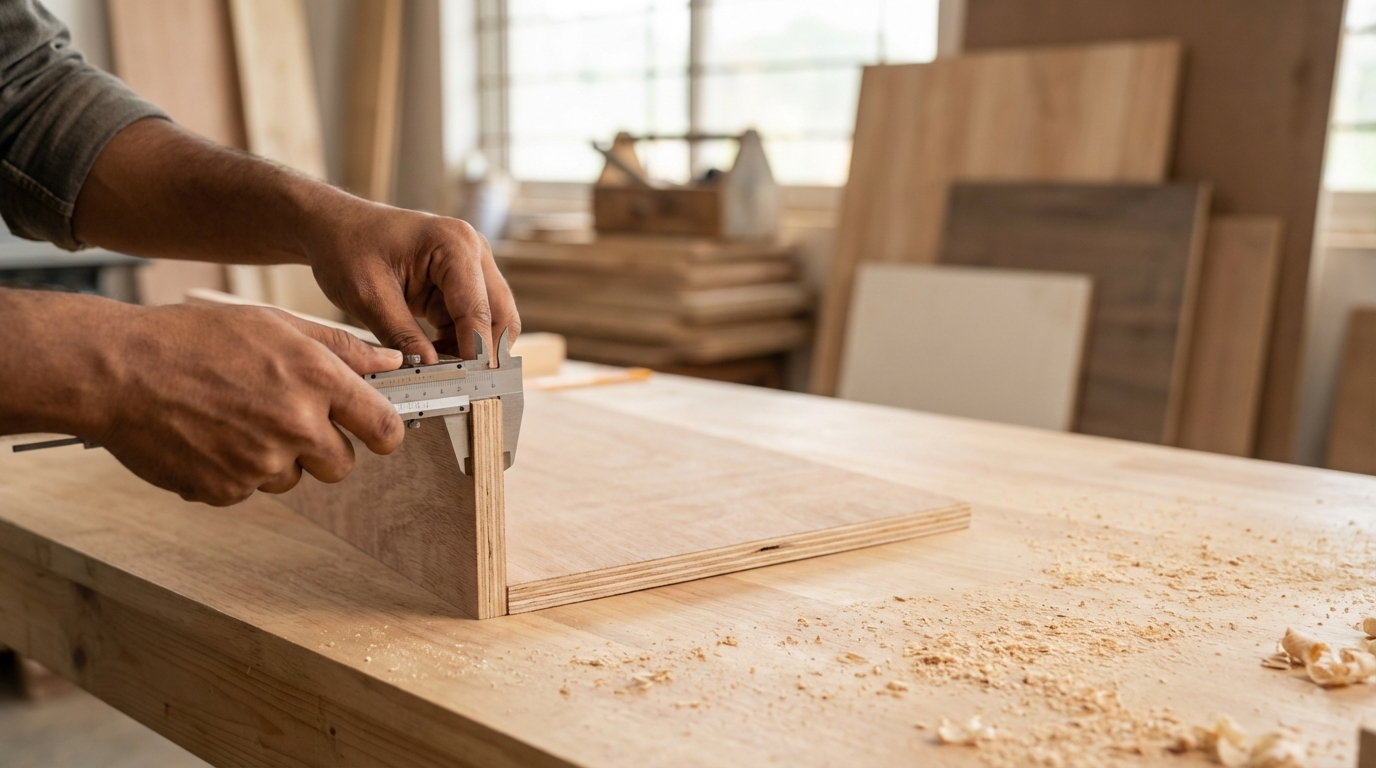
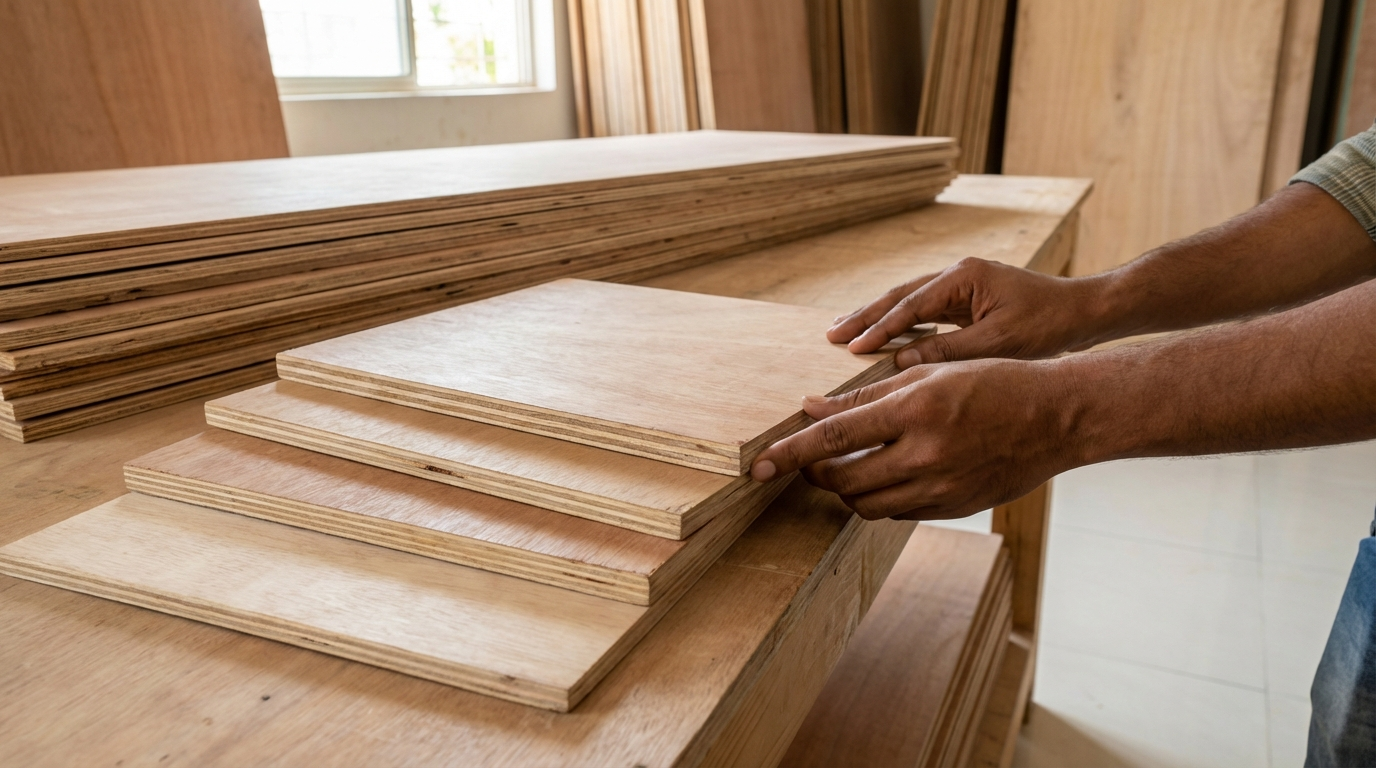
Thickness dictates load-bearing for shelves, shutters, and carcasses. Thinner sheets suit lightweight uppers; thicker ones handle base units with heavy utensils. Indian modular kitchens typically use 18mm for carcasses (main frames) and 6-12mm for shutters/back panels, but choices hinge on span, hardware, and budget.
| Thickness | Best For | Pros | Cons | Cost Driver (Relative) |
|---|---|---|---|---|
| 6mm | Shutters, backs | Lightweight, easy to machine; ample for painted laminates | Flexes under load; needs stiffeners for wide spans | Lowest (base reference) |
| 12mm | Upper cabinets, shelves | Good rigidity for 60cm spans; common in mid-range modulars | Heavier than 6mm; pricier per sq ft | 20-30% higher |
| 18mm | Base carcasses, heavy-duty shelves | Handles 100+kg loads; standard for pros | Increased weight impacts wall fixings; higher transport costs | 40-60% higher |
| 25mm+ | Islands, tall units | Ultimate stability; vibration-resistant | Bulky, expensive; overkill for most homes | 80%+ higher |
Decision logic: Measure spans first. For a 90cm wide shutter, 12mm minimum prevents sagging. Architects favor 18mm carcasses for resale value, as thin plywood signals cost-cutting. Contractors in humid regions add 2mm buffer. Cost rises nonlinearly—thicker cores demand more glue and pressing time.
Edge Banding and Finishing: Thickness Companions
No thickness choice stands alone. PVC edge bands (1-2mm thick) seal exposed edges, vital in kitchens where water wicks along grains. Pair 18mm BWP with 2mm ABS banding for premium builds; cheaper 1mm PVC suffices for rentals. Laminates (1mm) or veneers add abrasion resistance, but skip membranes on BWP—they trap moisture if poorly applied.
Navigating Brands: Analytical Comparison for Kitchen Use
India's plywood market features 50+ brands, but kitchen reliability boils down to consistent BWP quality, not logos. Dealers push mid-tier for margins, while discerning buyers verify core density (600+ kg/m³ ideal) and emission compliance (E1/E0 for low formaldehyde in enclosed cabinets).
Neutral lens: No brand dominates universally. Coastal buyers prioritize marine-grade variants; inland opt for balanced specs. Test samples by tapping—dense cores sound solid. Avoid unbranded "commercial" plywood; it fails edge-wise bending tests meant for IS:710.
| Brand Tier | Strengths | Weaknesses | Kitchen Fit | Regional Pricing Variance |
|---|---|---|---|---|
| Premium (e.g., Greenply, Century Gold) | Consistent IS:710; high glue shear; warranty-backed | Dealer markups; limited stock in small towns | Ideal for modulars; 25+ year life | North: Lower; South: 15% premium |
| Mid-Range (e.g., Kitply, Archidply) | Good moisture hold; wider availability | Variable core quality; occasional delam reports | Solid for semi-modular; inspect batches | Uniform across metros; rural +20% |
| Budget (e.g., local mills) | Low upfront cost; quick supply | Short glue life; fails boil tests | Avoid for kitchens; partition use only | Tier-3: Cheapest; metros inflated |
Buyer tip: Cross-check with ISI directories online. Homeowners in Bangalore negotiate via architects; contractors buy bulk from Gujarat mills for savings. Brands like Duroply excel in fire-retardant variants for gas-heavy kitchens, but verify independent tests—not self-claims.
Import vs Domestic: Hidden Trade-Offs
Imports (Indonesian/Malaysian) tempt with pricing, but customs delays and inconsistent grading plague supply chains. Domestic BWP adheres better to IS norms, with faster replacements. Local stock wins for kitchens needing urgent installs.
Avoiding Moisture Damage: Practical Strategies Beyond Grade
BWP isn't a silver bullet—installation and maintenance matter. 40% of failures trace to poor practices, per industry anecdotes from Noida showrooms to Hyderabad worksites.
- Site Prep: Acclimatize sheets 48-72 hours in kitchen humidity. Indian summers swell unadjusted plywood 5-10%.
- Sealing Mastery: Apply silicone at sink cutouts; use marine-grade putty on screws. Exposed cores invite capillary action.
- Hardware Synergy: Soft-close hinges reduce slam vibrations; SS brackets prevent rust transfer.
- Ventilation Hacks: Exhaust fans mandatory; add silica packs in cabinets for monsoon seasons.
- Cleaning Protocols: Wipe spills immediately; avoid acidic cleaners that etch resins.
For high-risk zones (under sinks), double up: BWP carcass + FRP lining. Architects in Pune swear by this for villas with frequent cooking.
Common Pitfalls: Lessons from Failed Installs
Homeowners regret MR plywood after first Diwali sweets spill—warping evident in months. Contractors cut corners on 12mm uppers, leading to droops. Dealers offload old stock sans BIS; always demand test certificates. In Kerala’s backwaters, untreated edges fail spectacularly.
Cost Framework: What Drives Kitchen Plywood Expenses
Plywood is 30-40% of modular kitchen budgets. BWP starts higher (1.5-2x MR) due to PF glues and extended pressing. Thickness adds 30-50%; brands 20%. Regional swings: Kerala mills undercut North by 10-15% via coconut husk cores.
Per sqm logic:
- Basic modular (100 sq ft): 18mm BWP ~40-60% of material cost.
- Luxury (with veneers): Thickness premium negligible vs finishes.
Inspection Checklist: Empower Your Purchase
- Verify IS:710 stamp + hologram.
- Check core: No voids, uniform density.
- Sand edges: Smooth glue lines, no telegraphing.
- Smell test: Low VOC; acrid = poor resins.
- Source traceability: Mill address, batch code.
- Load test sample: 18mm should span 80cm unsupported.
Armed with this, negotiate confidently. Interior designers in Mumbai use it to vet suppliers; replicate for your project.
Future-Proofing: Trends Shaping 2026 Kitchen Plywood
HDHMR rises for humidity but lacks BWP's boil-proofing—hybrid use emerging. Zero-formaldehyde mandates tighten; CARB2 compliance standardizes. Recycled cores gain traction in eco-modulars, but test durability. For longevity, stick to proven BWP; innovations complement, not replace.
Choosing plywood isn't checkbox—it's matching material physics to your kitchen's realities. Prioritize BWP (IS:303) or marine (IS:710), calibrate thickness, vet brands analytically, and seal meticulously. This approach delivers kitchens that endure India's diverse assaults, from masala steam to monsoon leaks.
Related guides on PlyPrice
Want Plywood Suggestions?
Share a few details and a PlyPrice specialist will suggest suitable brands and connect you to responsive dealers.