How to Check Plywood Quality at the Dealer: Knock, Cut and Surface Tests
Check plywood quality with simple field tests: knock the sheet to hear hollow voids, cut a sample to expose core gaps and layer count, and inspect the veneer, finish and edges. Add checks on markings, weight and smell, and know the red flags that mean you should walk away.
Why Field Tests Are Essential for Plywood Buyers in India
In India's diverse climates—from humid coastal regions to dry interiors—plywood faces constant threats like moisture ingress, termite attacks, and structural stress during construction. Homeowners, contractors, and interior designers often rely on dealer assurances, but substandard sheets lead to warping, bubbling, or outright failure within months. Field tests empower you to verify quality on-site, bypassing polished showroom displays. These checks focus on core integrity, bonding strength, and surface durability, revealing issues hidden by manufacturing shortcuts like irregular glue lines or recycled wood fillers.
Indian plywood standards, influenced by ISI norms (IS 303 for interior grades, IS 710 for boiling water resistant), emphasize uniform density and void-free cores. Yet, regional variations in sourcing—poplar from Punjab, eucalyptus from South India—mean quality fluctuates. Start with these pro-level tests: the knock (sound) test for internal voids, the cut test for core gaps, and surface inspection for veneer flaws. Each reveals decision-critical defects before installation.
Plywood Anatomy: What You're Testing For
Before tests, grasp first-principles construction. Plywood stacks thin wood veneers (face, core, crossbands) glued under heat and pressure. Ideal cores use uniform hardwood strips (12-18mm thick sheets), with glue lines ensuring 100% bonding. Defects arise from poor pressing: air pockets (voids), overlapping strips (gaps), or weak adhesives diluting moisture resistance.
In India, MR (moisture resistant) suits dry interiors, BWR (boiling water resistant) handles kitchens/bathrooms, and BWP (boiling water proof) fits marine or shuttering uses. Test outcomes vary by grade—loose cores doom even BWP sheets in monsoons. Weight per sheet (around 35-50kg for 18mm) hints at density; lighter ones often hide fillers.
The 'Knock' Test: Listening for Voids and Delamination
The knock test mimics ultrasonic scanning, using sound waves to detect air pockets or separated layers. Voids—common in low-end poplar cores—reduce screw-holding strength by 40-50%, causing cabinets to sag or shelves to collapse.
How to Perform the Knock Test Step-by-Step
- Lay the sheet flat on a stable surface, away from echoes.
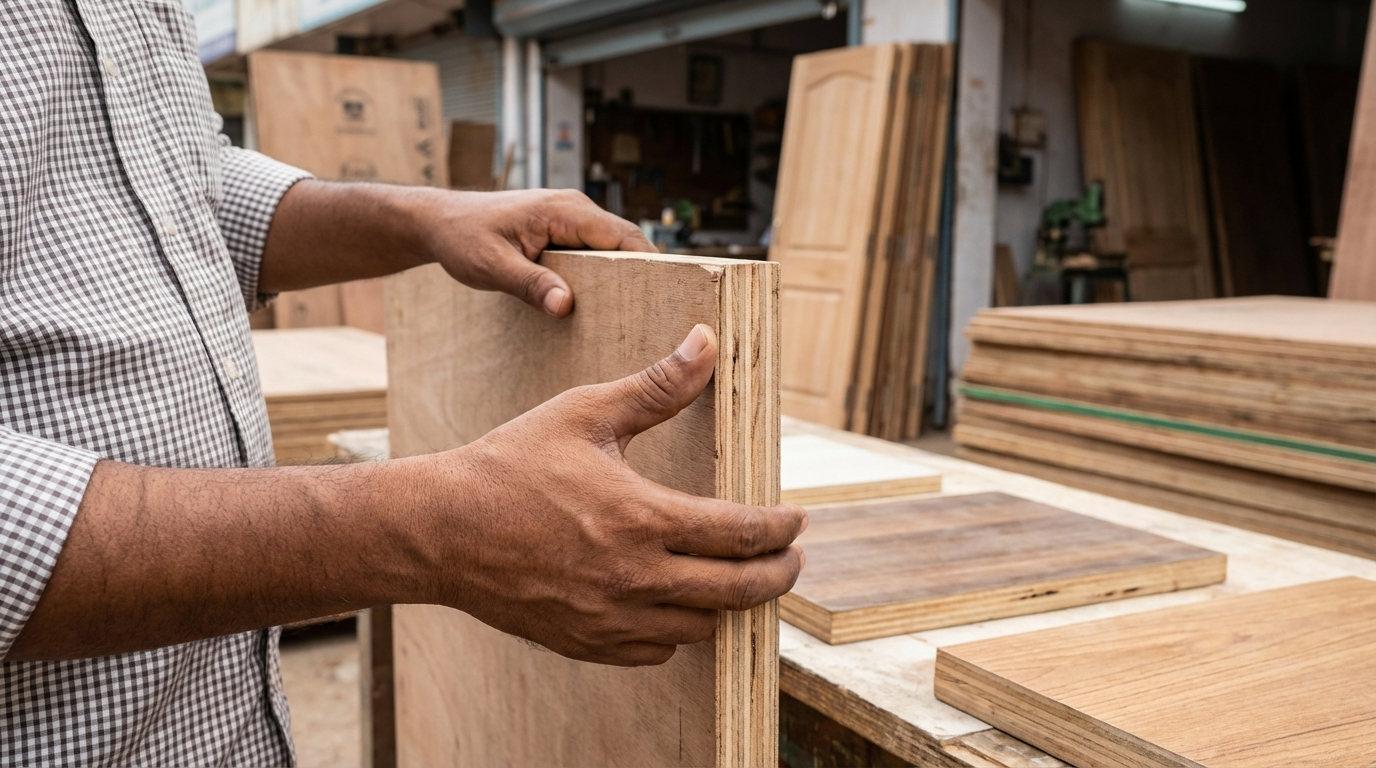
- Use a rubber mallet or knuckle: tap firmly across the entire face, from edges to center, in a grid pattern (every 150mm).
- Listen for tone variations: uniform, solid "thud" indicates dense, bonded core. Hollow "tok-tok" or drum-like echoes signal voids or delamination.
- Flip and repeat on the reverse; inconsistencies worsen prognosis.
Interpreting Knock Test Results
| Test Sound | Meaning | Action for Buyers | India-Specific Risk |
|---|---|---|---|
| Solid, consistent thud | Tight glue lines, void-free core | Proceed; ideal for load-bearing like beds or partitions | Safe in humid Gujarat or Kerala homes |
| Hollow echo in spots | Small voids or partial delam | Reject if >10% area; negotiate discount otherwise | Expands in monsoon, fails ISI boil test |
| Drum-like across surface | Major delamination or filler core | Immediate rejection | Common in unbranded dealer stock; termite-prone |
For contractors: Test stacks of 10+ sheets; batch variations indicate factory inconsistencies. Homeowners: Prioritize bedroom/kitchen sheets, where failures annoy most.
Why Voids Form and How to Spot Early
Voids stem from uneven veneer peeling or rushed pressing in high-volume factories. In Punjab's plywood hubs, overuse of short-rotation poplar creates irregular strips. Pair knock with edge inspection: bulging or wavy edges amplify hollow sounds, signaling moisture-weakened bonds pre-delivery.
The 'Cut' Test: Exposing Core Gaps and Layer Integrity
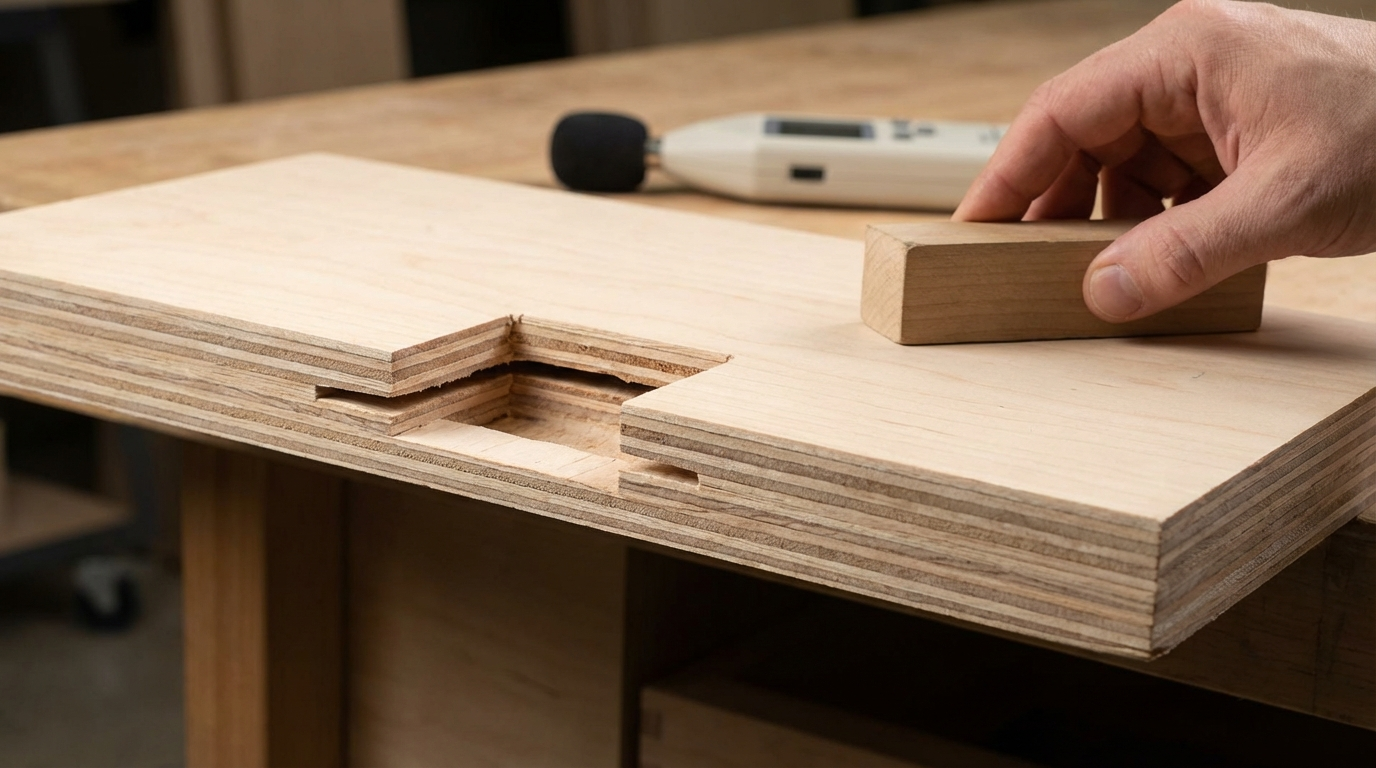
Visualize internal structure by slicing a sample. This destructive test uncovers gaps between core strips (should be butt-jointed, no overlaps/underlaps exceeding 2mm) and glue penetration. Gaps allow water capillary action, delaminating sheets in India's rainy seasons.
Step-by-Step Cut Test Execution
- Request a 300x300mm corner cut from the dealer (standard practice; refuse if denied).
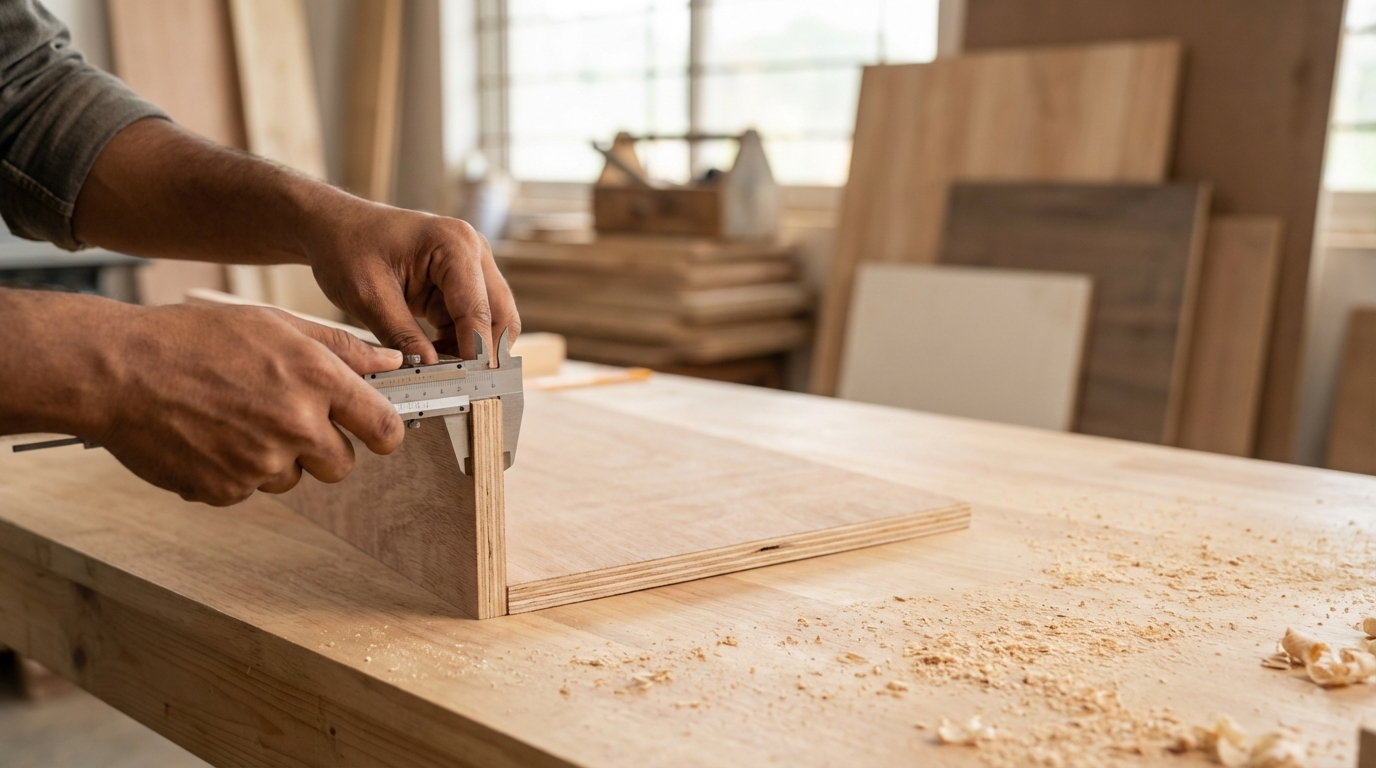
- Use a sharp panel saw or carpenter's blade for a clean cross-section perpendicular to grain.
- Examine under good light: check core strip alignment, glue color (tan-brown uniform), and face veneer thickness (1.5-2.5mm).
- Probe gaps with a screwdriver; resistance indicates solid fill.
Core Quality Checklist from Cut Test
| Feature | Good Quality | Poor Quality | Buyer Implication |
|---|---|---|---|
| Core Strips | Straight, uniform width (30-50mm), hardwood | Twisted, narrow, softwood/mixed | Weak screw hold; avoid for modular kitchens |
| Gaps/Joints | Tight butt joints, fully glued | Overlaps >3mm or voids | Water traps; unsuitable for BWR/BWP claims |
| Glue Lines | Even, no bubbles, penetrates 1-2mm | Starved (thin/white) or excessive | Delams in humidity; test boil resistance |
| Veneer Thickness | Face: 1.5mm+, back: 1mm+ | Paper-thin (<1mm) | Paints poorly; bubbles under polish |
Architects note: For HDHMR upgrades, cuts reveal density (700-800kg/m³); crumbly cores fail lab compression tests. Dealers often cut from rejects—insist on fresh edges.
Layer Count and Thickness Validation
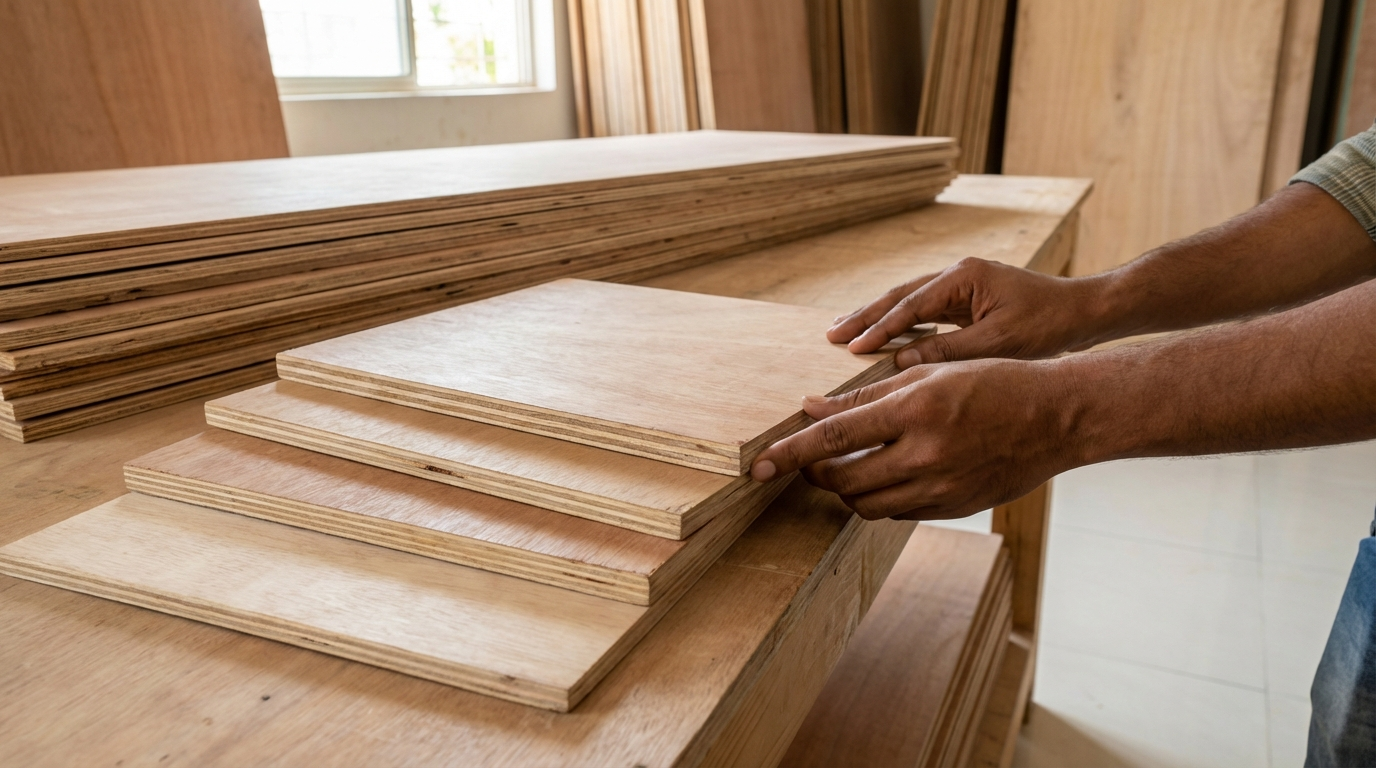
18mm sheets need 9-11 layers; count them post-cut. Thinner layers (<1.6mm average) inflate thickness falsely. In Tamil Nadu's humid belt, gap-filled cores swell 20% faster, per field observations.
Surface Inspection: Veneer, Finish, and Edge Analysis
Surfaces bear daily wear; inspect for milling precision, sanding smoothness, and defect masking. India's dust-laden sites accelerate veneer wear, so flawless starts matter.
Key Surface Checks
- Veneer Quality: Hold at 45° angle—color uniformity, no patches/telegraphing (core grain showing through). Premium faces use gurjan/meranti; cheap ones patch with fillers.
- Sanding: Run palm across—silky, no scratches/pin knots. Roughness snags laminates.
- Edges: Straight, sealed (no exposed core). Chipped edges indicate transport damage or thin veneers.
- Finish: Natural sheen, no glue bleed/stains. Press fingernail—resists denting in quality stock.
Surface Defect Table
| Defect Type | Appearance | Cause | Reject If |
|---|---|---|---|
| Blisters/Bubbles | Raised spots | Poor pressing | >5 per sqm |
| Color Streaks | Uneven dye | Recycled veneers | Non-uniform >10% |
| Dead Knots | Dark, loose plugs | Low-grade wood | Any in face veneer |
| Edge Swells | Curled/broken | Moisture exposure | Uneven taper |
Interior designers: Match veneer grain direction across sheets for seamless wardrobes. Contractors: Reject glossy over-sanded surfaces—they hide thin veneers.
Combining Tests: A Buyer's Decision Framework
No single test suffices; score sheets holistically. Assign points: Knock (40%), Cut (30%), Surface (30%). Threshold: 80%+ for approval.
| Buyer Type | Priority Tests | Acceptance Criteria | Cost Impact |
|---|---|---|---|
| Homeowner | Surface + Knock | No audible voids, smooth feel | Mid-range pricing viable |
| Contractor (Shuttering) | Cut + Knock | Gap-free core, solid thud | Opt for denser cores despite higher cost/kg |
| Designer (Furniture) | Surface + Cut | Thick veneer, uniform layers | Premium faces justify 20-30% uplift |
Supplementary Checks: Markings, Weight, and Smell
Verify ISI stamps (BIS hologram for authenticity), grade markings (BWP/MR), and thickness caliper (true 18mm, not nominal). Weigh sheets—underweight flags low density. Sniff edges: chemical odors suggest urea-formaldehyde excess, risking health in enclosed spaces.
For marine plywood: Soak scrap 24hrs—no delam. Blockboard alternatives: Fewer layers, prone to central voids; knock reveals faster.
Navigating Dealer Dynamics and Regional Variations
In Mumbai/Delhi, dealers stack premium faces atop mediocre cores—cut first. Kerala buyers face monsoon urgency; prioritize BWP with proven knock solidity. Negotiate: 10-15% off for minor flaws, full swap for majors. Bulk buyers: Sample 10% of lot.
Red Flags and When to Walk Away
- Refusal of cuts/knocks: Hiding defects.
- Mismatched markings vs. tests: Fakes abound.
- Batch inconsistencies: Factory overrun risks.
Post-purchase: Store flat, acclimatize 48hrs before use. Failures post-install? Document tests for claims.
Quality vs. Cost: Long-Term Savings Logic
Higher upfront cost (20-50% more for tested sheets) yields 2-3x lifespan. Untested cheap stock callbacks cost contractors dearly in labor rework. Choose based on use: Interior MR passes basic tests suffice; exterior demands all three aced.
Related guides on PlyPrice
Want Plywood Suggestions?
Share a few details and a PlyPrice specialist will suggest suitable brands and connect you to responsive dealers.