How Plywood Prices Are Decided in India: Timber, Resin and Veneer Costs
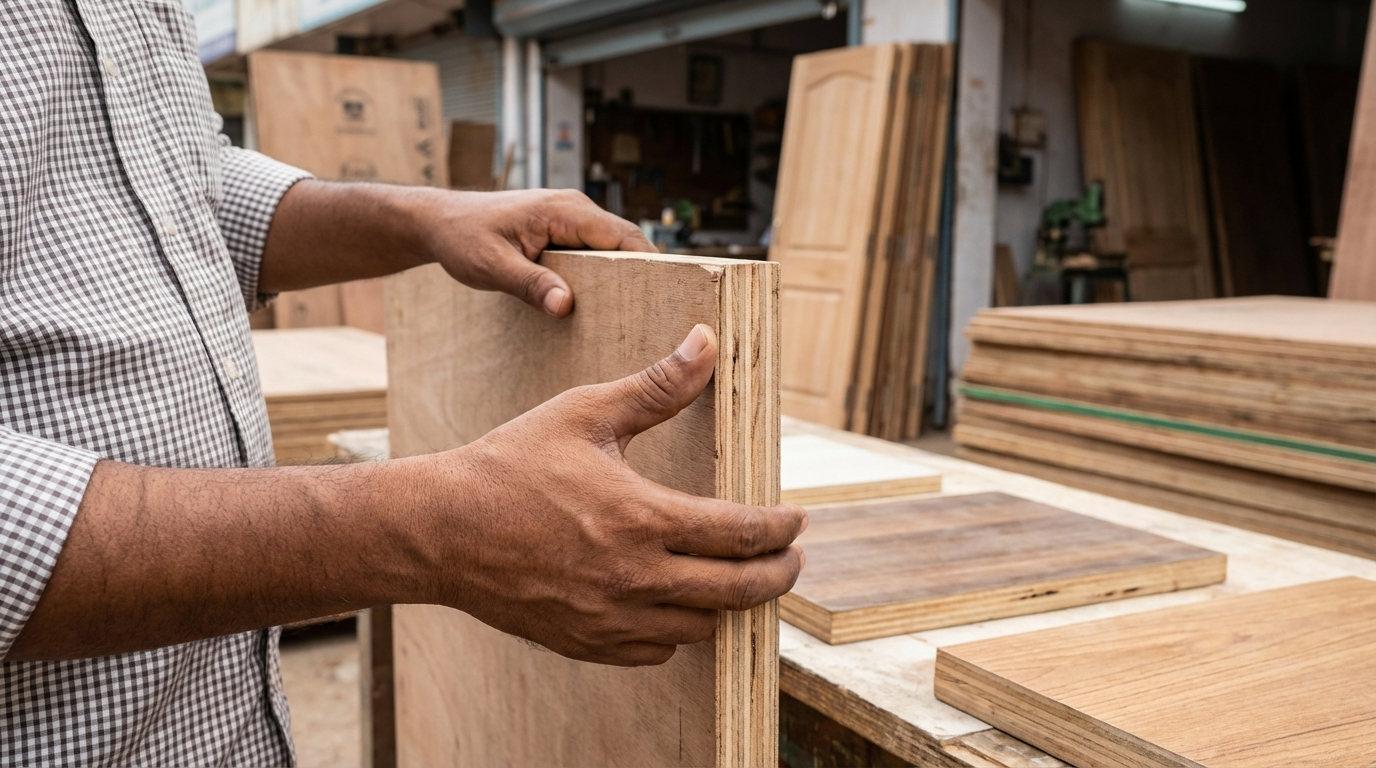
Plywood prices in India are set mainly by the timber in the core, the resin type (cheaper urea formaldehyde for MR versus costlier phenolic for BWR and BWP) and the face veneer grade, with thickness, factory overheads and transport layered on top.
Last updated: . Grades and standards checked against current BIS standards.
Decoding Plywood Pricing: Core Cost Drivers in the Indian Market
In India's diverse construction landscape, plywood prices per square foot fluctuate based on raw material sourcing, processing methods, and regional supply chains. Homeowners fitting out kitchens in humid Mumbai apartments, contractors building multi-story projects in Delhi's dry heat, or interior designers specifying wardrobes in Bangalore's tech hubs all encounter these variations. Unlike uniform commodities, plywood's engineered structure—layers of veneers glued under pressure—embeds multiple cost layers that directly translate to the final rate. This guide breaks down the primary influencers: timber costs, resin types like urea formaldehyde versus phenolic, and face veneer quality, while contextualizing them within India's buyer ecosystem.
Timber as the Foundational Cost Element
Timber constitutes 60-70% of plywood's production expense, making its sourcing the biggest price swing factor. In India, where poplar from Uttar Pradesh plantations dominates interior-grade plywood, fluctuations in log prices ripple through to finished sheets. Poplar's fast growth suits MR (moisture-resistant) grades, but supply disruptions—like seasonal floods in Bihar or export demands—can elevate costs by 20-30% in short bursts.
Hardwoods such as teak or sheesham, used in premium BWP (boiling water-proof) marine plywood, command higher baseline prices due to slower growth and stricter felling regulations under the Forest Conservation Act. Importers in Gujarat ports handle gurjan or keruing from Southeast Asia for export-quality faces, adding freight and customs duties that inflate landed costs.
Consider a contractor in Chennai: sourcing local eucalyptus keeps base timber costs lower than importing hardwood for coastal durability needs. First-principles logic here—denser timbers resist warping better in monsoons but require more energy to peel into thin veneers, compounding expenses. Buyers often overlook yield losses: a single log yields only 40-50% usable veneer after defects, directly hiking per-sheet pricing.
| Timber Type | Typical Use | Cost Influence | India-Specific Factor |
|---|---|---|---|
| Poplar | MR/BWR interiors | Lower base; volatile with plantation yields | UP/Bihar hubs; monsoon impacts |
| Eucalyptus | Shuttering/general | Moderate; fast availability | South India plantations |
| Hardwood (Gurjan/Teak) | BWP marine | Higher; pricier tropical timber | Coastal erosion resistance |
Resin Type: Urea Formaldehyde vs Phenolic – The Glue That Binds Costs
Resins bind veneers, but their chemistry dictates moisture resistance and thus pricing tiers. Urea formaldehyde (UF), standard for MR grades, is cost-effective for dry interiors but degrades in humidity above 20%, common in Indian kitchens or bathrooms. Phenolic resins (PF), used in BWR and BWP, cross-link for superior water boil resistance, justifying 30-50% higher costs.
UF production relies on cheaper ammonia derivatives, with Indian manufacturers in Punjab sourcing locally to keep glue-line expenses down. Phenolic, however, demands imported phenol and formaldehyde, sensitive to global petrochemical swings—evident in post-monsoon price hikes when coastal projects spike demand.
For architects specifying wardrobes in Hyderabad's variable climate, UF suffices for cost savings, but phenolic prevents delamination in steam-exposed vanities. Processing adds nuance: phenolic requires higher press temperatures (140-160°C vs UF's 110-130°C), increasing energy bills by 15-20%. ISI IS:303 standards mandate bond strength tests, where phenolic excels, allowing premium positioning despite upfront costs.
Relative impact: switching from UF to PF can lift per sq. ft. rates proportionally to the glue's share (10-15% of total cost), amplified in thicker 18mm sheets needing more resin volume.
- UF (MR Grade): Ideal for bedrooms; lower upfront but higher replacement risk in damp zones.
- PF (BWP Grade): Essential for kitchens/shuttering; longevity offsets initial premium in high-use scenarios.
Face Veneer Quality: Surface Aesthetics Driving Premium Pricing
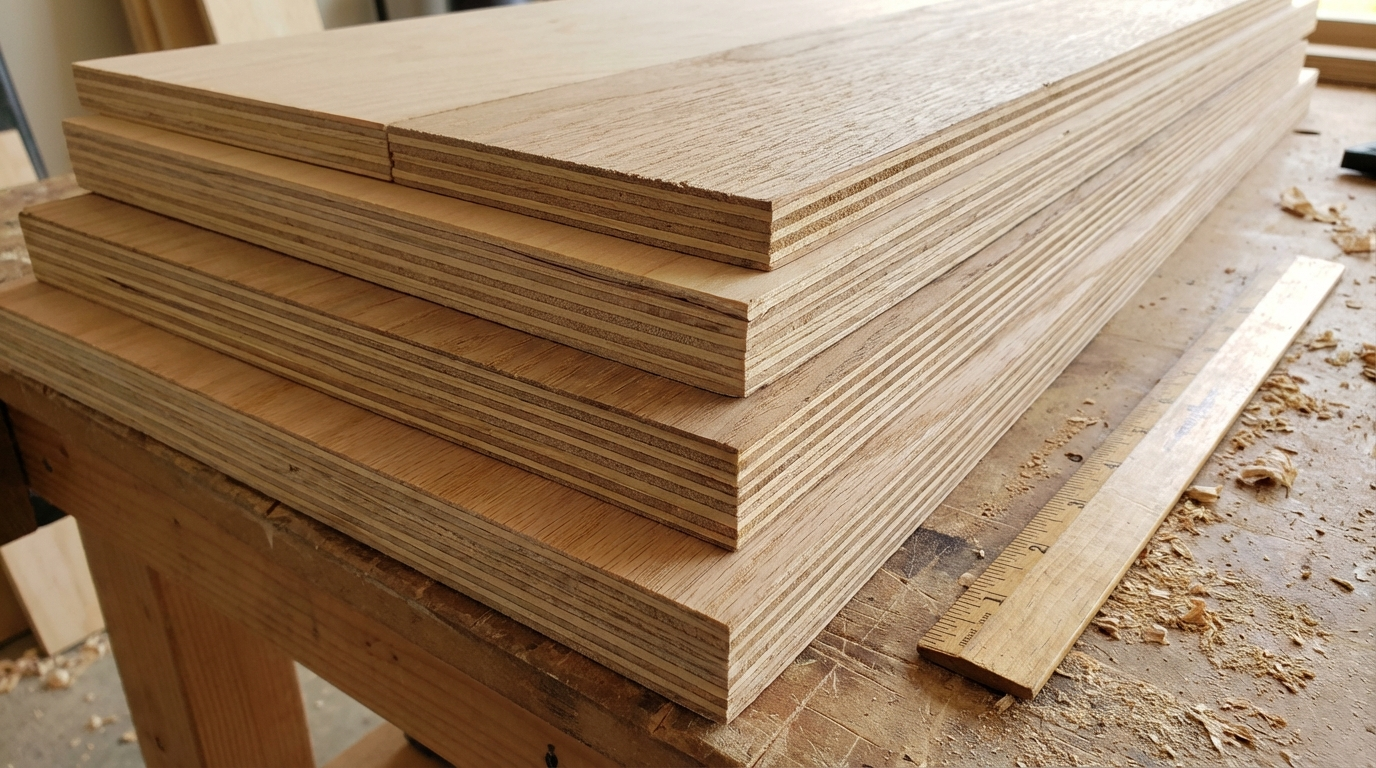
The outermost veneer defines visual appeal and durability, often tipping the scale on final rates. Indian buyers prioritize "face" quality for furniture, where A-grade veneers (uniform grain, minimal knots) fetch 20-40% more than C-grades riddled with defects.
Peeling precision matters: rotary-cut poplar faces yield consistent patterns at lower costs, while sliced hardwood veneers for teak finishes demand skilled labor and waste more log material. In dealer yards from Kolkata to Coimbatore, "AA" faces signal flawless imports, contrasting "BB" local mixes with filled plugs.
Climate context: UV-exposed balconies in Rajasthan fade cheaper dyes faster, making UV-coated premium faces worthwhile. Thickness uniformity in faces prevents telegraphing (core patterns showing through), a defect costly to rectify via sanding—adding 5-10% to manufacturing.
Veneer Grading and Buyer Trade-offs
Grading per IS:303 categorizes faces by defects: A (clear), B (small knots), C (larger fills). Homeowners chasing laminate overlays might opt B-grade for savings, as faces get covered. Exposed polishwork demands A-grade, where veneer cost alone can double sheet pricing.
| Face Grade | Defect Tolerance | Price Uplift | Best For |
|---|---|---|---|
| A/AA | None/minimal | High (base +30-50%) | Polished furniture, doors |
| B/BB | Small knots/patches | Moderate (base +10-20%) | Laminates, cabinets |
| C/CC | Large defects/fills | Low (base) | Shuttering, subflooring |
Layered Influences: Thickness, Grading, and Manufacturing Overhead
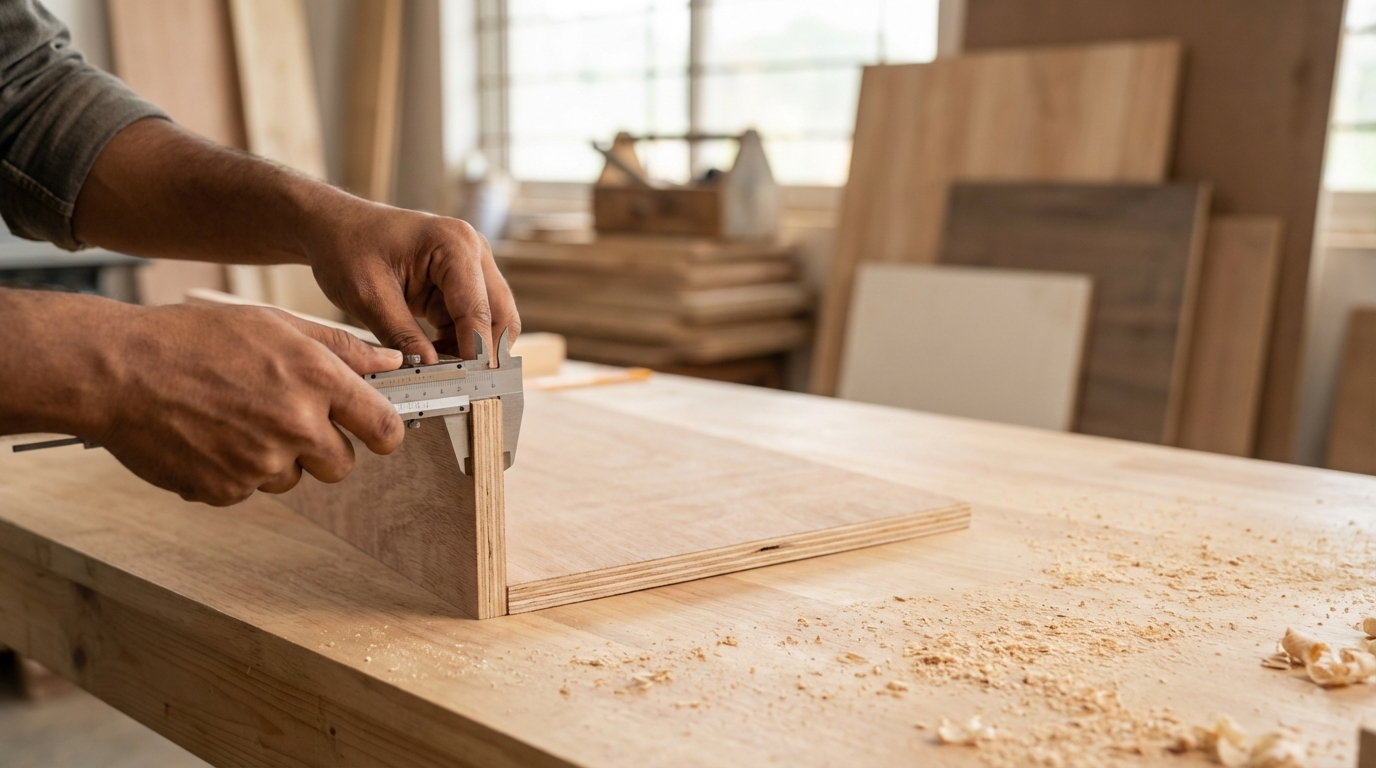
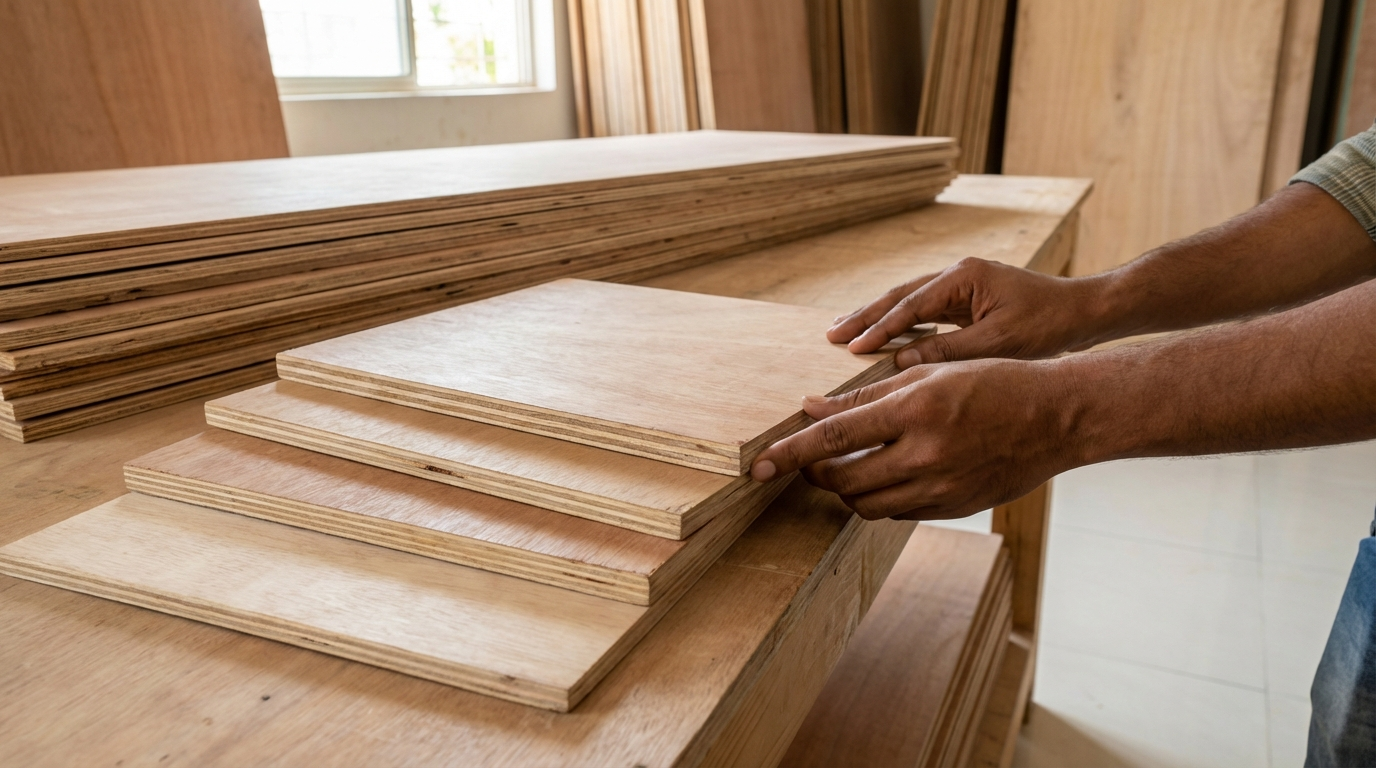
Beyond primaries, plywood's multi-ply architecture amplifies costs. Standard 8x4 ft sheets in 6-19mm thicknesses see rates scale near-linearly: each mm adds core veneers and resin, pushing 18mm BWP 2-3x over 6mm MR.
Grading standards formalize this: MR for <20% moisture interiors, BWR for three 8-hour boil cycles, BWP for a 72-hour boil, with each escalating resin and press time. ISI certification involves lab tests (shear strength, mycological resistance), with compliant mills passing costs via 5-10% premiums, reassuring architects against fakes rampant in tier-2 markets.
Manufacturing variances: Boiling core veneers for BWP adds hydro-treatment costs, while HDF/HMR cores in modern boards boost density but hike expenses 20-30% over softwood cores. Energy-intensive hot presses in Gujarat clusters versus semi-manual Punjab units explain regional spreads.
Regional Dealer Dynamics and Transport Multipliers
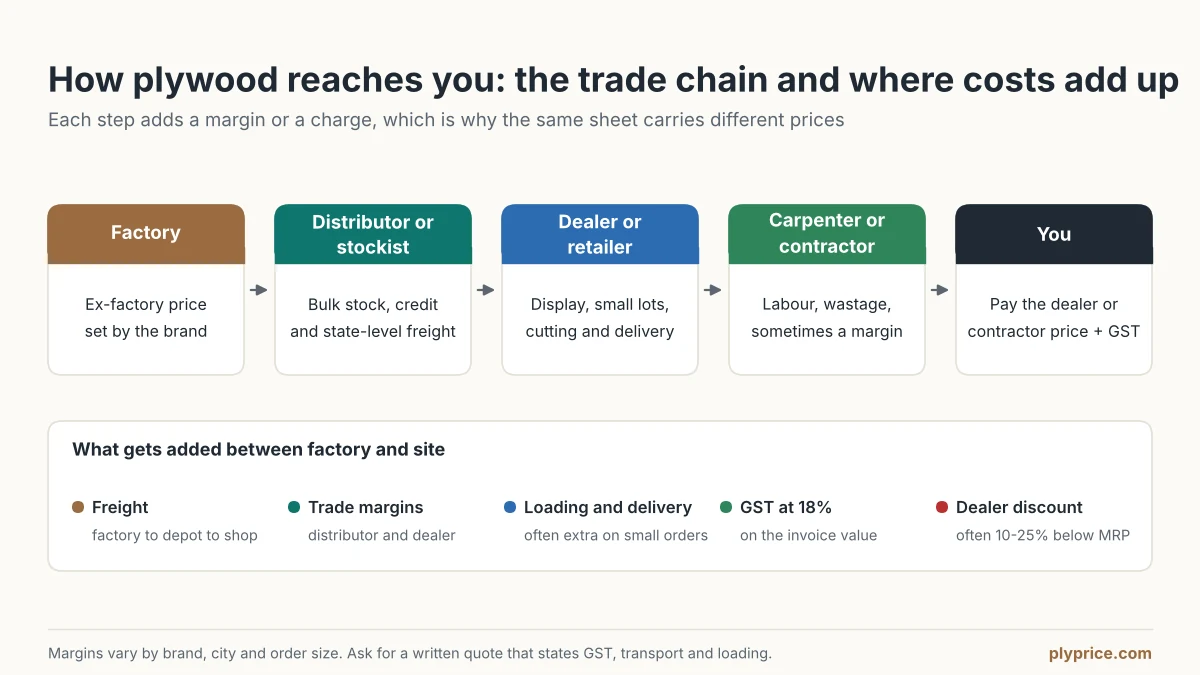
India's federal logistics fragment pricing: Punjab mills serve North at lower freight, but Kerala buyers pay 15-25% more for UP imports. Dealer margins (10-20% retail vs 5-8% wholesale) layer on, with GST at 18% uniform but input credits varying by vendor scale.
Monsoon stockpiling inflates spot rates; post-Diwali demand surges for furniture plywood. Contractors negotiate volume discounts (5-15% off retail), unavailable to homeowners via apps like IndiaMART.
Per Square Foot Rate Calculation: A Practical Framework
Effective pricing blends sheet cost divided by area (32 sq. ft. for 8x4), adjusted for wastage (10-15% in cuts). Formula insight: Total Cost = (Timber 60% + Resin 12% + Veneer 15% + Overhead 13%). Track drivers:
- Base Material: Timber/resin combo sets 70% floor.
- Finishing: Veneer grade overlays 20-30% variance.
- Volume/Location: Dealer negotiations shave 10-20%.
Example scenario: A Bangalore interior designer quotes 18mm BWR poplar with B-face at mid-range; coastal Goa equivalent swaps phenolic for humidity, lifting 25%. Use this to benchmark quotes—reject outliers without cost breakdowns.
| Scenario | Key Drivers | Relative Per Sq. Ft. Impact |
|---|---|---|
| Urban Homeowner (MR 12mm) | Poplar/UF, C-face | Baseline |
| Contractor Shuttering (BWR 12mm) | Eucalyptus/PF, B-face | +25-40% |
| Marine Kitchen (BWP 18mm) | Hardwood/PF, A-face | +50-80% |
Strategic Buying Decisions for Indian Buyers
Contractors prioritize bulk BWR for formwork recyclability, amortizing costs over 10-15 pours. Homeowners weigh lifecycle: cheap MR fails in 2-3 years under AC drips, versus BWP's 10+ year span. Architects integrate via load charts—thicker cores for spans reduce joist needs, netting savings.
Red flags: Unmarked "ISI" stamps signal boondi (substandard); demand test reports. Compare 3-5 quotes factoring transport; apps aid but verify mill origins. In volatile markets, lock Q4 rates for Q1 projects anticipating timber hikes.
For dealers, stocking mid-tier BWR balances turnover; extremes tie capital. Ultimately, informed buyers align specs to use-case—timber resilience for structure, phenolic bonds for wet zones, flawless faces for aesthetics—optimizing value over lowest bid.
Related guides on PlyPrice
Want Plywood Suggestions?
Share a few details and a PlyPrice specialist will suggest suitable brands and connect you to responsive dealers.