How Long Does Plywood Last
What is the lifespan of plywood furniture? We analyze durability of commercial vs. marine grade ply under Indian climatic conditions.
Key Factors Influencing Plywood Durability in Indian Conditions
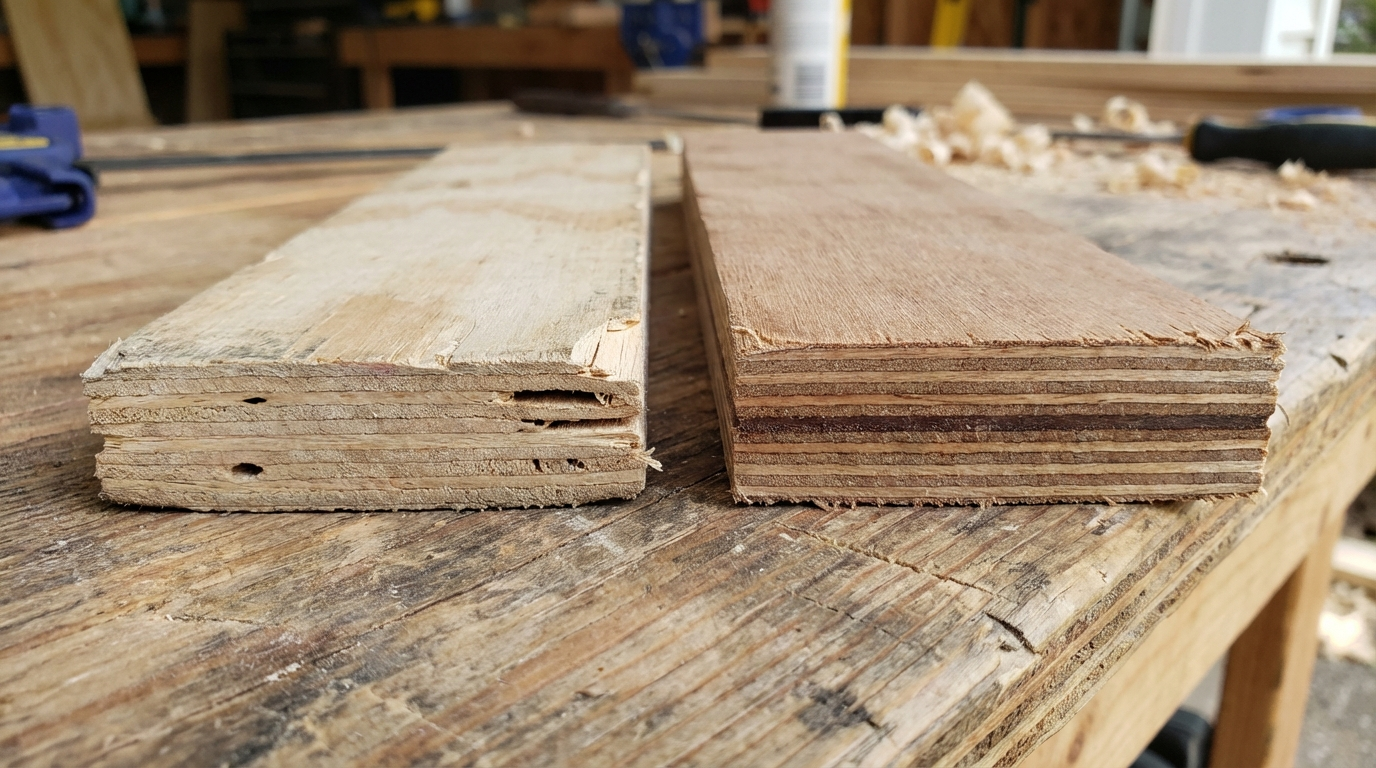
Plywood's longevity hinges on its inherent properties interacting with environmental stressors, usage patterns, and upkeep practices prevalent in India. Unlike uniform lab tests, real-world performance emerges from how sheets withstand humidity spikes during monsoons, termite pressures in tropical regions, and mechanical wear from daily household routines. Homeowners in Mumbai's coastal humidity face delamination risks absent in Rajasthan's arid interiors, while contractors prioritize load-bearing capacity for furniture under variable weights.
Core determinants include glue line quality (MR for interiors, BWP for wet zones), face veneer thickness, core material density, and compliance with BIS standards like IS 303 for MR grades or IS 710 for BWP marine ply. Furniture applications amplify these: wardrobes endure dry storage stresses, but kitchen cabinets battle steam and spills. Expect lifespans to vary by 30-50% based on installation precision—poor edge sealing halves durability in humid belts.
Moisture as the Primary Enemy
India's climate zones dictate plywood vulnerability: coastal areas (60-90% RH year-round) accelerate glue breakdown in non-resistant grades, while inland monsoons (3-6 months of 80%+ RH) test cyclic exposure. MR plywood, with urea-formaldehyde adhesives, swells beyond 12-14% moisture content, leading to warping within 2-5 years in kitchens. BWP marine variants, using phenolic resins, resist boiling water cycles, maintaining integrity up to 25-30% MC without failure.
Structural and Biological Stressors
Termites plague 70% of Indian households per regional surveys; untreated softwood cores succumb faster than hardwood laminates. Load from stacked shelves or heavy drawers induces core shear—thinner 6mm sheets for partitions last shorter than 18mm furniture-grade stock. UV fading on exposed surfaces adds aesthetic decay, irrelevant for concealed uses but critical for modular furniture.
Expected Lifespan of Commercial MR Plywood Furniture
Moisture Resistant (MR) plywood, the workhorse for budget-conscious Indian interiors, suits dry-to-moderate humidity zones like bedrooms and living rooms. Under optimal conditions—sealed edges, ventilated spaces, inland climates—MR furniture pieces like wardrobes or bedsides endure 8-15 years before noticeable delamination or sagging.
In practice, architects specify MR for non-wet areas per IS 303 norms, where it handles 24-hour water soak tests up to 2-3 cycles. However, Indian buyers often repurpose it in semi-wet spots (utility cabinets), slashing lifespan to 4-8 years amid monsoon leaks or cooking vapors. Regional dealer feedback highlights Delhi-NCR installations holding 10+ years, versus Kerala homes showing failures by year 5 without polishing.
Realistic Scenarios for MR Ply Furniture
- Bedroom Wardrobes: 10-15 years with annual termite treatment and humidity below 65%.
- TV Units/Living Room Shelves: 8-12 years; dust accumulation accelerates veneer peel if unsealed.
- Study Tables: 7-10 years under desk lamp heat and occasional spills.
- Challenges in High-Humidity India: Coastal apartments see 40-60% shorter life without acclimatization (stacking sheets 48 hours pre-install).
Why MR Falls Short in Demanding Uses
First-principles breakdown: Urea glue hydrolyzes above 70% RH, causing layer separation. Indian contractors note 20-30% rework rates on MR kitchens within 3 years, prompting shifts to hybrids like HDHMR for marginal gains in density without full waterproofing.
Marine Grade Plywood: Built for Prolonged Exposure
Boiling Water Proof (BWP) marine plywood, governed by IS 710, targets wet-prone furniture like bathrooms, kitchens, and exteriors. Its phenolic glue withstands 72+ hours submersion and 3-hour boils, translating to 20-40 years in furniture under Indian extremes. Interior designers favor it for premium modular setups, where initial cost premium (1.5-2x MR) amortizes over decades.
In Mumbai high-rises or Chennai villas, marine ply cabinets resist steam cycles without bubbling, unlike MR counterparts. Inland users gain overkill protection, but termite-proof variants extend viability in pest-hotspots like Uttar Pradesh villages. Expect aesthetic integrity (no warping) up to 25 years, structural up to 35+ with maintenance.
Performance Benchmarks for Marine Ply Furniture
- Kitchen Cabinets: 25-35 years; handles oil splashes, humidity swings.
- Bathroom Vanities: 20-30 years post-grouting, outperforming laminates in steam.
- Balcony Units: 15-25 years against rain exposure.
- Long-Term Edge: Phenolic bonds resist fungal decay, rare in MR after 10 years.
Trade-Offs in Marine Ply Selection
Denser cores (700+ kg/m³) demand skilled carpentry to avoid screw slippage. Not ideal for lightweight partitions—opt for MR there. Dealers report 10-15% weight increase complicating transport in tier-2 cities.
MR vs Marine Plywood: Detailed Durability Comparison
| Aspect | MR Commercial Plywood | Marine BWP Plywood |
|---|---|---|
| Adhesive Type | Urea-Formaldehyde (interior dry use) | Phenolic (wet-resistant, boil-proof) |
| Moisture Tolerance | 12-14% MC; fails post-monsoon | 25-30% MC; cyclic boil resistant |
| Furniture Lifespan (Dry Areas) | 8-15 years | 20-30 years (overbuilt) |
| Wet Area Lifespan (Kitchens/Bath) | 4-8 years | 20-35 years |
| Termite Resistance | Moderate (needs treatment) | High (dense core + preservatives) |
| Cost Relative to MR | Baseline | 1.5-2.5x higher |
| Best Indian Climate Fit | Inland dry (Delhi, Jaipur) | Coastal/high-humidity (Mumbai, Kochi) |
| ISI Compliance | IS 303 (3 cycles soak) | IS 710 (72hr boil) |
This table distills lab-to-field translations: MR suffices for 70% of Indian homes' dry furniture, but marine prevents 80% of premature failures in wet zones. Contractors weigh total ownership cost—MR's low entry yields higher rework expenses.
Indian Climate Zones and Plywood Performance Mapping
India's diversity demands zonal thinking: Zone I (Himalayan dry) favors MR for cost; Zone IV (coastal humid) mandates marine. Monsoon mapping shows Kerala installations needing BWP for 90% survival past 10 years, versus Punjab MR hitting 15-year marks.
Buyer logic evolves: Homeowners prioritize upfront savings, architects lifecycle costs, dealers stock both per regional demand. Hybrid grades (BWR) bridge gaps, offering 12-20 year spans at 1.2x MR pricing for semi-wet uses like laundry areas.
Case Studies from Contractor Feedback
- Bengaluru Apartments: MR wardrobes last 12 years; marine kitchens 28+ amid IT corridor humidity.
- Hyderabad Villas: Termite hits cut MR to 6 years untreated; marine variants double it.
- Kolkata Flats: Monsoon delam on MR (3-5 years); BWP holds 22 years sealed.
Installation and Maintenance to Maximize Lifespan
Pre-install acclimatization (72 hours in site conditions) equalizes MR moisture to prevent cupping. Edge banding with PVC tapes blocks 50% ingress; silicone sealants suit marine wet joints. Annual checks—polish veneers, vacuum cores—extend life 20-30%.
Termite protocols: Borate sprays pre-lay, metal mesh barriers. Avoid overloading: 18mm min for bottom shelves. Ventilation trumps AC—cross-breezes in Pune homes preserve MR 3 years longer than sealed rooms.
Common Pitfalls in Indian Installs
Skipping BIS stamps risks 40% early failure; dealer-mixed grades confuse specs. DIY edge cuts expose cores, halving wet-zone life. Pros recommend pro-carpentry for marine's rigidity.
Decision Framework for Buyers: Homeowner vs Contractor
Homeowners assess ROI: MR for bedrooms (low risk), marine for kitchens (high regret). Contractors factor project scale—bulk MR bids win tenders, marine specs luxury fits. Architects blend: MR cores with marine faces for zoned durability.
| Buyer Type | Recommended Grade | Key Rationale | Expected Payback |
|---|---|---|---|
| Homeowner (Budget Bedroom Fitout) | MR 12-18mm | Cost-effective for dry use | 10-12 years |
| Contractor (Site Apartments) | MR + Spot Marine | Balances tenders and callbacks | 8-15 years avg |
| Interior Designer (Premium Kitchen) | Full Marine BWP | Client retention via zero rework | 25+ years |
When to Upgrade Beyond Standard Plywood
For ultra-longevity, consider HDHMR (high-density, 15-25 years semi-wet) or blockboard hybrids. Avoid shuttering ply indoors—its recycled core delams fast. Test samples: soak 24 hours; no swell signals quality.
Final Buyer Insights on Plywood Longevity
Plywood lifespan isn't fixed—it's a function of grade-climate-use interplay. MR delivers reliable 8-15 years for most Indian furniture, marine extends to 20-35 in challenges. Verify ISI marks, match to site RH, invest in seals: these steps turn averages into outliers. Dealers vary regionally—coastal premiums reflect demand; inland bargains abound.
Want Plywood Suggestions?
Share a few details and a PlyPrice specialist will suggest suitable brands and connect you to responsive dealers.