7 Plywood Buying Mistakes: Grades, Core Gaps, Thickness and Dealer Claims
The costliest plywood buying mistakes are using the wrong grade for the room's moisture, missing core gaps and voids, and accepting nominal thickness without measuring. Chasing the lowest price, skipping veneer checks and trusting dealer claims blindly complete the seven.
Last updated: . Grades and standards checked against current BIS standards.
Why Plywood Choices Go Wrong in Indian Homes and Projects
In India's diverse climates—from humid coastal regions to arid interiors—plywood serves as the backbone for furniture, cabinets, wardrobes, and structural elements. Yet, hasty decisions at local dealers or wholesale markets often lead to warping, delamination, or premature failure. These issues stem from overlooked technical details rather than bad luck. Homeowners chasing affordability, contractors prioritizing speed, and designers specifying aesthetics without durability checks all fall into similar traps. Understanding these pitfalls through practical lenses helps extend product life by years, avoiding rework costs that can exceed the initial outlay.
The High Stakes of Plywood Failure
Consider a typical Mumbai apartment renovation: plywood cabinets exposed to monsoon humidity swell and peel within months if underspecified. In contrast, a Delhi contractor's site shuttering collapses under rain due to subpar moisture resistance. Such failures disrupt timelines, inflate budgets by 20-50% on replacements, and erode trust. Root causes trace back to mismatched grades, hidden defects, and unverified claims—issues amplified by India's decentralized supply chain, where regional mills vary in quality control.
Decision Factors Beyond Surface Appeal
- Application demands: Interior furniture vs. kitchen wet areas vs. outdoor partitioning.
- Load-bearing needs: Shelves holding heavy appliances vs. decorative panels.
- Environmental exposure: High-humidity Kerala vs. dry Rajasthan conditions.
Buyers must weigh these against core material science: veneer layers bonded under pressure, glue lines dictating strength, and face finishes influencing finish quality.
Mistake 1: Disregarding Plywood Grades for Your Specific Use
Plywood grades—MR (Moisture Resistant), BWR (Boiling Water Resistant), and BWP (Boiling Water Proof)—define glue and performance limits, yet many buyers default to the cheapest MR grade for all applications. MR suits dry interiors like bedrooms but fails in kitchens or bathrooms where steam and spills penetrate glue lines, causing bubbling and layer separation.
Grade Breakdown and Application Fit
| Grade | Glue Type & Resistance | Ideal Indian Uses | Risk if Misapplied |
|---|---|---|---|
| MR | Urea-formaldehyde; short-term moisture | Bedroom wardrobes, dry false ceilings | Delamination in 6-12 months in humid zones |
| BWR | Phenol-formaldehyde; repeated boiling | Kitchen cabinets, bathrooms | Moderate warping under prolonged wet exposure |
| BWP | Advanced phenolic; marine-grade boiling | Exterior doors, shuttering, coastal areas | Overkill for dry interiors (higher upfront cost) |
How to Avoid: Match Grade to Exposure
Assess your project's micro-climate: In monsoon-heavy Gujarat, opt for BWR/BWP for lower cabinets. Contractors should specify grades in bills of quantities (BOQ) to prevent substitutions. Test by asking dealers for ISI-marked samples—genuine certification ensures glue meets IS:303 standards. Homeowners: Probe with "Will this handle Kerala humidity without warping?" and insist on lab-tested proofs if bulk buying.
Mistake 2: Missing Core Gaps and Voids That Compromise Strength
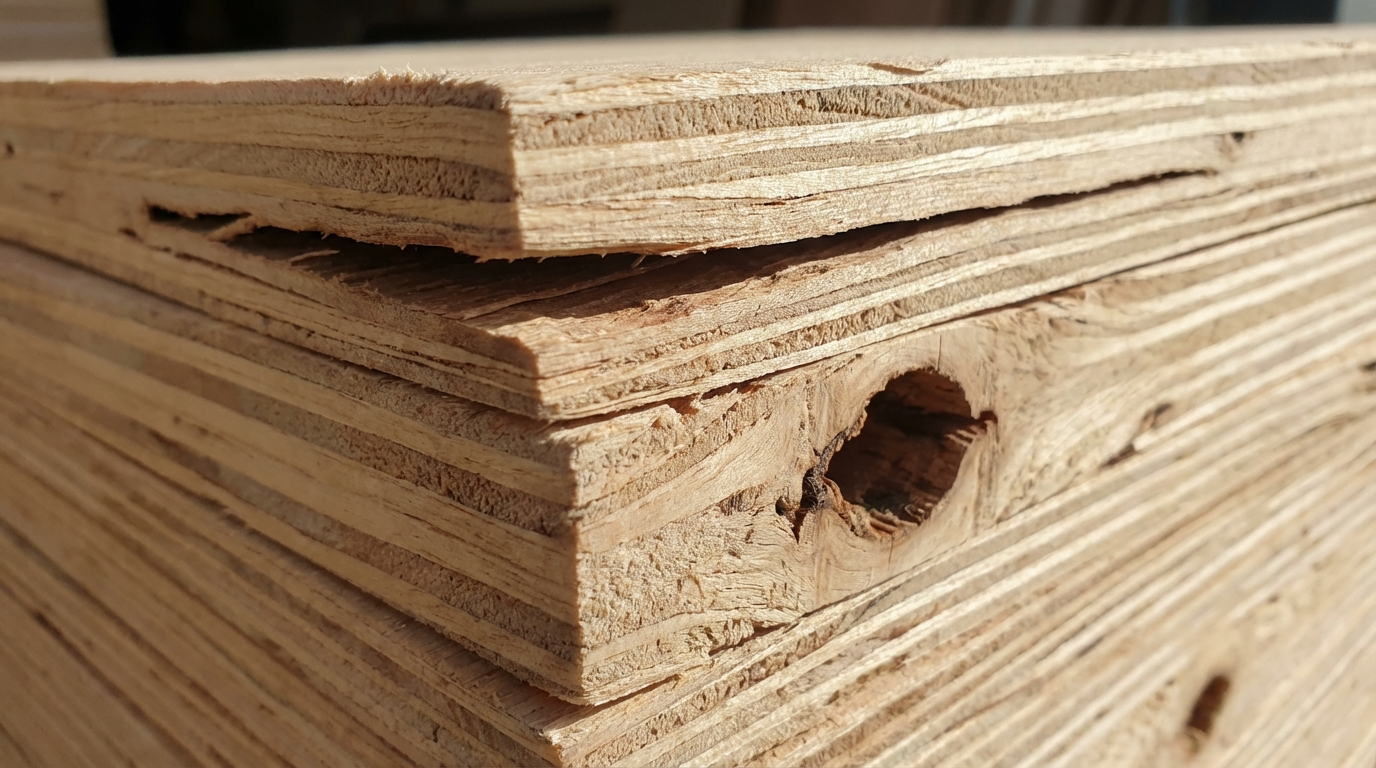
The plywood core—typically 5-13mm thick layers of softwood or hardwood strips—forms 70-80% of the board's volume. Gaps or voids here act as weak points, leading to sagging shelves or cracking under screws. In India, machine-pressed cores from northern mills often hide telescope-like voids from uneven peeling, invisible until furniture assembly reveals flexing panels.
Spotting Core Defects on Site
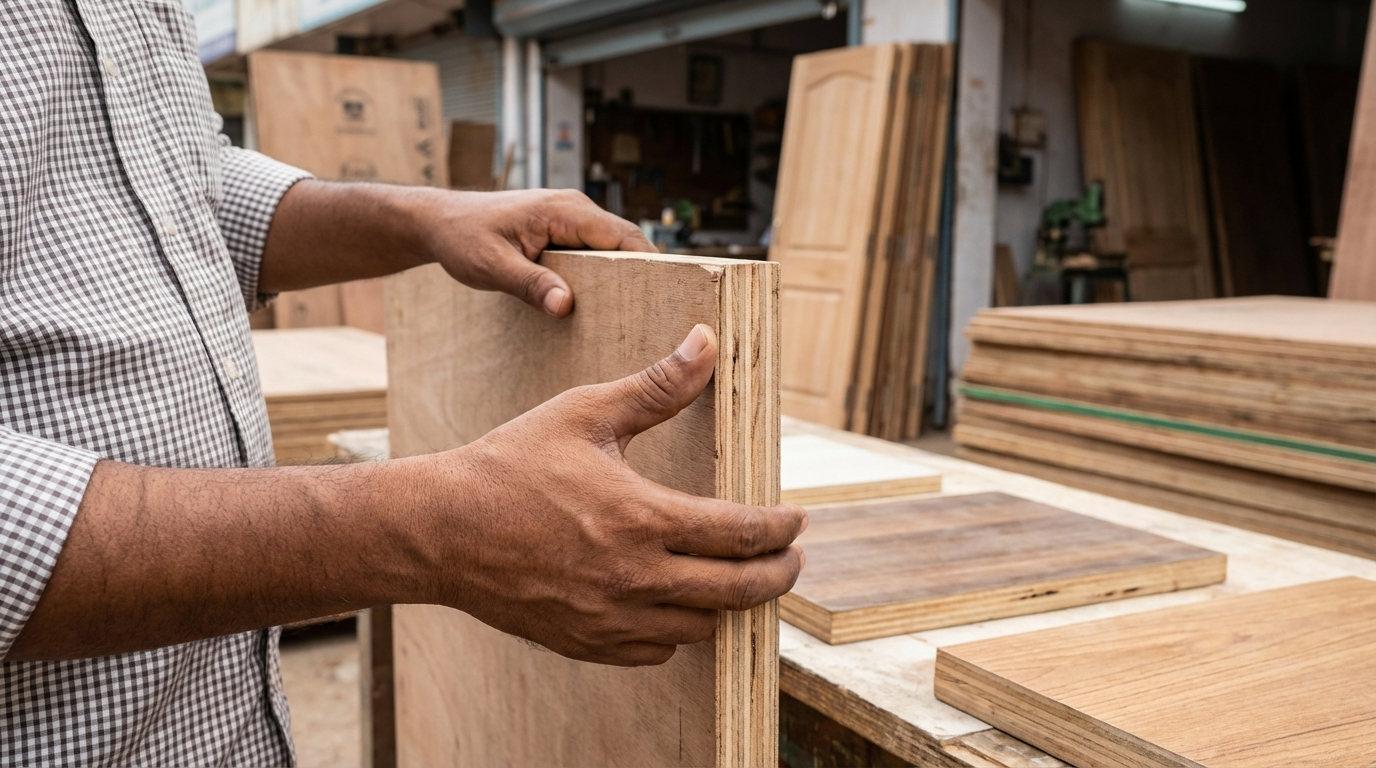
Stack boards edge-on under light: Uniform color without black lines or cavities signals solid cores. Tap edges—hollow sounds indicate air pockets. For blockboard alternatives, ensure core blocks are finger-jointed without gaps exceeding 2mm.
Avoidance Strategy for Buyers
Insist on cross-section samples at dealers. Architects: Mandate ultrasound or X-ray reports for premium projects. In high-volume contractor buys from Punjab wholesalers, negotiate core density specs (above 500kg/m³ for load-bearing). Regional tip: Southern mills excel in denser rubberwood cores suited to humid Tamil Nadu builds.
Mistake 3: Accepting Nominal Thickness Without Measurement
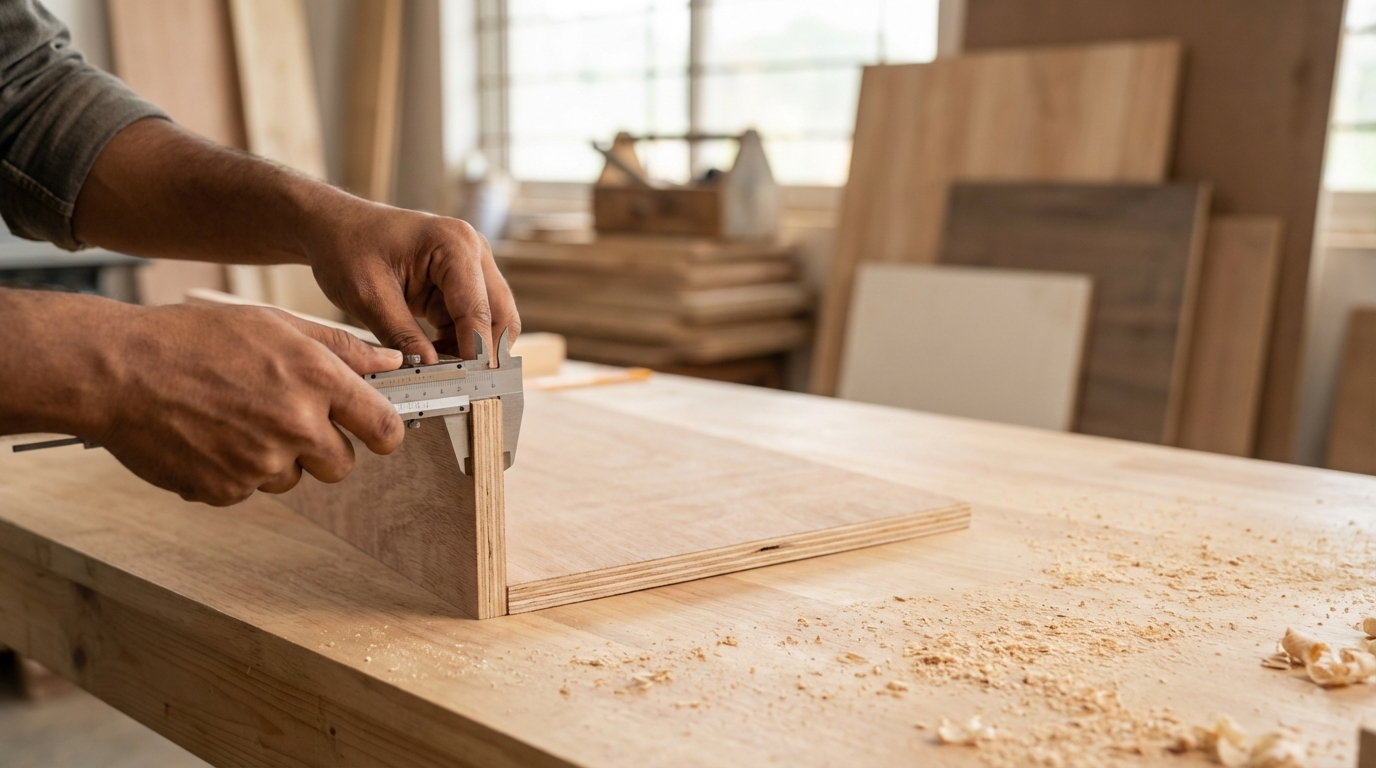
Sellers quote "18mm" plywood, but actual thickness might measure 16-17mm due to sanding or compression during pressing. This discrepancy reduces screw-holding strength by 10-20%, causing wardrobe sides to pull out under weight. Indian standards (IS:303 for MR, BWR and BWP; IS:710 for marine) allow minor tolerances, but dealer padding inflates volumes while skimping material.
Thickness Reality Check Table
| Nominal Thickness | Expected Actual Range | Impact of Undersizing | Measurement Tip |
|---|---|---|---|
| 6mm | 5.4-5.8mm | Weak for partitions | Use digital caliper at 3 points |
| 12mm | 11.2-11.8mm | Sagging shelves | Check center vs. edges |
| 18mm | 17-17.8mm | Door/frame failures | Average multiple boards |
Pro Tip: Verify Before Loading
Carry a vernier caliper (₹500 tool) to wholesale yards in Delhi's Bhagirath Palace or Chennai markets. Reject lots below 95% of nominal. Interior designers: Build thickness audits into site inspections to hold fabricators accountable.
Mistake 4: Chasing the Lowest Price Without Quality Correlation
Price wars in India's plywood bazaars—ranging from economy MR at lower ends to premium BWP—tempt bulk buyers. However, rock-bottom rates often signal thin veneers, low-density cores, or non-compliant glues emitting formaldehyde. A 20% cheaper board might fail twice as fast, negating savings through replacements.
Price Drivers and Red Flags
- Core wood: Poplar (cheaper, lighter) vs. hardwood (denser, stable).
- Veneer plies: 5-ply economy vs. 9-ply premium for even load distribution.
- Regional variance: Kerala teak-faced boards cost more than UP eucalyptus.
Smart Cost-Benefit Approach
Compare per sqm per mm thickness adjusted for grade. For a 100-sheet contractor order, factor lifecycle: BWR at mid-range outlasts cheap MR by 3-5 years in humid Pune sites. Homeowners: Allocate 10-15% budget premium for kitchens to avoid ₹50,000+ rework.
Mistake 5: Underestimating Moisture and Climate Mismatch
India's 80% humidity spikes during monsoons overwhelm MR grades, causing core swelling up to 15%. Coastal Andhra Pradesh buyers ignore this, fitting interior plywood in utility areas, only to face peeling laminates.
Climate-Zone Matching
Inland dry (Rajasthan): MR suffices with sealing.
Humid coastal (Goa): BWP mandatory for bases.
Temperate hills (Shimla): BWR for temperature swings.
Prevention: Edge Sealing and Storage
Apply PU sealant on cut edges immediately. Store sheets flat, elevated off floors in godowns. Test resistance: Soak sample edge in water for 24 hours—no swelling means reliable.
Mistake 6: Ignoring Face Veneer Quality and Finish Prep
Attractive face veneers lure buyers, but thin (under 1mm), knotty, or poorly sanded surfaces lead to veneer lifting post-lamination or painting. India's hot-press processes sometimes trap air bubbles, visible as telegraphing under finishes.
Veneer Inspection Checklist
- Uniform grain without patches or color mismatches.
- Smooth 180-grit sanding—no scratches for paint adhesion.
- Edge banding quality: Flush, glue-tight.
Avoidance for Fabricators
Request "AA grade" faces for visible panels. Designers: Specify veneer thickness in drawings. Dealers often swap grades—counter by numbering sheets on arrival.
Mistake 7: Blind Trust in Dealer Claims Without Independent Checks
Local timber merchants push "ISI certified" without proof, or unbranded "factory seconds" as bargains. Without verification, you risk non-compliant boards failing BIS norms for glue shear strength or formaldehyde emission (E1 and E2 classes).
Verification Toolkit
- Scan ISI hologram and license number online via BIS portal.
- Smell test: Strong chemical odor flags high-emission glues.
- Third-party lab reports for tensile strength (>500N/mm²).
Empowering Contractor Negotiations
In bulk from Gujarat hubs, demand pre-shipment inspections. Homeowners: Cross-shop 2-3 dealers, comparing warranties (1-5 years realistic). Architects: Include penalty clauses for substandard deliveries.
Pre-Purchase Checklist: Your Plywood Audit Framework
| Check | Method | Pass Criteria |
|---|---|---|
| Grade Match | Review label vs. use | ISI-marked for exposure |
| Core Integrity | Edge light/tap test | No voids >1mm |
| Thickness | Calipers at 3 spots | ≥95% nominal |
| Moisture Test | Sample soak | <8% swelling |
| Face Quality | Visual/touch | Smooth, uniform |
Long-Term Ownership: Maintenance to Maximize Lifespan
Post-installation, avoid direct water hits and use dehumidifiers in humid zones. Annual inspections catch early delamination. For contractors, document batches for warranty claims. This framework shifts buying from gamble to calculated investment, aligning with India's evolving standards for sustainable builds.
Related guides on PlyPrice
Want Plywood Suggestions?
Share a few details and a PlyPrice specialist will suggest suitable brands and connect you to responsive dealers.