Budget Plywood Buying Guide: Choosing Commercial MR Ply That Lasts
Budget plywood usually means commercial MR grade sheets priced 20-40% below premium BWR or BWP, and it works well for dry interior furniture, partitions and wardrobes. Skip it for kitchens and bathrooms, and check the ISI mark, core gaps and glue lines at the dealer yard.
Last updated: . Grades and standards checked against current BIS standards.
Defining Budget Plywood: Realistic Expectations for Indian Buyers
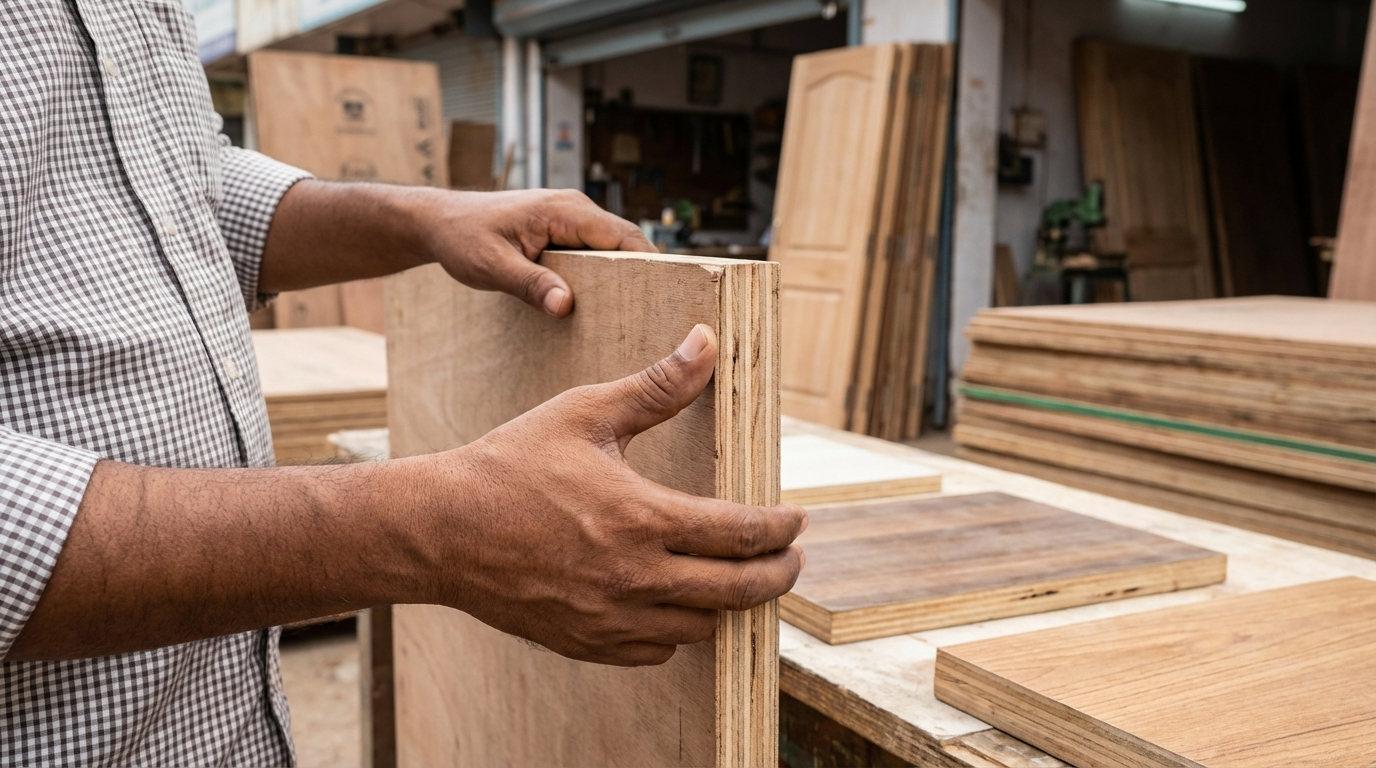
In India's diverse construction landscape, where monsoon humidity, termite risks, and varying regional budgets shape decisions, budget plywood refers to commercial-grade options priced 20-40% lower than premium BWR or BWP varieties. These sheets prioritize essential structural integrity for interior applications like furniture, partitioning, and cabinetry, without the reinforced waterproofing needed for kitchens or bathrooms.
From a first-principles view, plywood's value stems from its layered construction: face veneers for finish, core veneers for load-bearing, and adhesives for bonding. Budget variants use urea-formaldehyde (MR) glue, sufficient for dry indoor use, but they demand scrutiny to avoid delamination from poor core quality or uneven glue spread.
Homeowners in tier-2 cities like Jaipur or Coimbatore often opt for these to furnish 2-3BHK apartments under ₹10-15 lakh total interiors budget, while contractors value them for quick-turnaround projects where longevity beyond 5-7 years isn't critical.
Budget Plywood vs. Premium: A Layered Breakdown
Premium plywood invests in phenolic resins (BWR/BWP) for moisture resistance and denser cores from imported hardwood, justifying 50-100% higher costs. Budget plywood, conversely, relies on tropical hardwoods like poplar or eucalyptus mixes, with thinner veneers (1.5-2mm vs. 2.5mm+ in premiums).
- Strength Trade-off: Core density around 500-600 kg/m³ supports 50-80 kg/sq.m uniformly distributed loads—adequate for wardrobes but not heavy shelving without bracing.
- Durability Limit: Handles 20-25% ambient humidity swings common in Indian summers; beyond that, edges may swell without edge-banding.
- Finish Quality: Acceptable for paint or laminate overlay, but raw faces show more knots or patches.
Core Strength Essentials: What Can't Be Skipped on a Tight Budget
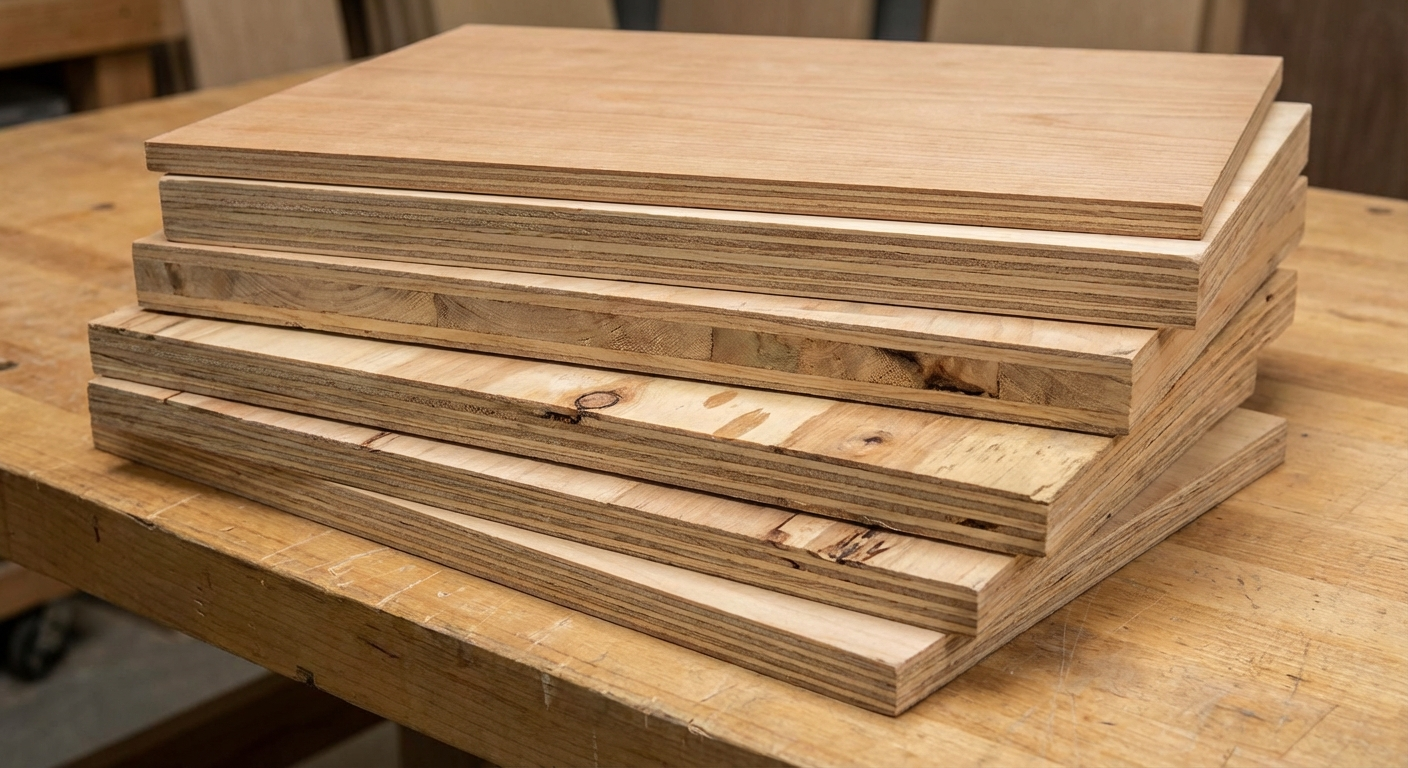
Strength originates from uniform glue penetration across 7-13 plies, preventing shear failure under weight. In budget sheets, weak cores from recycled wood or uneven pressing lead to sagging— a common failure in poorly made almirahs.
Indian contractors report that 30-40% of low-end failures trace to inadequate core glue lines, visible as gaps when nails are driven. Prioritize sheets with consistent 5-6mm core thickness in 18mm variants, ensuring they pass a simple screw test: insert 2-inch screws at 6-inch intervals; they should hold without pull-out.
Load-Bearing Logic for Everyday Uses
| Application | Recommended Thickness | Max Span (without support) | Load Capacity (UDL) |
|---|---|---|---|
| Wardrobe carcass | 18mm | 900mm | 60kg/m |
| Kitchen shutters (dry zones) | 16-18mm | 750mm | 50kg/m |
| Partition panels | 12mm | 1200mm | 30kg/m |
| Bed base slats | 12mm | 400mm | 80kg/point |
These figures assume proper fixing with 40-50mm screws at edges and centers. In humid belts like Kerala or Mumbai suburbs, add vertical supports every 600mm to counter warp.
Durability Drivers: Basic Protection Without Premium Costs
Budget plywood's longevity hinges on glue boil-proofing (minimal for MR) and veneer quality. Expect 5-8 years in controlled interiors vs. 2-3 years if exposed to steam or spills.
Key metric: Formaldehyde emission class—E1 or better reduces health risks in bedrooms. Indian norms emphasize this via voluntary BIS testing, though enforcement varies by mill.
Moisture Management in Indian Climates
Coastal buyers face 70-90% RH spikes; budget sheets survive with laminate sealing and ventilation gaps. Inland dry zones like Delhi allow raw use post-priming. Causal factor: Poplar cores absorb less than mixed agro-waste, but unchecked termites degrade any wood—pair with oil-based primers.
Selecting Commercial MR Plywood: The Budget Workhorse
MR (Moisture Resistant) commercial plywood dominates 60-70% of budget segment, certified for interiors per IS:303 standards. It withstands occasional wiping but not submersion.
Alternatives like HDHMR boards offer similar pricing with higher density (650+ kg/m³) from engineered fibers, ideal for modular furniture where machinability matters. However, pure plywood edges out in screw-holding for traditional carpentry.
ISI Mark and Boiling Water Resistance Tests Explained
- ISI-CM/L (Commercial MR): Must pass a ply-adhesion test after three cycles of a 3-hour soak in 60°C water and 8-hour drying, the core test for budget viability.
- Mycological Test: Fungal resistance via lab exposure; look for passing certificates at dealers.
- Non-Structural Use: Not for load-bearing beams; reinforce with frames.
Dealers often stock unbranded "mill plywood" at 15-25% less, but verify lab reports—regional mills in Punjab or Gujarat vary in consistency.
Hands-On Quality Inspection: Dealer Yard Checklist
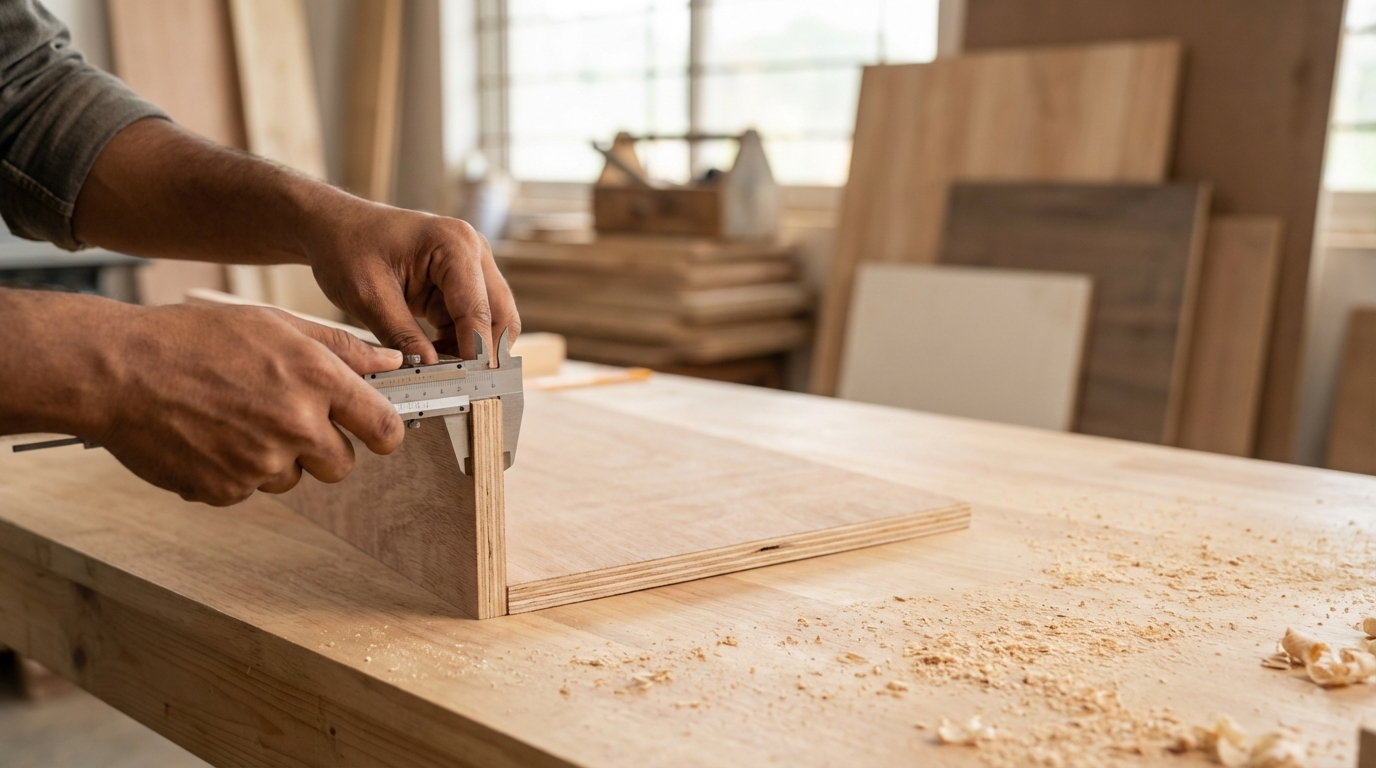
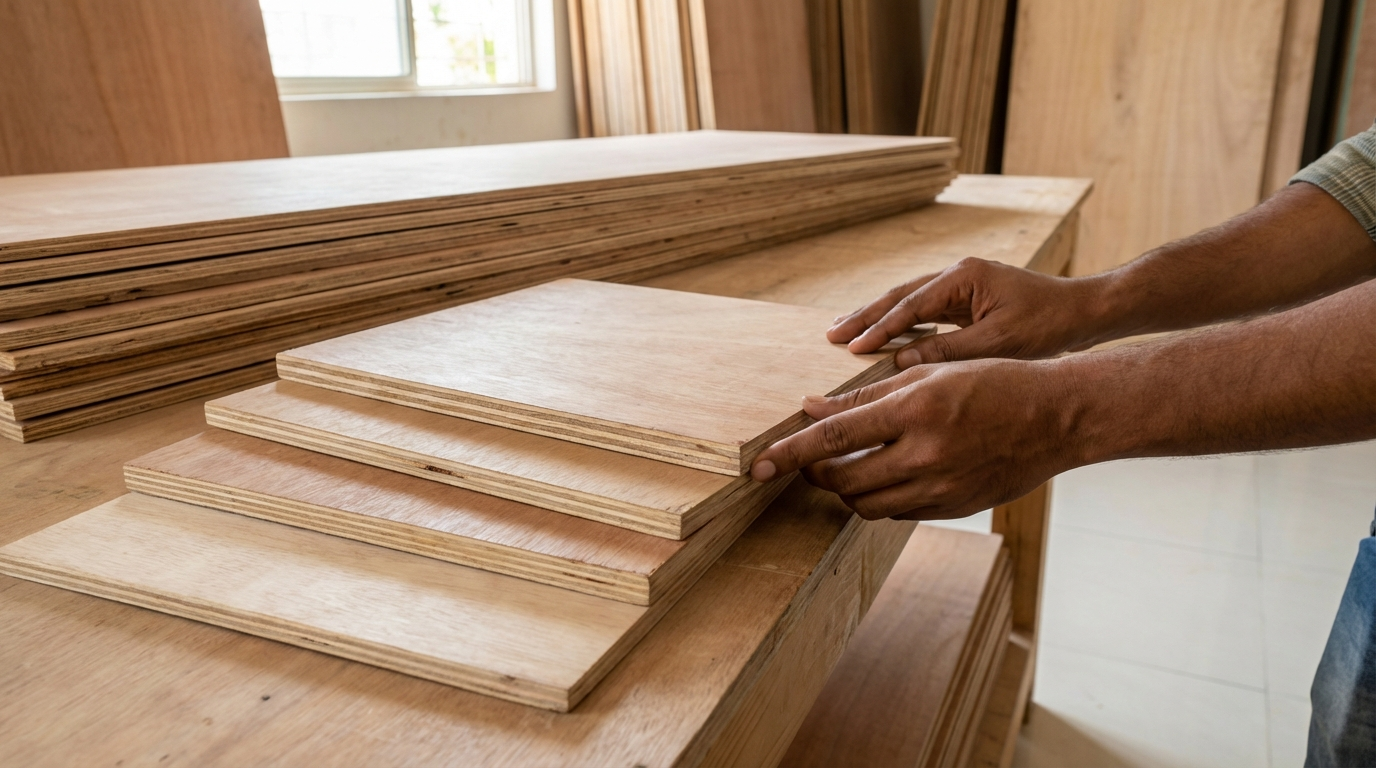
Visual and tactile checks outperform labels. Start at the stack: uniform thickness (caliper gauge or edge comparison) signals pressing quality.
- Face Veneers: Smooth, minimal patches; tap for hollow sounds indicating voids.
- Core Inspection: Plane a sample edge—count plies (min 9 for 18mm), check glue lines (no white residue).
- Edge Straightness: <2mm bow over 8ft length prevents fitting issues.
- Weight Test: Heavier sheets (38-42kg for 8x4x18mm) denote denser wood.
- Smell Check: Mild glue odor; pungent means excess formaldehyde.
Red Flags to Walk Away From
- Bubble marks or delams on edges.
- Oversized knots >25mm.
- Thickness variation >0.5mm across sheet.
- No traceability (mill name, batch).
Thickness Selection: Matching Use to Sheet Size
Budget logic favors 12-18mm range: thinner saves 20-30% cost but risks deflection; thicker adds weight/cost without proportional gains.
For apartments: 18mm for carcasses (stability), 12mm for backs/doors (economy). Contractors in high-rise projects prefer 16mm hybrid for balance.
| Thickness | Typical Cost Premium | Best For | India Regional Note |
|---|---|---|---|
| 6-9mm | Baseline | Shuttering, formwork | North India labor-intensive sites |
| 12mm | +15-20% | Partitions, shelves | Universal interiors |
| 16-18mm | +30-40% | Furniture frames | South India humid zones |
Price Dynamics: Why Costs Vary Across India
No fixed rupees per sheet—ranges from ₹50-90/sq.ft depending on wood sourcing, mill efficiency, and logistics. Poplar-heavy northern mills undercut southern teak-mixes by 10-20%.
Cost drivers:
- Wood Origin: Imported softwood boosts density but raises price 15%.
- Dealer Margins: Retail 25-35% vs. wholesale 10-15%; bulk >50 sheets negotiates 5-10% off.
- Regional Factors: Transport from UP mills adds ₹5-10/sq.ft in East India; local Kerala mills premium for quality.
- Volume & Timing: Post-monsoon dips 8-12%; branded adds 20% over generic.
Architects advise calculating per sq.m loaded cost: plywood + labor + fittings, targeting <₹150/sq.ft for budget interiors.
Dealer vs. Retail vs. Online: Sourcing Strategy
Local dealers offer inspection advantage; online risks misgrading. Contractors leverage mill-direct for 20% savings on 100+ sheets.
Application-Specific Buying Logic
Furniture and Wardrobes
Opt 18mm MR with cross-band plies for twist resistance. Edge-band immediately to seal ends.
Partitions and False Ceilings
12mm suffices; gypsum alternatives cheaper but less rigid.
Modular Kitchens (Dry Areas)
HDHMR edges plywood for machinability; test screw grip pre-order.
Common Pitfalls: Lessons from Failed Budget Projects
Overlooking core voids leads to 20-30% rework. Skipping priming causes 1-2mm swelling in first monsoon. Buying "imported" labels without density checks wastes premiums.
Pro tip: Sample one sheet first—machine it to verify.
Enhancing Budget Plywood Performance
Post-purchase: 2-coat primer + laminate/PU finish extends life 2x. Ventilation in wardrobes prevents moisture trap. Termite oil annually in endemic areas.
Hybrid Approaches for Better Value
Mix with blockboard cores for heavy loads or MDF inserts for flush doors—saves 15% vs. all-premium.
Final Decision Framework: Is Budget Plywood Right for You?
Yes if: Interiors <₹20 lakh, dry use, 5+ year horizon. No if: High-moisture, heirloom pieces, or structural roles.
Empower choices with this matrix:
| Priority | Budget Pick | Upgrade Trigger |
|---|---|---|
| Strength | ISI MR 18mm | >100kg loads |
| Durability | Sealed edges | Wet areas |
| Cost | Dealer bulk | Small qty |
This guide equips you to source plywood that delivers 80% performance at 60% cost—core to smart Indian builds.
Related guides on PlyPrice
Want Plywood Suggestions?
Share a few details and a PlyPrice specialist will suggest suitable brands and connect you to responsive dealers.