Best Plywood for TV Unit: Grade, Thickness and Finish for Heavy TVs
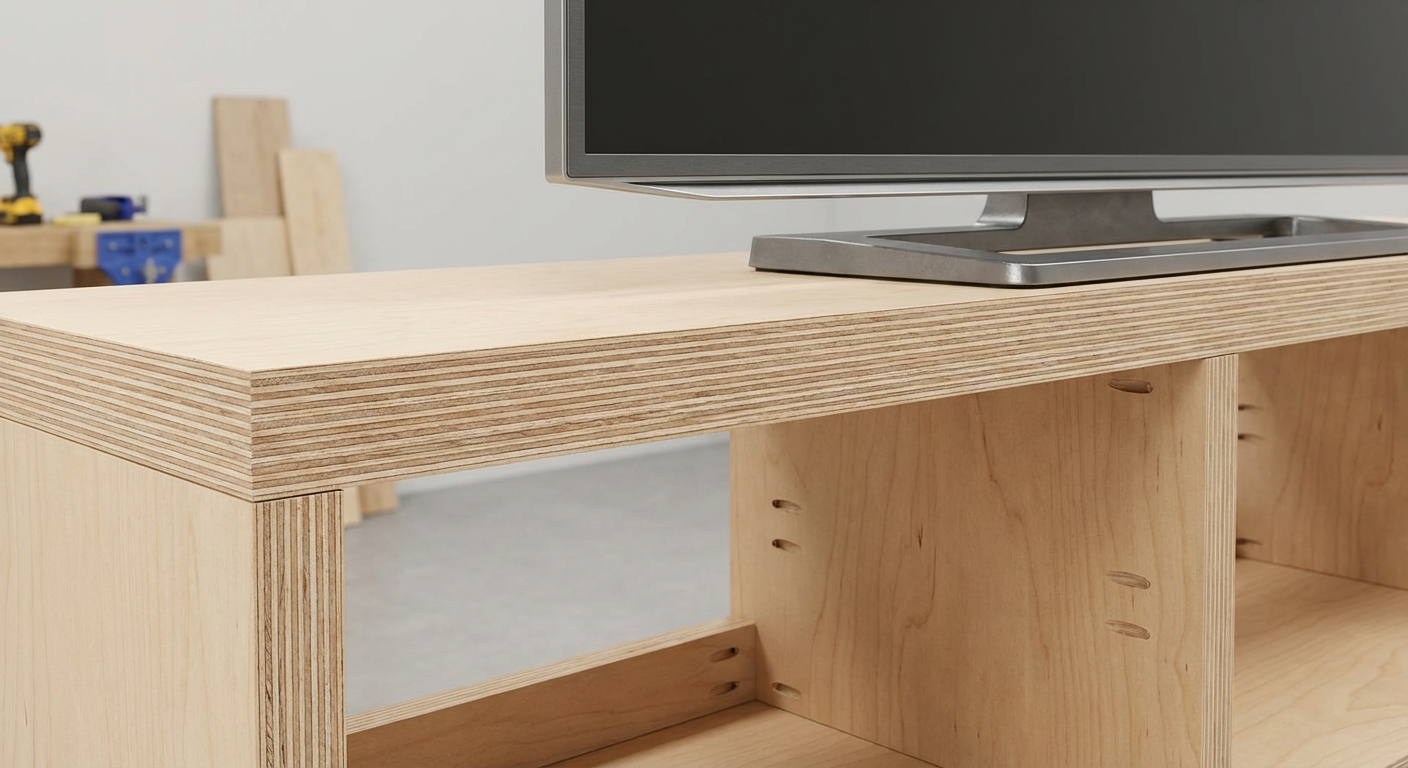
Pick a dense, ISI-marked plywood with thickness chosen for the span, because modern TVs weigh 20-50 kg and the unit also carries soundbars, set-top boxes and decor. Then finish it in laminate or veneer to suit the room's humidity and the look you want.
Last updated: . Grades and standards checked against current BIS standards.
TV Unit Design Essentials in Indian Interiors
TV units in Indian homes serve as focal points in living rooms, blending functionality with aesthetics. They must accommodate modern flat-screen TVs weighing 20-50 kg or more, support shelves for soundbars, set-top boxes, and decor, while harmonizing with modular furniture trends. Homeowners prioritize units that withstand daily use amid varying humidity levels, from Mumbai's coastal moisture to Delhi's dry winters. Interior designers seek plywood that enables clean lines, open shelving, and seamless integration with laminates or veneers for a premium look without sagging or warping over time.
Load Distribution Challenges
Heavy TVs mounted or placed centrally demand plywood shelves with even load spread. In wall-mounted designs, cantilevered sections face torque stress. Indian construction often involves carpenter-fabricated units onsite, where plywood quality directly impacts longevity. Poor choices lead to drooping shelves within months, especially under air-conditioned drying followed by monsoon re-humidification cycles.
Aesthetic Demands for Modern TV Units
Contemporary designs favor floating shelves, asymmetrical layouts, and textured finishes. Plywood must accept adhesives for laminates (1.5-2mm thick) or veneers (0.6-1.2mm) without bubbling or delamination. Neutral tones like white oak veneer or high-gloss laminates are popular, requiring smooth, defect-free surfaces.
Load-Bearing Criteria for TV Units
Selecting plywood starts with verifying its ability to handle concentrated loads from TVs. A 55-inch OLED TV can exceed 30 kg; add speakers and remotes for 40-60 kg per shelf. Indian Standards (IS:303 for MR, BWR and BWP grades; IS:710 for marine) outline screw-holding strength and modulus of elasticity, but practical tests matter more for TV units.
Minimum Strength Thresholds
- Sag resistance: Less than 2mm deflection under 50 kg central load over 1m span.
- Screw withdrawal: Minimum 200-300 N for M6 screws in laminates.
- Edge banding hold: Critical for exposed TV unit edges against impacts from cleaning.
Testing Load Capacity in Practice
Carpenters in India often perform a simple deflection test: load a 600mm span sample with 20 kg weights. Superior plywood recovers fully without permanent bend. For heavy OLED/QLED models, opt for options exceeding 100 kg/m² uniform load ratings.
Plywood Grades Optimized for TV Units
Not all plywood suits TV units; focus on interior-grade boards balancing strength, machinability, and finish compatibility. MR (Moisture Resistant) dominates budget modular units, but BWR (Boiling Water Resistant) edges out for longevity in humid zones like Kerala or Chennai.
| Grade | Core Composition | Load Suitability | Finish Compatibility | Best Use Case |
|---|---|---|---|---|
| MR (IS:303) | Hardwood core, urea glue | Moderate (up to 30 kg shelf) | Good for laminates; fair veneers | Budget TV units in dry interiors |
| BWR (IS 303) | Mixed hardwood, PF resin | High (40-60 kg shelf) | Excellent for both; resists glue failure | Humid climates, heavy TVs |
| BWP (IS:303) or Marine (IS:710) | Hardwood, full PF glue | Very High (60+ kg shelf) | Superior; marine-grade durability | Premium units, coastal homes |
| HDHMR | Engineered fibers, moisture-resistant resin | High (uniform density) | Best for intricate laminates | Modern minimalist designs |
BWP offers overkill for most TV units unless in high-moisture areas, where it prevents core swelling. HDHMR provides consistent density (650-750 kg/m³), ideal for precision CNC routing in designer units.
Thickness Recommendations for Structural Integrity
TV unit shelves typically span 300-900mm; thickness dictates deflection. Thinner boards (12mm) suffice for light decor shelves, but TV platforms need 18-25mm for zero sag.
Span vs Thickness Guide
| Span Length | 12mm (Light Load) | 18mm (Medium Load) | 25mm (Heavy TV) |
|---|---|---|---|
| 300-500mm | Suitable (<20kg) | Optimal | Overkill |
| 500-700mm | Risky (sag likely) | Suitable (<40kg) | Optimal |
| 700-900mm | Not recommended | Risky | Suitable (<60kg) |
For wall-hung units, reinforce with battens or L-brackets. In Indian carpentry, 18mm BWR is the sweet spot for 90% of homes, balancing weight and cost.
Finish Compatibility: Laminates and Veneers
TV units shine with finishes that mask plywood grain while enhancing durability. Laminates (HPL) demand strong glue adhesion; veneers require flat, sandable faces.
Laminate Application on Plywood
Use PU adhesives for BWR/HDHMR; apply 180-200g/m². Pre-press at 100°C prevents telegraphing (core texture showing through). Matte or textured laminates (common in India) hide minor face defects better than gloss.
Veneer Suitability
Veneers excel on defect-free faces (A/B grade). Teak or sheesham veneers add warmth to TV units. HDHMR veneers exceptionally due to uniform density, avoiding pin knots that plague natural plywood.
Humidity Impact on Finishes
In 70-90% RH Indian monsoons, MR grades risk veneer lift-off. BWR/BWP maintain bond integrity, crucial for floating shelf designs where edges peel first.
Regional Variations in India
Plywood selection varies by climate and sourcing. North India (Delhi-NCR) favors MR for cost; South (Bengaluru) leans BWR for humidity. Coastal Gujarat opts BWP despite premium, as swelling ruins aesthetics.
Dealer Sourcing Logic
- Check BIS mark and test certificate for glue emission (BIS class E1 for indoor air quality; E0 is only a brand label).
- Inspect core: Avoid finger-jointed softwood; prefer full-length hardwood plies.
- Thickness tolerance: ±0.5mm max for precise laminations.
Cost Drivers and Value Assessment
Plywood for TV units ranges from economy to premium based on grade and origin. MR starts lower, but factor lifecycle: cheaper boards replace sooner. BWR/HDHMR mid-range offers best value for 5-10 year units.
| Option | Relative Cost (per sqm, 18mm) | Longevity Expectation | Value for TV Units |
|---|---|---|---|
| MR Plywood | Baseline | 2-4 years | Budget rentals |
| BWR Plywood | 20-40% higher | 5-8 years | Family homes |
| HDHMR | 30-50% higher | 7-10 years | Designer units |
| BWP Plywood | 50-80% higher | 10+ years | High-end/coastal |
Regional dealer markups (10-25%) and transport add variance; bulk buys from mills reduce costs.
Step-by-Step Selection Process
- Assess load: Weigh TV + accessories; calculate span.
- Climate check: MR for dry, BWR+ for humid.
- Design review: Veneer needs A-grade faces; laminates tolerate B-grade.
- Sample test: Buy 1x4ft piece; load-test and finish trial.
- Source verified: Prefer mills with ISI, avoid roadside unknowns.
- Architect/carpenter consult: Match to overall modular system.
Alternatives to Traditional Plywood
MDF suits painted units but warps under load. Particleboard fails heavy TVs. HDHMR bridges gap with superior screw hold (25-30% better than MDF). For eco-conscious buyers, FSC-certified options emerge, though pricier.
Pitfalls in TV Unit Plywood Choices
- Overlooking core voids: Tap test reveals hollows causing laminate cracks.
- Thin shelves without supports: Leads to warranty claims on carpenters.
- Ignoring emission grades: Formaldehyde off-gassing affects family health.
- Budget over strength: Initial savings vs. redo costs (2-3x higher).
Maintenance for Longevity
Dust with microfiber; avoid direct water. Annual PU sealant on edges in humid areas prevents moisture ingress. Proper ventilation under AC prevents drying cracks.
Related guides on PlyPrice
Want Plywood Suggestions?
Share a few details and a PlyPrice specialist will suggest suitable brands and connect you to responsive dealers.