Best Plywood for Outdoor Furniture: Marine Grade IS 710 and UV Care
Only marine grade plywood certified to IS 710 is suitable for outdoor furniture in India, because MR and other interior grades use urea-formaldehyde glue that breaks down when wet. Even marine ply needs sealing, UV-resistant paint or varnish, and edge protection to last outdoors.
Last updated: . Grades and standards checked against current BIS standards.
Why Outdoor Furniture Demands Specialized Plywood
In India's diverse climates—from coastal monsoons to intense inland summers—outdoor furniture faces relentless exposure to moisture, UV radiation, temperature swings, and humidity. Homeowners crafting garden benches or patio dining sets often overlook plywood's vulnerability, leading to rapid delamination and structural failure. Standard interior-grade options like MR (Moisture Resistant) simply cannot withstand these conditions, as their urea-formaldehyde adhesives break down under prolonged wetness.
The core issue stems from plywood's construction: thin wood veneers glued in cross-laminated layers. Water infiltration swells veneers unevenly, while UV degrades surface resins, causing cracking and peeling. For any outdoor application, including garden swings, patio tables, or balcony loungers, only plywood engineered for boiling water resistance offers viability—specifically Marine Grade certified to IS:710 standards.
India's Climate Challenges for Exposed Wood
- Monsoon saturation: High humidity (80-100%) and direct rain penetrate seams, unlike controlled interiors.
- UV exposure: Tropical sun breaks down lignin in wood, fading and weakening surfaces within months.
- Temperature flux: Day-night swings (10-40°C) induce expansion/contraction, stressing glue lines.
- Pollutants: Urban dust and salt spray in coastal areas accelerate corrosion.
Contractors and designers in regions like Mumbai, Kerala, or Delhi-NCR report 70-80% failure rates with non-marine plywood in outdoor setups after one season, based on field observations from material testing labs.
Marine Grade Plywood (IS:710): Built for Harsh Exteriors
IS:710 specifies Marine Plywood, formulated with phenolic resins that pass a 72-hour boil test without delamination. This grade mandates tropical hardwood cores (like gurjan or sal), minimum 5+ veneers, and glue shear strength exceeding 1.75 N/mm²—far surpassing BWR (Boiling Water Resistant, IS:303) limits.
Unlike BWR, which suits semi-exposed areas like bathrooms, Marine Grade's fully waterproof adhesive and denser face veneers resist fungal decay and insect attack, critical for furniture sitting on verandas or lawns.
Core Specifications Breakdown
| Property | IS:710 Marine Grade | IS:303 BWR (Not Suitable) | IS:1658 MR (Indoor Only) |
|---|---|---|---|
| Adhesive Type | Phenolic (WBP - Weather & Boil Proof) | Urea-Phenolic (BWR) | Urea-Formaldehyde (MR) |
| Boil Test Endurance | 72-hour boil | 8-hour boil, three cycles | <2 hours |
| Mycological Test | Passes severe decay (IS:1708) | Limited resistance | Fails outdoors |
| Typical Thickness | 6-25mm (12-18mm ideal for furniture) | 6-19mm | 3-18mm |
| Outdoor Viability | 5-10+ years with protection | 1-2 years max | Not viable |
This table highlights why architects specify IS:710 for projects like resort patios in Goa or urban rooftop decks—durability directly correlates to reduced callbacks and maintenance.
Protecting Marine Plywood from UV Rays and Weathering
Even IS:710 isn't invincible without surface treatments. UV rays photodegrade exposed wood polymers, causing brittleness, while weathering (rain-wind cycles) erodes unsealed edges. Indian buyers must layer protections to extend lifespan.
Essential Protection Layers
- Priming and Sealing: Apply oil-based wood primer on all faces/edges post-cutting. Phenolic primers block moisture ingress by 90%.
- UV-Resistant Coatings: Use exterior polyurethane (PU) varnish or spar varnish (3-5 coats). These filters block 95%+ UVB rays; alkyd paints suffice for budget setups but yellow faster.
- Edge Banding: PVC or ABS edging prevents capillary water entry—vital for furniture legs contacting ground moisture.
- Regular Maintenance: Annual recoating counters 20-30% degradation; monsoon-proof covers add insurance.
Advanced Options for High-End Furniture
- Marine Epoxy Resins: Two-part systems penetrate 2-3mm deep, ideal for tabletops.
- Teak Oil Infusions: Natural UV blockers for a premium finish, though reapplication needed bi-annually.
- Factory-Laminated Faces: Some mills offer UV-stable laminates, reducing on-site labor.
In practice, unprotected Marine Plywood lasts 2-3 years in shaded patios but 7+ with full treatments, per accelerated weathering tests mimicking Mumbai's 1,500 annual sunshine hours.
Garden and Patio Furniture: Tailored Applications
Garden sets demand 18mm thickness for load-bearing (e.g., benches seating 4), while patio chairs suit 12mm. Designers prioritize glue-line integrity over aesthetics initially.
Specific Use Cases
| Furniture Type | Recommended Thickness | Key Stressors | Protection Priority |
|---|---|---|---|
| Garden Bench | 18-21mm | Ground moisture, foot traffic | Leg sealing, UV topcoat |
| Patio Dining Table | 18mm | Spills, sun exposure | Epoxy tabletop, edge banding |
| Balcony Lounger | 12-15mm | Wind/rain, flexing | Full PU varnish, covers |
| Swing Seat | 15-18mm | Vibration, humidity | Chain hole sealing |
Homeowners in Tier-2 cities like Pune or Coimbatore favor these for DIY kits, while contractors source bulk for plotted developments.
Buyer Decision Framework: Selecting Marine Plywood
Dealers across India quote Marine Grade 20-50% higher than BWR due to imported hardwoods and phenolic glues, but longevity offsets costs (e.g., one replacement cycle every 7 years vs. annually).
Verification Checklist
- ISI Mark: Genuine IS:710 stamp with lab test reports (BIS portal verifiable).
- Veneer Quality: Uniform hardwood faces, no softwood core voids.
- Moisture Content: 8-12% at delivery (hygrometer check).
- Source Reliability: Prefer mills in Kerala/Andhra with export history over unbranded dealer stocks.
Regional Pricing Dynamics
Coastal hubs (Chennai, Visakhapatnam) offer tighter ranges due to proximity to gurjan logs; inland (Delhi, Jaipur) adds 10-15% freight. Bulk dealer buys (100+ sheets) yield 5-10% discounts vs. retail.
Alternatives and When Marine Grade Isn't Enough
For ultra-extreme exposures (poolside, seaside), consider HDHMR overlays or full metal frames. Solid hardwoods like teak outperform plywood long-term but at 3-5x cost. BWP blockboard hybrids suit hybrid indoor-outdoor but lack IS:710's veneer strength.
Hybrid Strategies
- Marine Plywood frames + powder-coated metal accents for corrosion resistance.
- Fiberglass sheathing over plywood for yacht-like durability.
Common Pitfalls in Outdoor Plywood Selection
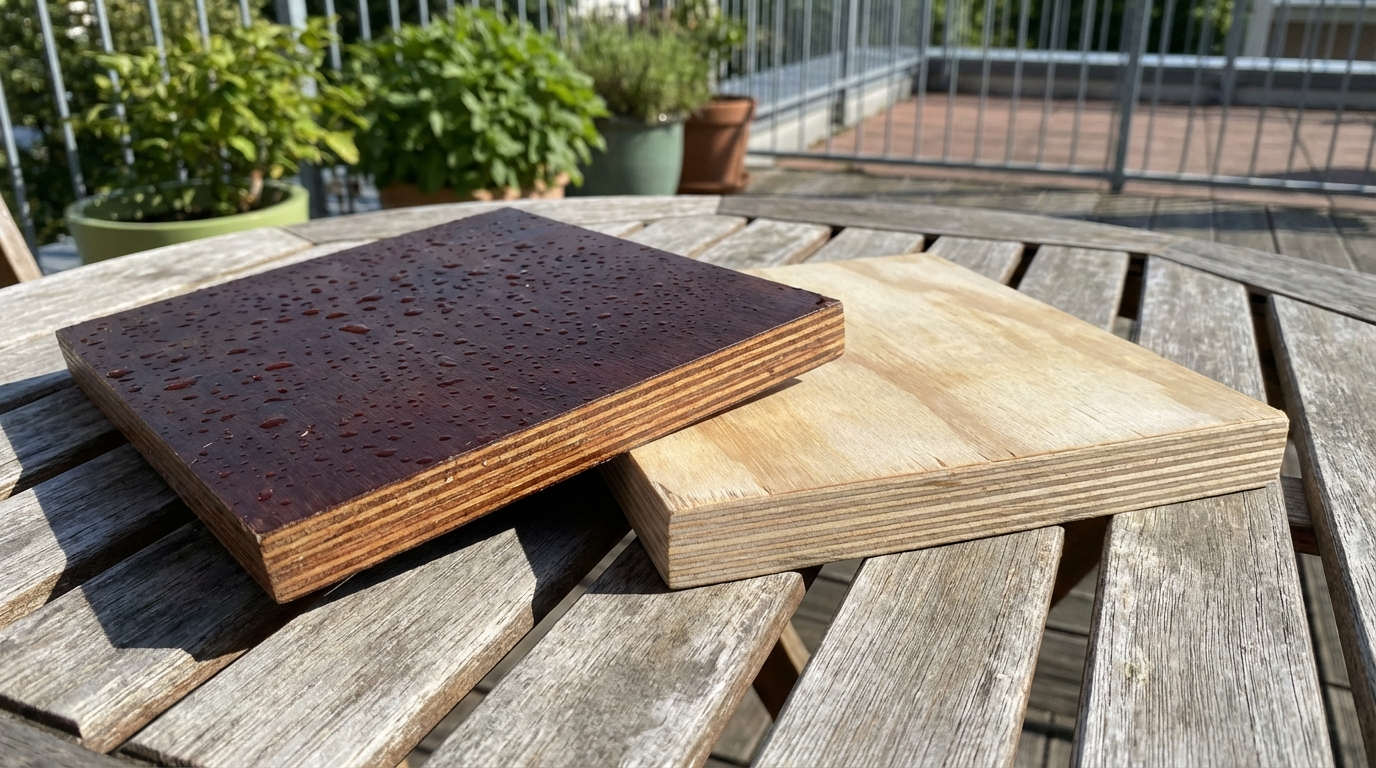
Overlooking edge treatments causes 60% failures; using "waterproof" labels on MR grades misleads novices. Architects advise against thin (<12mm) sheets for spans >1m. Test samples via 24-hour submersion before bulk purchase.
For sustainable choices, seek PF (phenol-formaldehyde) low-emission variants compliant with E1 norms, balancing eco-impact with performance.
Long-Term Performance Expectations
With proper layering, IS:710 Marine Plywood furniture endures 8-12 years in most Indian conditions, versus 1-2 for lesser grades. Factor in site specifics: shaded lawns extend life; direct beachfront demands extras. This positions it as a pragmatic investment for enduring outdoor aesthetics and utility.
Related guides on PlyPrice
Want Plywood Suggestions?
Share a few details and a PlyPrice specialist will suggest suitable brands and connect you to responsive dealers.