Best Plywood for Retail Fitouts
Plywood for shops and retail stores. Explore flexible and pre-laminated options for quick turnaround and modern aesthetic appeal.
Retail Fitouts in India: Unique Demands on Plywood Selection
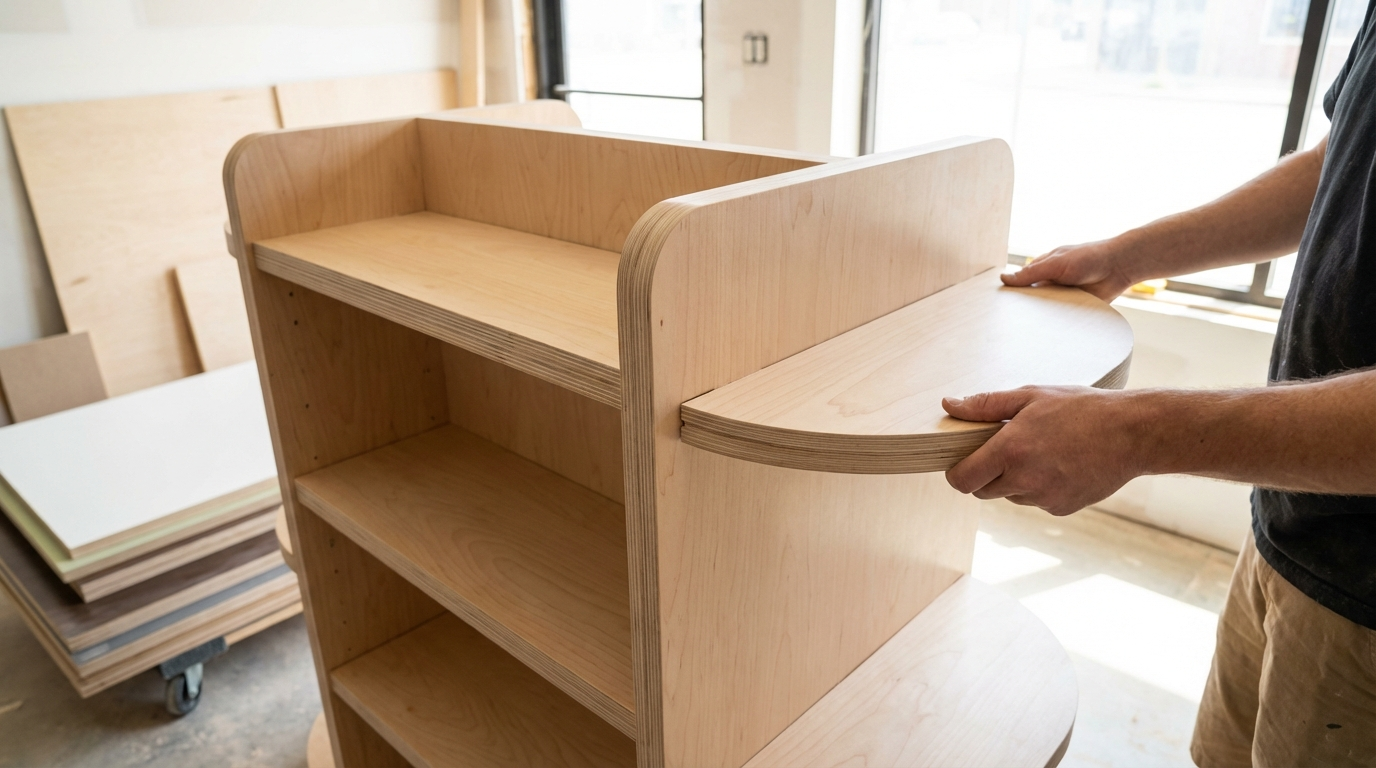
Retail spaces like boutique shops, grocery outlets, and mall kiosks in India prioritize speed of setup alongside eye-catching designs. Unlike residential projects, these fitouts face daily foot traffic, varying humidity from coastal cities to dry interiors, and tight deadlines driven by lease agreements or festive seasons. Plywood serves as the backbone for counters, shelves, wall panels, and displays, but not all grades handle these pressures equally. Decisions hinge on balancing machinability for custom shapes, surface finish for branding, and resistance to wear from constant handling.
Core Requirements for Plywood in Shop and Store Interiors
Indian retail fitouts demand plywood that installs fast without extensive finishing, resists warping in non-AC environments, and supports modular designs for frequent reconfigurations. Key factors include:
- Thickness versatility: 6-18mm for shelves and partitions, with thinner sheets for curved elements.
- Moisture tolerance: MR (Moisture Resistant) grade suffices for air-conditioned malls; BWR (Boiling Water Resistant) for open-fronted street shops.
- Surface readiness: Pre-laminated options cut painting time by 40-50%, ideal for 7-10 day turnarounds.
- Load-bearing capacity: Essential for heavy displays in supermarkets, where sagging under 50-100kg/m² leads to failures.
Buyers—often contractors or designers—evaluate based on site conditions: Mumbai's humidity favors waterproofing, while Delhi's dust requires smooth, cleanable surfaces.
Climate and Traffic Influence Material Choices
In humid regions like Kerala or Chennai, untreated plywood swells within weeks, cracking laminates or veneers. High-traffic stores need denser cores to prevent dents from trolleys or stacking. First-principles logic: Plywood's layered structure (veneers glued under pressure) must maintain bond integrity under cyclic loading, explaining why lower-grade MR fails faster than BWR in semi-exposed areas.
Flexible Plywood Options for Dynamic Retail Designs
Modern retail favors fluid layouts—think wavy shelves or angled counters for apparel stores. Standard plywood's rigidity limits this, so flexible variants shine. These include thin-gauge (3-6mm) commercial plywood or engineered boards like HDHMR, which bend without splintering due to uniform density.
For example, forming a 1.5m radius curve requires pre-steaming or scoring, but flexible options reduce labor by minimizing breaks. In India's modular retail trend (e.g., quick-service kiosks), this flexibility supports plug-and-play systems, reusable across pop-ups.
HDHMR vs Traditional Plywood for Curves and Modularity
HDHMR (High-Density Moisture Resistant) offers superior bendability from its particleboard-like core, machined easily on CNC routers common in Tier-2 city workshops. Drawbacks: Less screw-holding than plywood in high-load spots. Use it for decorative panels, pair with blockboard for structural beams.
Pre-Laminated Plywood: Accelerating Trendy Retail Aesthetics
Pre-laminated plywood arrives with factory-applied finishes—wood grains, solids, or gloss textures—eliminating on-site polishing or painting. This suits retail's need for photogenic interiors that align with brand identities, like matte black for luxury watches or vibrant prints for kids' wear.
Advantages in Indian context:
- Time savings: Ready-to-assemble, slashing fitout timelines from 3 weeks to under 10 days.
- Consistency: Uniform color across large surfaces, avoiding patchiness from humid-site applications.
- Customization: Digital printing allows brand-specific patterns, popular in franchise rollouts like coffee chains.
Limitations: Laminates scratch under abrasive cleaning; opt for 0.6-1mm thick abrasion-resistant films for longevity.
Grade Matching for Pre-Laminated Sheets
Base it on exposure: MR pre-lam for interiors, BWR for perimeter walls. ISI IS:303 standards ensure glue-line strength, but verify dealer certifications to avoid delamination in 6-12 months.
Durability Comparison: Matching Plywood to Retail Stressors
| Plywood Type | Best For | Strengths | Weaknesses | Typical Thickness Range |
|---|---|---|---|---|
| Commercial MR Plywood | Basic shelving in AC shops | Affordable, easy to cut | Low moisture resistance; warps in humidity | 6-12mm |
| BWR Plywood | High-traffic counters | Better boil resistance; screw-holding | Heavier, costlier than MR | 12-18mm |
| Pre-Laminated BWR | Trendy displays, walls | Fast install, aesthetic variety | Edge banding needed; scratches possible | 8-16mm |
| HDHMR / Flexible Boards | Curved fixtures, modular units | Bendable, uniform finish | Lower impact resistance | 4-12mm |
| Blockboard (Hybrid) | Load-bearing partitions | Stable core, no warping | Less flexible for designs | 18-25mm |
This table highlights trade-offs: For a 200 sq ft boutique, combine pre-lam BWR for visuals with blockboard for stability, optimizing both speed and span.
Cost Drivers in Retail Plywood Procurement
Pricing varies 20-50% regionally—lower in plywood hubs like Kerala/Gujarat due to mill proximity, higher in metros from transport. Relative costs:
- MR base: Entry-level benchmark.
- BWR: 25-40% premium for durability.
- Pre-laminated: 30-60% uplift from lamination, offset by labor savings.
- Flexible HDHMR: Comparable to mid-grade plywood, but factor machining ease.
Dealer logic: Bulk buys (50+ sheets) yield 10-15% discounts; negotiate for free edge banding. Avoid rock-bottom rates signaling sub-grade glue.
ROI Calculation for Contractors
Faster installs recoup premiums: A pre-lam fitout saves 2-3 painter days (₹5,000-8,000), plus zero VOC emissions for health-compliant stores.
Installation Best Practices for Long-Lasting Retail Fitouts
Precision matters to prevent callbacks:
- Acclimatization: Store sheets 48 hours at site temperature/humidity.
- Edge treatment: PVC/ABS tapes on pre-lam to block moisture ingress.
- Fixing: Use PU adhesives over PVA for BWR; space screws 150mm apart.
- Finishing: Minimal—silicone sealants at joints for dust-proofing.
In monsoon-prone areas, elevate off-floor storage; test prototypes for high-use zones like billing counters.
Common Pitfalls and How to Avoid Them
Oversights derail projects:
- Underestimating traffic: Thin MR sags; specify 12mm+ with cross-bracing.
- Ignoring modularity: Rigid plywood complicates re-fits; choose CNC-friendly options.
- Skipping tests: Drop-test samples for impact; humidity-cycle for bonds.
Architects favor layered specs: Core (BWR/blockboard) + skin (pre-lam flexible) for hybrid performance.
Decision Framework for Retail Buyers
Step-by-step guide:
- Assess exposure: AC (MR ok) vs open (BWR mandatory).
- Prioritize speed: Pre-lam if <2 weeks deadline.
- Design needs: Flexible for curves; dense for loads.
- Budget audit: Total cost = material + labor savings.
- Source wisely: Reputed dealers with ISI stock; sample first.
For a mid-sized store (500 sq ft), budget 40% for plywood, targeting 10-15 year lifespan through right grading.
Sourcing and Dealer Ecosystem in India
Major hubs (Indore, Yamunanagar) supply 70% volume; metros add 15-25% markup. Contractors leverage platforms for quotes, but inspect for core density (tap test: solid thud = quality). Alternatives to branded: Generic BWR from co-ops offers value without hype.
Regional Variations
South India: Abundant teak-core BWR. North: Pine mixes cheaper but check formaldehyde. Always demand boil tests on-site.
This approach ensures retail fitouts that impress customers while withstanding operational rigors, grounded in practical Indian realities.
Want Plywood Suggestions?
Share a few details and a PlyPrice specialist will suggest suitable brands and connect you to responsive dealers.