Best Plywood for Office Furniture
Selecting ply for office desks & partitions? We explore durable yet affordable commercial plywood options for high-traffic workspaces.
Office Furniture Demands: Balancing Durability, Aesthetics, and Budget
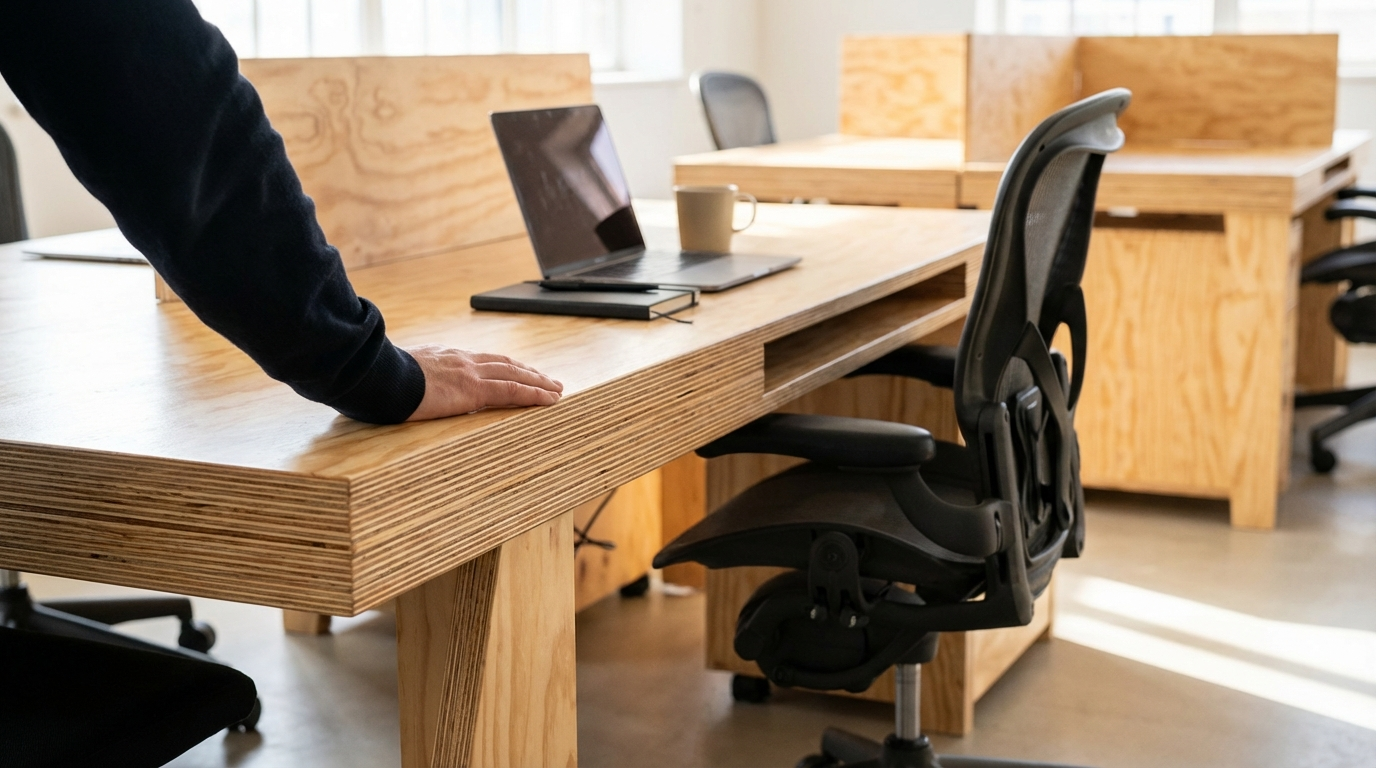
In Indian office fit-outs, where spaces often endure daily wear from multiple users, heavy equipment, and fluctuating indoor humidity, plywood selection directly impacts longevity and maintenance costs. Desks supporting computers and files, partitions defining workstations, and storage units bearing constant loads require materials that resist warping, delamination, and surface damage without inflating project budgets. Commercial plywood emerges as a practical choice due to its engineered strength from layered veneers, but not all variants suit high-traffic professional environments.
Decision-makers—interior designers, contractors, and facility managers—prioritize options that align with ISI standards like IS 303 for commercial grades, offering predictable performance amid India's diverse climates, from Mumbai's monsoon humidity to Delhi's dry winters. This guide breaks down suitable plywood types, application-specific recommendations, and cost influencers, enabling informed choices for desks, partitions, and beyond.
Core Properties Defining Plywood Suitability for Offices
Office plywood must withstand static loads (e.g., desk overlays), dynamic stresses (e.g., drawer slides), and environmental factors like air-conditioned dryness or occasional spills. First-principles evaluation starts with glue line strength, face veneer quality, and core stability.
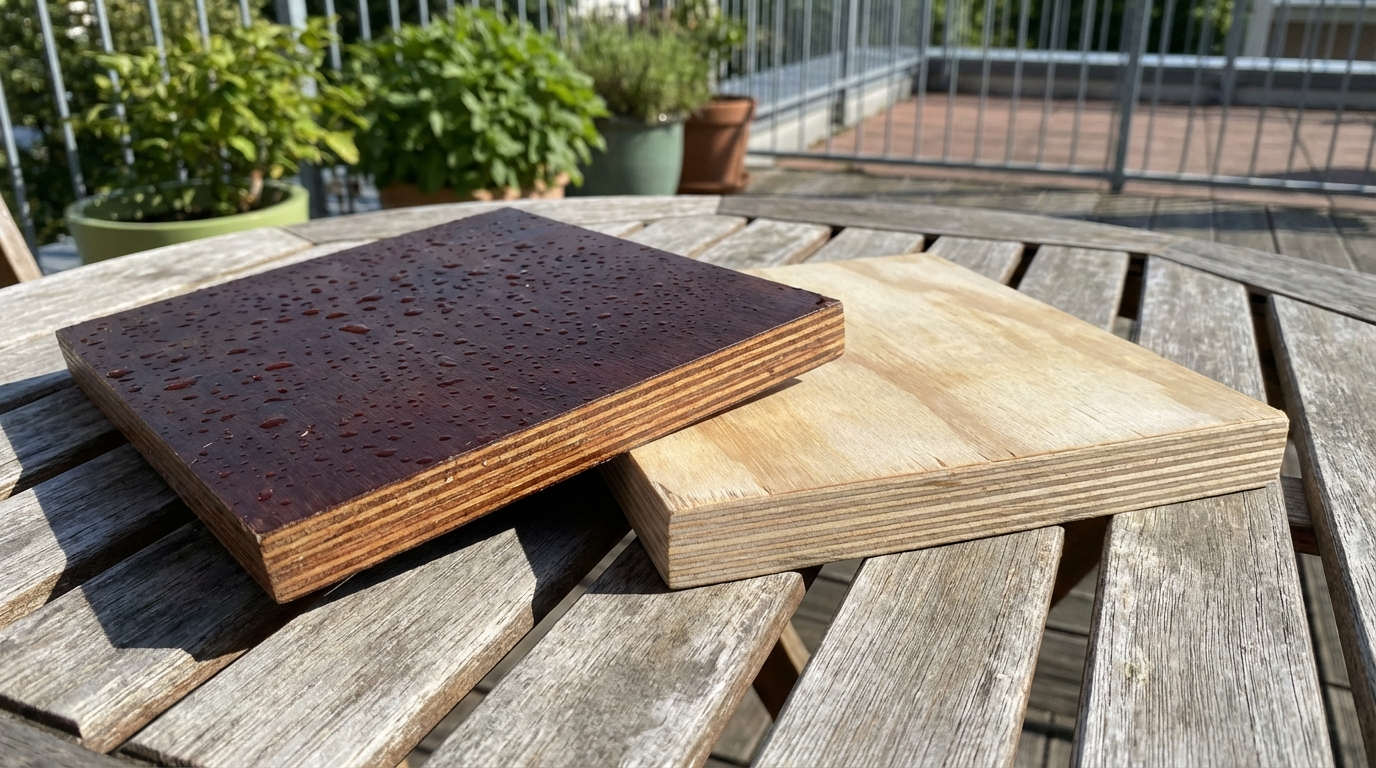
- Boiling Water Resistance (BWR): Ideal for semi-exposed areas; survives 4-6 hours of boiling without delaminating, handling humidity spikes common in Indian offices without central dehumidification.
- Moisture Resistance (MR): Basic interior grade for controlled AC environments; cost-effective but risks bubbling in non-climate-controlled spaces.
- Boiling Water Proof (BWP): Premium for wet-prone zones like pantries, though overkill for most furniture unless marine-grade durability is mandated.
Face veneers (AA, A, BB) determine finish readiness—AA for paintable desks, BB for laminate-covered partitions where minor knots are hidden. Core composition—hardwood like poplar or eucalyptus—ensures screw-holding power for modular fittings.
Load-Bearing Capacity in Real Office Scenarios
Indian offices often feature open-plan layouts with freestanding desks (up to 75kg top load) and full-height partitions (self-supporting panels). Plywood's modulus of rupture (MOR) governs bending resistance; commercial BWR grades typically exceed 40-50 N/mm², sufficient for spans up to 900mm without sagging.
| Application | Recommended Minimum MOR | Load Example | Suitable Glue Line |
|---|---|---|---|
| Conference Table Tops | 50 N/mm² | 100kg distributed | BWR |
| Workstation Desks | 45 N/mm² | 50kg point load | MR/BWR |
| Partitions & Screens | 40 N/mm² | Vertical stacking | BWR |
| Storage Cabinets | 55 N/mm² | Files + electronics | BWR/BWP |
These thresholds derive from practical testing under IS 303 protocols, adjusted for Indian softwood cores prevalent in mid-tier mills.
Top Plywood Recommendations for Office Desks
Desks form the workhorse of office furniture, exposed to keyboard impacts, coffee rings, and ergonomic adjustments. Prioritize 18mm thickness for tabletops (spanning 600-1200mm) to prevent deflection under dual monitors.
MR Commercial Plywood: Entry-Level for Budget Fit-Outs
Suitable for air-conditioned corporate offices in metros like Bangalore or Hyderabad, where RH stays below 60%. Offers smooth AA faces for direct lamination, with urea-formaldehyde glue providing adequate bond for interior use. Limitations appear in power outages causing humidity rebounds, leading to edge swelling if unsealed.
Cost driver: Lower resin content keeps it 20-30% cheaper than BWR equivalents; dealer markups vary by region (higher in Tier-2 cities due to transport).
BWR Plywood: Versatile Choice for Everyday Desks
The sweet spot for most Indian offices—phenol-formaldehyde glue resists 72-hour submersion, ideal for hybrid workspaces with occasional spills. Available in 16-19mm for L-shaped desks, with recessed edges for cable management. In coastal Gujarat or Chennai, it outperforms MR by minimizing cupping during monsoons.
Pro tip: Opt for 100% hardwood core over mixed softwood for superior screw retention in adjustable-height mechanisms.
When to Upgrade to HDHMR or Laminated Variants
For premium executive desks, High-Density High-Moisture Resistant (HDHMR) boards—particleboard derivatives—offer uniform density (750-850 kg/m³) for vibration resistance. Not true plywood, but a hybrid contender for cost-sensitive projects where laminate adhesion is paramount. Avoid in high-humidity non-AC setups.
Optimal Plywood for Office Partitions and Dividers
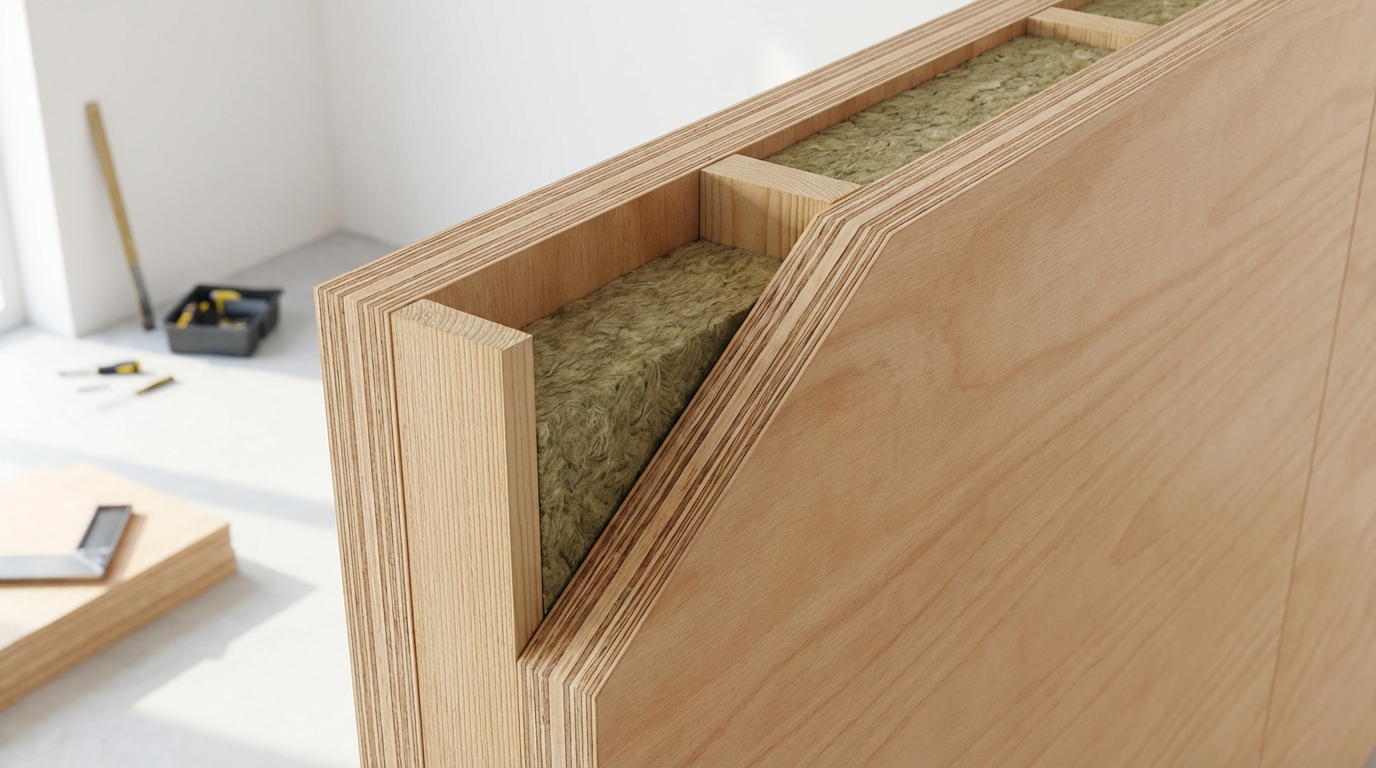
Partitions demand lightweight yet rigid panels (12-18mm) for easy installation via aluminum tracks, often with acoustic fabric overlays. Vertical loads from shelving necessitate strong glue lines to prevent seam separation.
BWR Over MR for Structural Integrity
MR suffices for low-height modesty panels, but full partitions (up to 2400mm) require BWR to counter thermal expansion in sun-exposed facades. BB-grade faces hide imperfections under gypsum or fabric cladding, reducing prep costs.
| Partition Type | Ideal Thickness | Glue Grade | Key Benefit | Cost Relative to MR |
|---|---|---|---|---|
| Full-Height Workstation | 18mm | BWR | Wind load resistance | 25% higher |
| Low Glass Partitions | 12mm | MR | Weight savings | Base |
| Acoustic Screens | 16mm | BWR | Stable mounting | 20% higher |
Shuttering Plywood Alternatives for Temporary Setups
In startup hubs like Pune, reusable shuttering ply (film-faced BWP) repurposes for prototype partitions. Its phenolic coating shrugs off paint overspray, but rough texture demands sanding for finishes—viable only for non-client-facing areas.
Thickness, Size, and Sizing Logic for Office Projects
Standard sheets (2440x1220mm) minimize wastage, but custom cuts inflate costs by 10-15%. For desks, 18mm balances strength-to-weight (15-18kg/sheet); partitions favor 12mm to ease handling during peak construction seasons.
- Desks: 18-25mm; thicker for cantilever designs common in modern ergonomic setups.
- Partitions: 12-16mm; pair with 50x50mm timber frames for stability.
- Cabinets: 19mm cores for hinge loads.
Regional availability skews: Southern mills dominate 18mm BWR stock, while North prefers 16mm MR due to lower AC reliance.
Environmental and Durability Challenges in Indian Offices
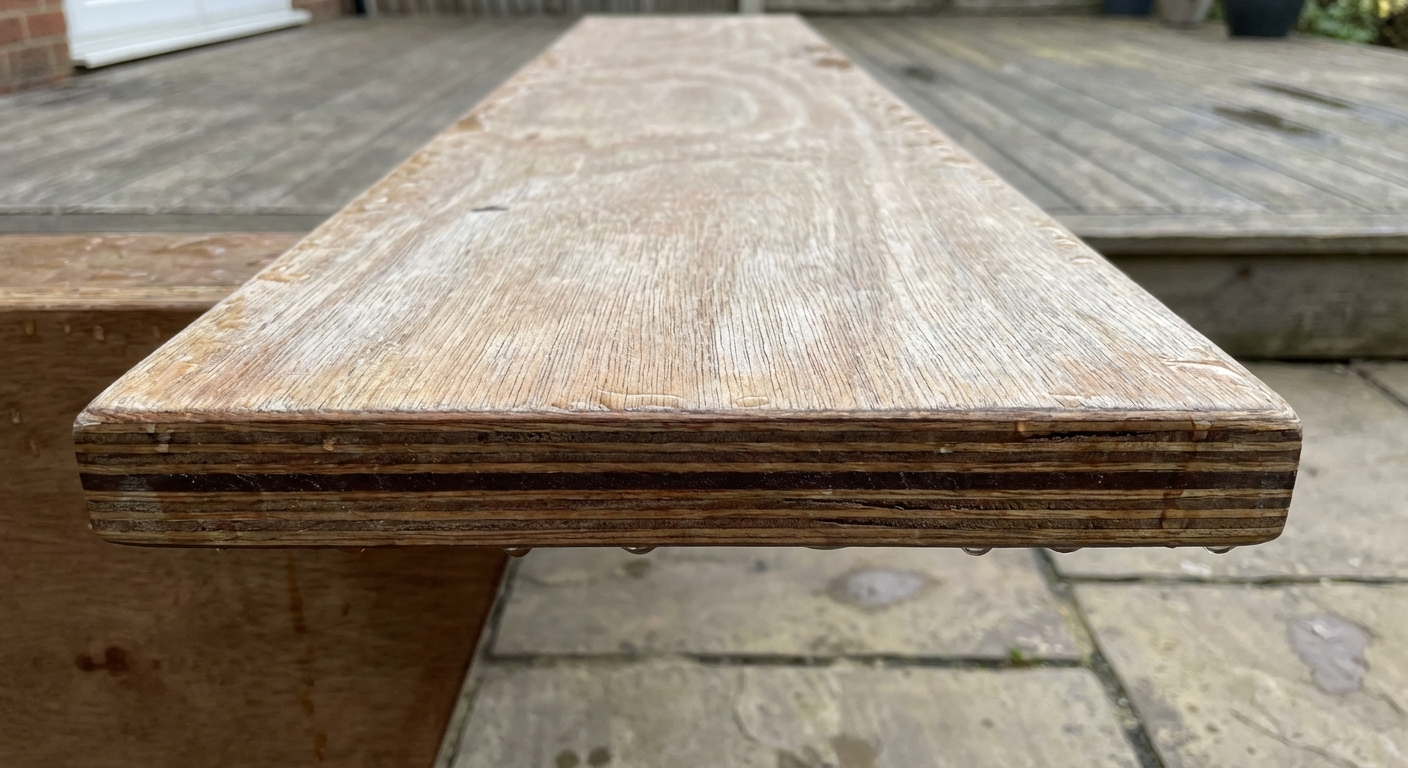
India's tropical climate amplifies plywood vulnerabilities—monsoon RH above 80% accelerates glue hydrolysis, while AC desiccation cracks unsealed edges. BWR mitigates this via cross-linked resins, extending life from 3-5 years (MR) to 8-10 years.
Formaldehyde emissions (E1/E0 grades per IS 615) matter for employee health in open offices; demand test certificates from dealers, as low-end mills skimp on compliance.
Termite and Pest Resistance
Office basements in Kolkata or Bangalore risk subterranean termites; choose plywood with IS 5531 preservatives or pair with anti-termite primers. Core species like eucalyptus naturally deter borers better than rubberwood.
Cost Analysis: Achieving Affordability Without Compromising Quality
Plywood pricing hinges on glue type (MR baseline, BWR +25-40%, BWP +50-70%), thickness, and face grade. Regional variance: Coastal dealers charge premiums for moisture-proof stock; inland hubs like Moradabad offer volume discounts.
| Factors Driving Cost | Impact on Per Sheet Price | Budget Strategy |
|---|---|---|
| Glue Line (MR vs BWR) | 20-40% uplift | Hybrid use: MR interiors, BWR exteriors |
| Thickness (12mm to 19mm) | Proportional +10%/3mm | Optimize spans to downsize |
| Veneer Grade (AA/BB) | 15-25% for premium | Hide BB under laminates |
| Volume Purchase | 15-25% dealer discount | Buy from mills for 500+ sheets |
Total fit-out economics: BWR setups amortize over 5 years via reduced repairs, offsetting initial outlay in high-traffic SME offices.
Procurement Strategies for Contractors and Designers
Navigate India's dealer ecosystem by verifying ISI BIS marks (CM/L no.) and sourcing from Category A mills for consistent core density. Sample test: Hammer-tap for voids; weigh for density uniformity.
- Assess project RH profile—AC-only favors MR savings.
- Prototype one station: Load-test for 48 hours.
- Negotiate slabs: Bundle with fittings for 10% rebates.
- Alternatives: MDF for curved reception desks, blockboard for heavy drawers.
Avoid pitfalls like "imported" labels on local ply or skipping edge banding, which invites moisture ingress.
Case Insights: Real-World Office Deployments
In a 50-workstation Mumbai co-working space, BWR 18mm desks endured 2 monsoons with zero warping, versus MR counterparts showing swells in adjacent pods. A Delhi IT firm saved 18% by mixing MR cabinets with BWR tops, proving layered selection optimizes ROI.
For scalable chains like WeWork clones, pre-laminated BWR sheets cut labor by 30%, though custom perforations for cable pass-through demand precise milling.
Future-Proofing Office Plywood Choices
As Indian offices shift to sustainable fits, look to engineered options like e0-emission BWR or recycled-core hybrids. Regulatory pushes for green certifications (IGBC) favor verifiable low-VOC ply, influencing long-term specs amid rising ESG mandates.
Ultimately, match plywood to usage intensity: MR for calm back-offices, BWR for vibrant hubs. This pragmatic matrix ensures furniture outlasts economic cycles, minimizing capex churn.
Want Plywood Suggestions?
Share a few details and a PlyPrice specialist will suggest suitable brands and connect you to responsive dealers.