Best Plywood for Modular Kitchen: Calibrated BWP, Thickness and Cost
Calibrated BWP plywood is the best choice for modular kitchens: uniform thickness keeps CNC-cut panels aligned, boiling water proof bonding withstands steam and spills, and a dense core holds hinges and slides through years of use.
Last updated: . Grades and standards checked against current BIS standards.
Modular Kitchens in India: Unique Demands on Plywood Performance
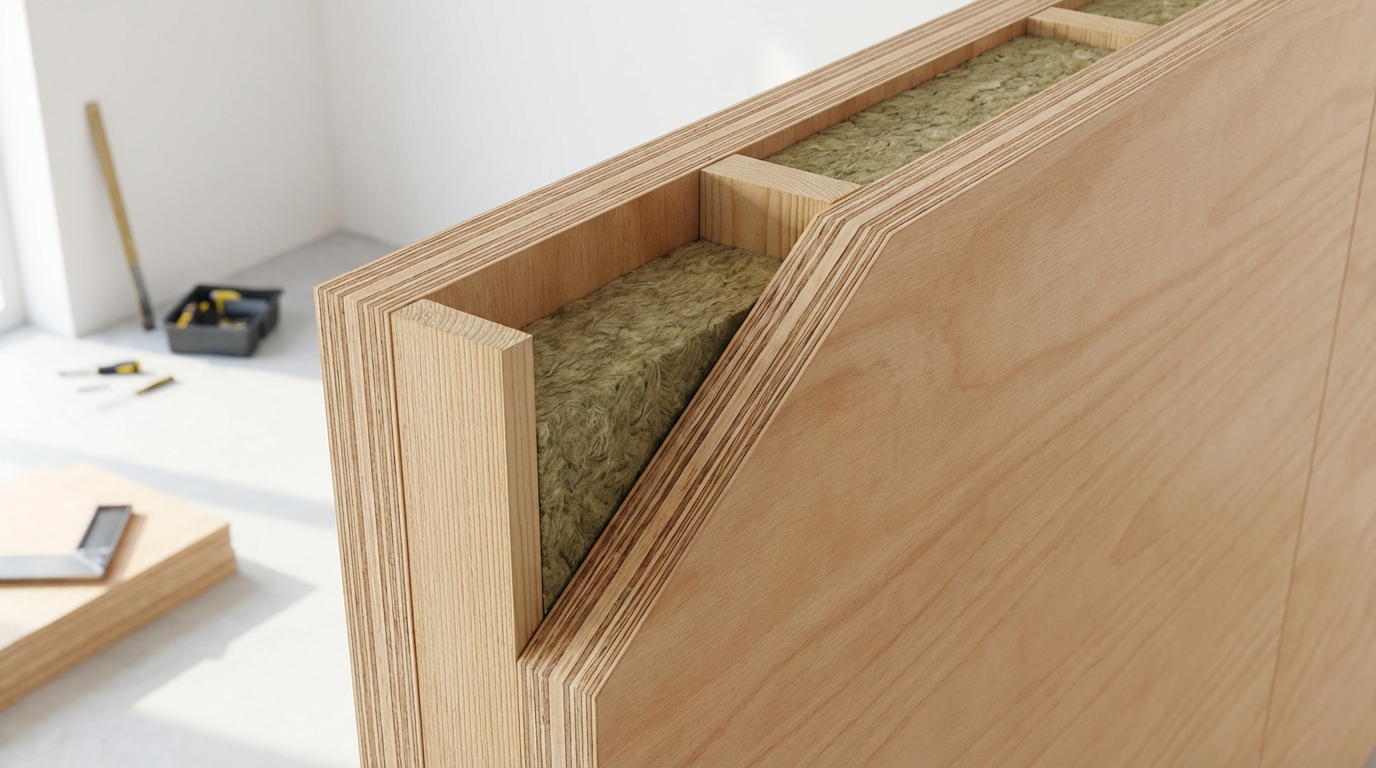
Modular kitchens have transformed Indian homes, especially in urban apartments where space efficiency and aesthetic finishes matter most. Unlike traditional carpentry, these setups rely on CNC machines for precise cutting, edge banding, and assembly. This process exposes plywood to exacting standards: uniform thickness for seamless alignment, resistance to steam and spills from daily cooking, and structural integrity to hold heavy hinges, slides, and handles over years of use.
In India's diverse climates—from humid coastal regions like Mumbai to monsoon-prone Kerala—plywood must withstand moisture without warping. Homeowners prioritize low-maintenance surfaces, while contractors focus on machinability to meet tight installation deadlines. Architects specify materials that balance performance with budget, knowing subpar plywood leads to callbacks for sagging shutters or peeling laminates.
Understanding Plywood Grading: From MR to BWP
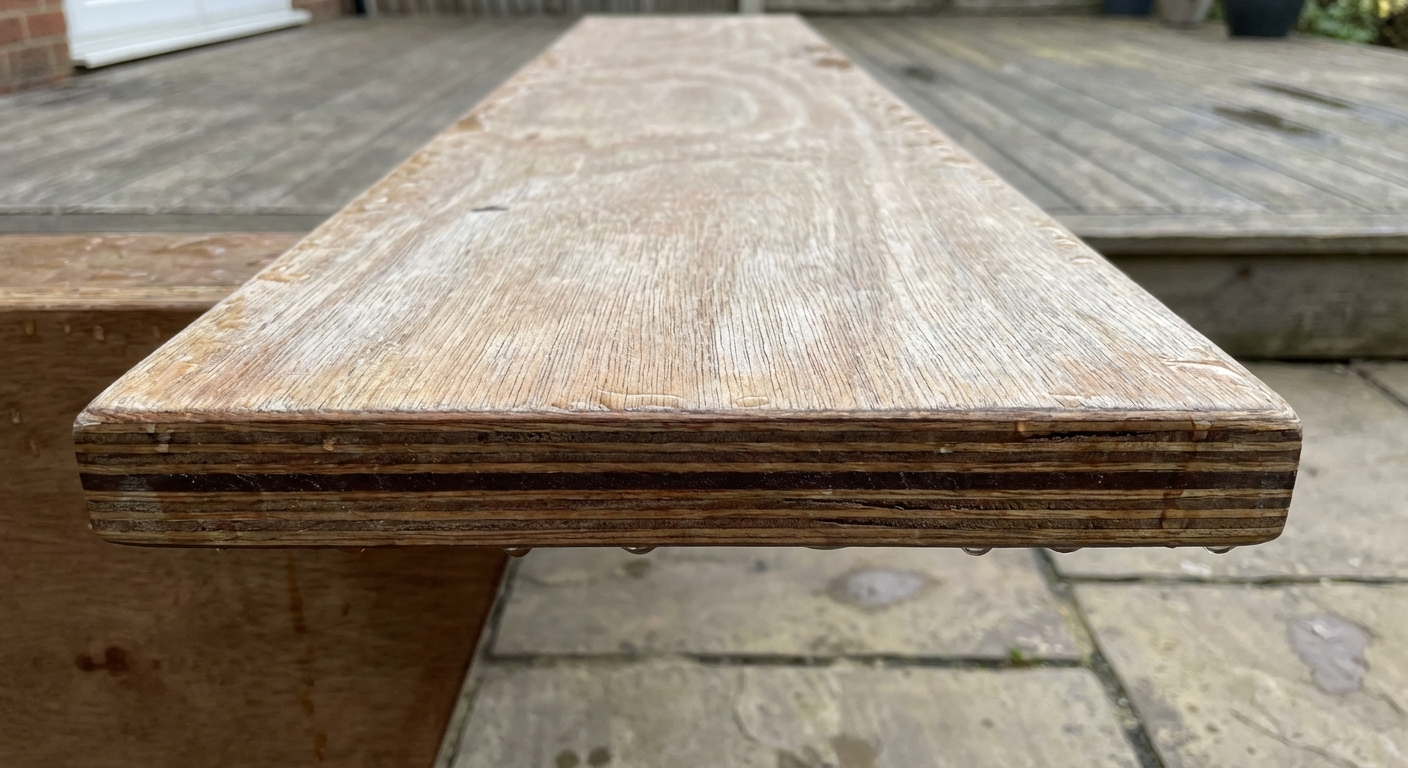
Plywood grades reflect glue and construction quality, tested under Indian Standards (IS:303 for MR, BWR and BWP; IS:710 for marine). MR (Moisture Resistant) uses urea-formaldehyde glue, suitable for dry interiors but fails in kitchens exposed to water. BWR (Boiling Water Resistant) improves with phenolic glue, surviving short boils but not prolonged immersion—common in Indian sink areas during monsoons.
BWP (Boiling Water Proof) marine-grade plywood employs fully synthetic resins, passing 72-hour boiling tests without delamination. For modular kitchens, BWP forms the baseline because cooking generates constant vapor, and Indian households often lack perfect ventilation.
Why BWP Outperforms in Real-World Kitchen Scenarios
- Humidity Tolerance: In 80-90% relative humidity (typical Mumbai summers), BWP maintains flatness, preventing gaps in laminated shutters.
- Edge Stability: Machine routing for hardware leaves exposed edges; BWP resists swelling, unlike MR which absorbs water and expands.
- Longevity: Supports 15-20 years of use in high-traffic kitchens, aligning with modular warranties from reputable assemblers.
Calibration: The Key to Perfect Alignment in Machine Finishing
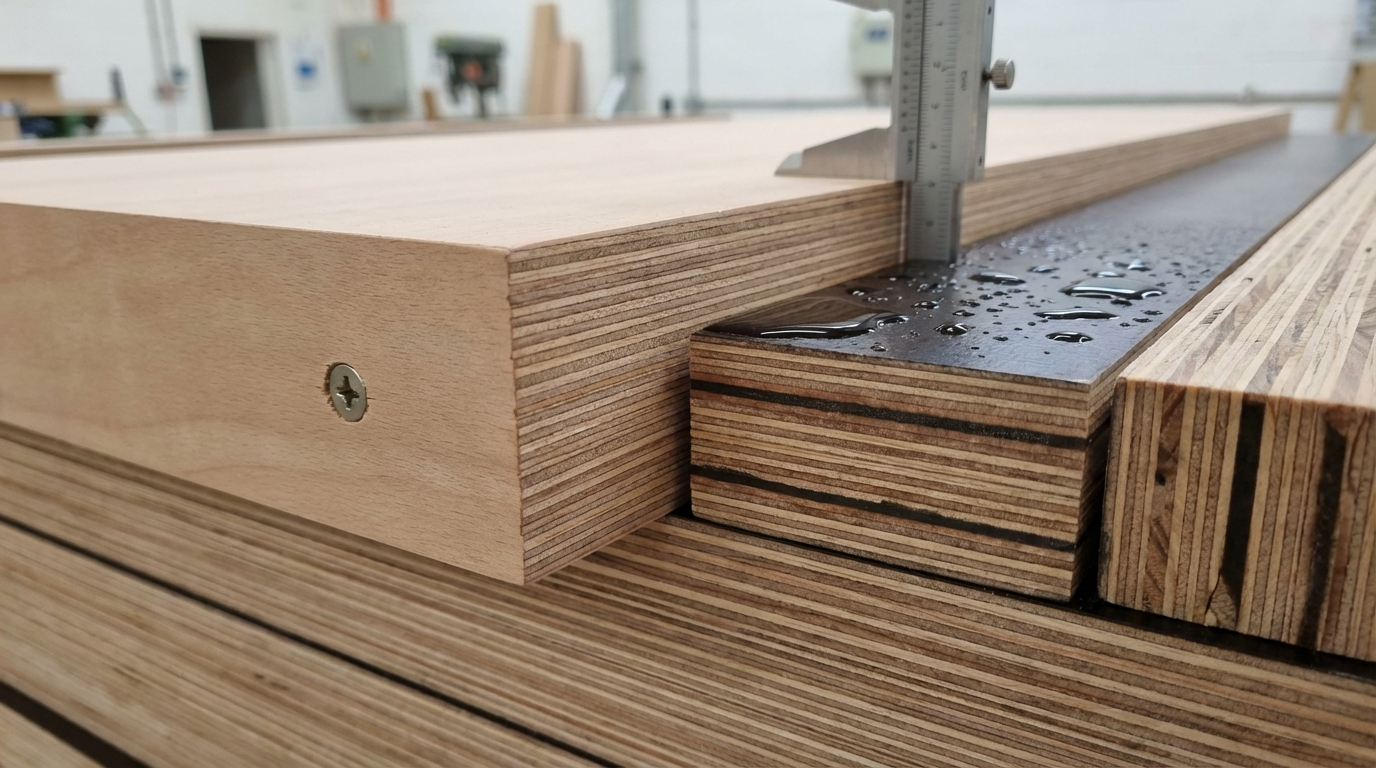
Calibrated plywood undergoes sanding to precise, uniform thickness (e.g., 18mm ±0.3mm tolerance). Standard plywood varies by 1-2mm across sheets due to press inconsistencies, causing misalignment in CNC-cut cabinets—drawers bind, doors sag.
In modular kitchens, calibration ensures:
- Flush Edges: Post-lamination, surfaces align perfectly for acrylic or membrane finishes.
- Seamless Joins: Panels fit without fillers, critical for glossy high-gloss kitchens popular in Delhi-NCR.
- Machine Efficiency: Reduces bit wear and waste, lowering contractor costs by 10-15% on large projects.
Non-calibrated ply often requires manual planing, delaying installs and risking uneven finishes. Insist on factory-calibrated BWP sheets marked with thickness guarantees.
Water Resistance Under Indian Cooking Conditions
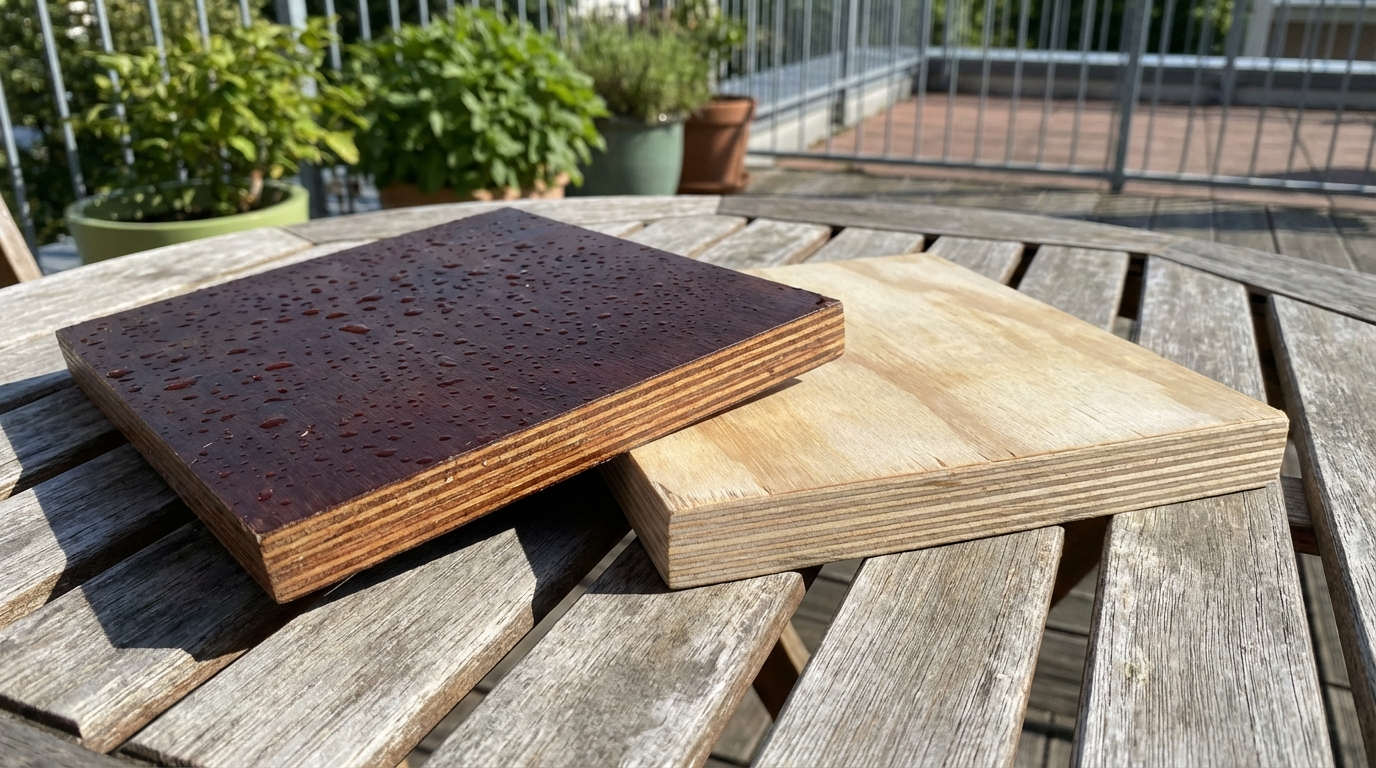
Indian modular kitchens face aggressive moisture: boiling dal, steaming idlis, frequent wiping with wet cloths. BWP's crossbanded veneer layers (7-13 plies in 18mm) distribute stress, preventing core rot.
Compare exposure tests relevant to homes:
| Grade | Short Water Exposure (Sink Splash) | Prolonged Steam (Cooking) | Monsoon Humidity |
|---|---|---|---|
| MR | Fails quickly (swells 5-10%) | Delaminates in days | Warps visibly |
| BWR | Moderate (2-5% swell) | Weakens over months | Edge lifting |
| BWP (Calibrated) | Minimal change (<1%) | Maintains integrity | Stable for years |
Coastal buyers (Chennai, Goa) report BWP extending cabinet life twofold versus BWR.
Hardware Grip: Why BWP Ensures Screw-Holding Strength
Modular kitchens use 100+ screws per setup for soft-close hinges and tandem slides. Plywood's screw pull-out strength depends on density and glue penetration into face veneers.
BWP's high-pressure manufacturing (28kg/cm²) creates denser cores (600-700kg/m³), gripping screws 30-50% tighter than MR. Overloading (e.g., heavy granite tops) loosens lesser grades, causing droop.
- Test Insight: After 10,000 cycles, BWP retains 90% grip; BWR drops to 60%.
- Practical Fix: Pre-drill pilots in calibrated BWP to avoid veneer tears.
For tandem drawers (Hettich/Blum), BWP's stability prevents misalignment from repeated pulls.
Optimal Specifications for Modular Kitchen Plywood
Standardize on these for best results:
| Component | Recommended Thickness | BWP Calibration | Why This Spec |
|---|---|---|---|
| Carcass (Base/Verticals) | 18mm | ±0.3mm | Load-bearing; resists sagging under appliances |
| Shutters | 16-18mm | ±0.2mm | Perfect lamination; hardware mounting |
| Shelves | 18mm | ±0.3mm | Supports 50-100kg uniform load |
| Partitions/Drawers | 12-16mm | ±0.3mm | Lightweight yet rigid |
Sizes: 8x4ft standard; opt for 2750x1750mm for fewer joins. Verify BIS IS:710 certification on edges.
Thickness Selection Logic for Different Kitchen Sizes
Compact Urban Kitchens (Under 100sqft)
16mm suffices for shutters if BWP calibrated; saves 10-15% cost without compromising grip.
Large Island Kitchens (200+sqft)
18-25mm carcass for stability under quartz slabs (80-100kg/m²).
Reason from load: Multiply shelf span by expected weight; exceed by 20% margin for safety.
Cost Drivers and Value Comparison
BWP calibrated plywood costs 2-3x MR due to marine glue and sanding processes. Regional variations: North India (Delhi) 20% higher from transport; South (Bangalore) competitive from local mills.
| Type | Relative Cost | Durability Payback | Best For |
|---|---|---|---|
| MR Calibrated | Baseline | 3-5 years | Dry pantries only |
| BWR Calibrated | 1.5-2x | 7-10 years | Low-moisture zones |
| BWP Calibrated | 2.5-4x | 15+ years | Full modular kitchens |
ROI: BWP reduces replacement costs in 5 years, especially for homeowners planning 10+ year stays.
Practical Buying Guide for Dealers and Contractors
- Inspect Core: No voids larger than 5mm; tap for hollow sounds.
- Check Calibration: Measure 4 corners with digital vernier.
- Grade Verification: Look for BWP stamp and test report.
- Source Wisely: Direct from mills (Kerala/Gujarat) or authorized depots; avoid roadside stacks prone to moisture damage.
- Negotiate Bundles: 50+ sheets for project discounts; factor 5% wastage.
Contractors: Pair with PU edge bands for extra sealing.
Common Pitfalls and How Calibrated BWP Mitigates Them
- Misaligned Laminates: Solved by tight tolerances.
- Hardware Failure: Dense core prevents stripping.
- Monsoon Swell: BWP glue unaffected by 100% humidity.
- Budget Overspend on Repairs: Upfront investment avoids 2x rework costs.
When to Consider Alternatives to Full BWP
For budget modulars:
- Hybrid Approach: BWP carcass + BWR shutters (saves 20-30%).
- HDHMR: High-density boards for dry uppers; lacks BWP's immersion proofing.
- Blockboard: Cheaper but inconsistent density; avoid for machined finishes.
Always prioritize calibrated BWP for sinks/stoves; compromise elsewhere.
Final Decision Framework for Buyers
Assess your kitchen: High moisture + machine finish = Calibrated BWP mandatory. Test small sample: Soak edge 24hrs, check warp. Consult local fabricator on regional dealer quality—Kerala's mills excel in BWP consistency.
This spec delivers alignment, resistance, and grip, ensuring your modular investment endures India's demanding home environments.
Related guides on PlyPrice
Want Plywood Suggestions?
Share a few details and a PlyPrice specialist will suggest suitable brands and connect you to responsive dealers.