Best Plywood for Hospital Furniture: Fire Retardant and Hygienic Grades
Hospital furniture needs plywood that resists fire, moisture and microbes, so specify fire retardant plywood, a moisture-resistant core that survives daily disinfection, and anti-bacterial laminates or coatings on touch surfaces, since ordinary MR or BWR sheets fall short.
Last updated: . Grades and standards checked against current BIS standards.
Healthcare Settings Demand Plywood Beyond Standard Grades
In Indian hospitals and clinics, furniture like beds, cabinets, trolleys, and partitions faces unique stresses. High footfall, frequent disinfection, monsoon humidity, and regulatory scrutiny for fire and infection control make ordinary MR or BWR plywood inadequate. Regular plywood absorbs moisture, harbors bacteria, and ignites easily—risks amplified in densely packed facilities where NABH accreditation and National Building Code (NBC) compliance are non-negotiable for operations.
Buyers—hospital administrators, architects, and contractors—prioritize plywood that withstands chemical cleaners, resists microbial growth, and meets fire retardancy norms without compromising structural integrity. This guide breaks down the reasoning from material science basics, tailored to India's tropical climate and procurement realities.
Core Risks in Hospital Environments Driving Plywood Choices
Hospitals operate under constant threat of cross-contamination and emergencies. Plywood must counter these through inherent properties:
- Infection Control: Surfaces wiped daily with bleach, alcohol, or phenolic disinfectants degrade untreated wood fibers, leading to delamination. Bacteria like MRSA thrive on porous surfaces in humid wards.
- Fire Hazards: Oxygen-rich environments and clustered furniture elevate ignition risks. NBC Part 4 mandates Class A or B fire ratings for public buildings.
- Moisture Exposure: Coastal or monsoon-prone regions (e.g., Mumbai, Kerala) see 80-90% humidity, causing swelling in non-boiled water-resistant grades.
- Mechanical Wear: Heavy loads from equipment and patients demand high screw-holding strength, absent in low-density core boards.
Decision logic starts here: Assess site-specific needs—urban multi-specialty vs. rural clinics—before specs. Architects often overlook long-term cleanability, leading to costly replacements within 2-3 years.
Hygiene-Focused Plywood: Anti-Bacterial and Anti-Microbial Options
Post-COVID, Indian healthcare mandates surfaces inhibiting 99% bacterial growth. Standard plywood's glue lines and veneers trap pathogens; treated variants incorporate nano-silver ions, copper compounds, or phenolic resins during manufacturing.
How Anti-Bacterial Treatments Work
From first principles: Microbes adhere to rough, organic surfaces. Treatments create a hydrophilic layer disrupting cell walls or release ions that puncture membranes. Look for ISI-marked plywood (IS:303) backed by lab-tested efficacy against E. coli, Staphylococcus, and fungi.
In practice, these boards cost 20-40% more than BWR due to additives but reduce replacement cycles by half in high-traffic ICUs. Regional dealers in Delhi-NCR or Bengaluru stock imported nano-tech variants alongside local phenolic-impregnated ones.
Suitable Types for Hygiene
| Property | Anti-Bacterial BWP | Phenolic Resin HDHMR | Standard FR Plywood |
|---|---|---|---|
| Microbial Resistance | High (nano-silver certified) | Medium (resin barrier) | Low (needs overlay) |
| Cleanability | Excellent (non-porous laminate compatible) | Good (sealable edges) | Fair (veneer absorbs cleaners) |
| Cost Relative to BWR | 1.5-2x | 1.2-1.5x | 1.3-1.8x |
| Best For | Patient beds, cabinets | Partitions, shelves | General furniture |
HDHMR edges out in cost-sensitive projects; BWP suits premium NABH setups.
Fire Retardant Plywood: Critical for Safety Compliance
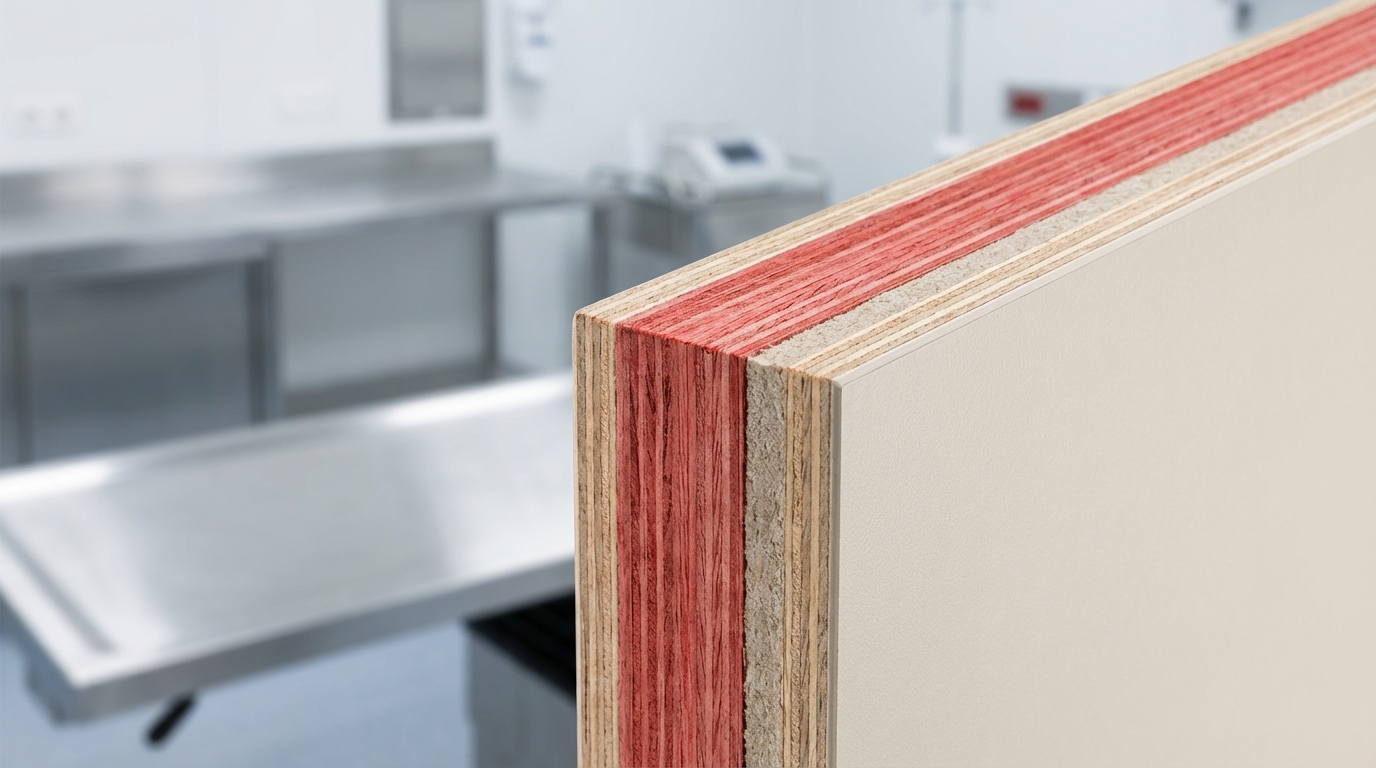
Fire retardant (FR) plywood integrates ammonium polyphosphate or borates into resins, forming a char layer that smothers flames. Unlike surface coatings that wear off, intrinsic FR achieves BS 476 Class 1 or IS:5509 fire-retardant ratings.
Grading Under Indian Norms
IS:303 specifies MR/BWR/BWP; FR extensions require independent testing. Grade I (flame spread <10) for corridors; Grade II for wards. In India, post-2010 fire audits, 70% urban hospitals upgraded to FR, per industry dealer feedback.
Moisture complicates FR: Non-BWP variants lose efficacy above 20% MC (moisture content). Pair with HMR cores for coastal installs.
Performance in Real Scenarios
- Urban Hospitals: Delhi's dry heat favors urea-bonded FR; avoid in humid Gujarat.
- Clinics: Lighter 12-18mm suffices for OT trolleys.
- Retrofits: Overlay FR laminates on existing ply to cut costs 30%.
Architects: Verify dealer test certificates; fakes abound in tier-2 markets.
Balancing Durability with Hygiene and Fire Needs
Hospital furniture lasts 7-10 years under load. Core matters: Poplar or eucalyptus for density; avoid agro-wastes prone to termites (IS:12076 compliant PF adhesives essential).
Moisture Resistance Tiers
| Tier | Glue Type | Boiling Resistance | Hospital Suitability |
|---|---|---|---|
| MR | Urea Formaldehyde | Low (swells in humidity) | Avoid |
| BWR | PF Modified | Medium (72 hrs boil) | Basic clinics |
| BWP | Phenolic | High (72+ hrs) | Ideal base for FR/anti-bac |
BWP forms the backbone; add FR/anti-bac as overlays or integrated.
Procurement Realities in India's Plywood Ecosystem
Dealers dominate sourcing; mill-direct rare for hospitals. Pricing drivers:
- Thickness: 18mm beds cost 25% more than 12mm shelves.
- Region: North (Punjab mills) 10-15% cheaper than South (Kerala marine-grade premiums).
- Volume: Contractors negotiate 15-20% off for 100+ sheets.
- Certifications: ISI + FR adds 10-15%; unbranded saves 30% but risks failures.
Contractor tip: Buy from authorized depots; inspect glue lines for voids. Homeowners funding clinics—insist on edge-sealed samples.
Step-by-Step Buying Checklist
- Map requirements: Fire zone? Infection hotspots?
- Specify BWP FR Grade I + anti-microbial.
- Request NABL-tested reports.
- Test samples: Screw hold, water immersion.
- Compare 3 dealers; factor transport (5-10% in remote areas).
Integration with Hospital Furniture Design
Modular designs amplify plywood strengths. Use 16-19mm for carcasses; laminate with 1.0mm FR HPL for wipeability. In OT panels, combine HDHMR cores with UV edges to block humidity ingress.
India-specific: Architects in Hyderabad favor hybrid MDF-HDHMR for curved counters; Mumbai opts full BWP for flood resilience.
Pitfalls Overlooked by Uninformed Buyers
Common errors:
- Ignoring core density: Low leads to sagging trolleys.
- Skipping termite PF: Infestations spike in ground-floor stores.
- Over-relying on laminates: Edges delaminate first.
- Budget FR claims: Verify spread-of-flame index.
Post-install: Annual inspections prevent 40% failures.
Long-Term ROI Analysis for Decision-Makers
Initial outlay for FR anti-bac BWP: 1.5-2.5x standard. Savings: 50% fewer replacements, zero fire downtime, NABH compliance avoids fines. In a 100-bed facility, payback in 3-4 years via durability alone.
For contractors: Specify in BOQs; upsell sealed edges for 10% margin.
Emerging Trends in Healthcare Plywood
Phenolic micro-veneer hybrids that resist common disinfectants are an emerging option. Recycled core FR variants gain traction in green-rated hospitals, though density lags. Monitor BIS updates for nano-FR mandates.
Related guides on PlyPrice
Want Plywood Suggestions?
Share a few details and a PlyPrice specialist will suggest suitable brands and connect you to responsive dealers.