Best Plywood for Bookshelves: Thickness, Grade and Span to Stop Sagging
The best plywood for bookshelves is a high-density, well-pressed sheet or blockboard sized to the span, because a typical 80-120 cm shelf carries 20-40 kg of books per metre. Add mid-supports or edge stiffeners on long spans so shelves do not sag over time.
Why Bookshelves Sag and How to Stop It in Indian Homes
In humid Indian climates, from Mumbai's monsoons to Delhi's summers, bookshelves often bend under the weight of books, especially over long spans without mid-supports. Sagging happens when the core material compresses unevenly under sustained loads—think rows of heavy textbooks or collected novels pulling downward over time. This isn't just aesthetic; it leads to structural failure, books tumbling, and costly replacements.
Preventing this starts with understanding load dynamics. A typical bookshelf shelf spans 80-120 cm, holding 20-40 kg per meter. Indian construction favors cantilever or floating shelves, amplifying stress. Low-density cores like softwood plywood buckle first, while high-density alternatives distribute weight better. First-principles: Material strength derives from core density (kg/cubic meter), glue line integrity, and face veneer quality. In India's variable humidity (60-90% RH), moisture absorption swells low-grade boards, weakening bonds and accelerating sag.
Load Factors Specific to Indian Bookshelves
- Book Weight Variability: Lightweight paperbacks (0.5 kg each) vs. hardcover engineering tomes (1.5+ kg), common in student-heavy households.
- Span Lengths: Homeowners prefer open spans for aesthetics, but physics demands thicker, denser cores beyond 90 cm.
- Environmental Stress: Coastal areas like Chennai see 20-30% more swelling; untreated MR-grade fails faster than BWR.
- Installation Flaws: Inadequate bracketing or wall plugs in masonry walls shifts loads unevenly.
Essential Properties for Sag-Resistant Plywood
Density above 600 kg/m³ ensures minimal deflection under load. Test via screw-holding strength and static bending (ISI IS:303 standards measure MOR—modulus of rupture—at 20-40 MPa for quality grades). Moisture resistance (BWR/BWP grades) prevents delamination, crucial as Indian bookshelves face kitchen-adjacent humidity or bathroom steam.
Face veneers (0.5-1 mm thick) provide surface hardness; underlay with laminates for scratch resistance from book edges. Avoid particleboard or low-density MDF—they compress 2-3x faster under point loads from stacked books.
High-Density Plywood: The Go-To for Bookshelves
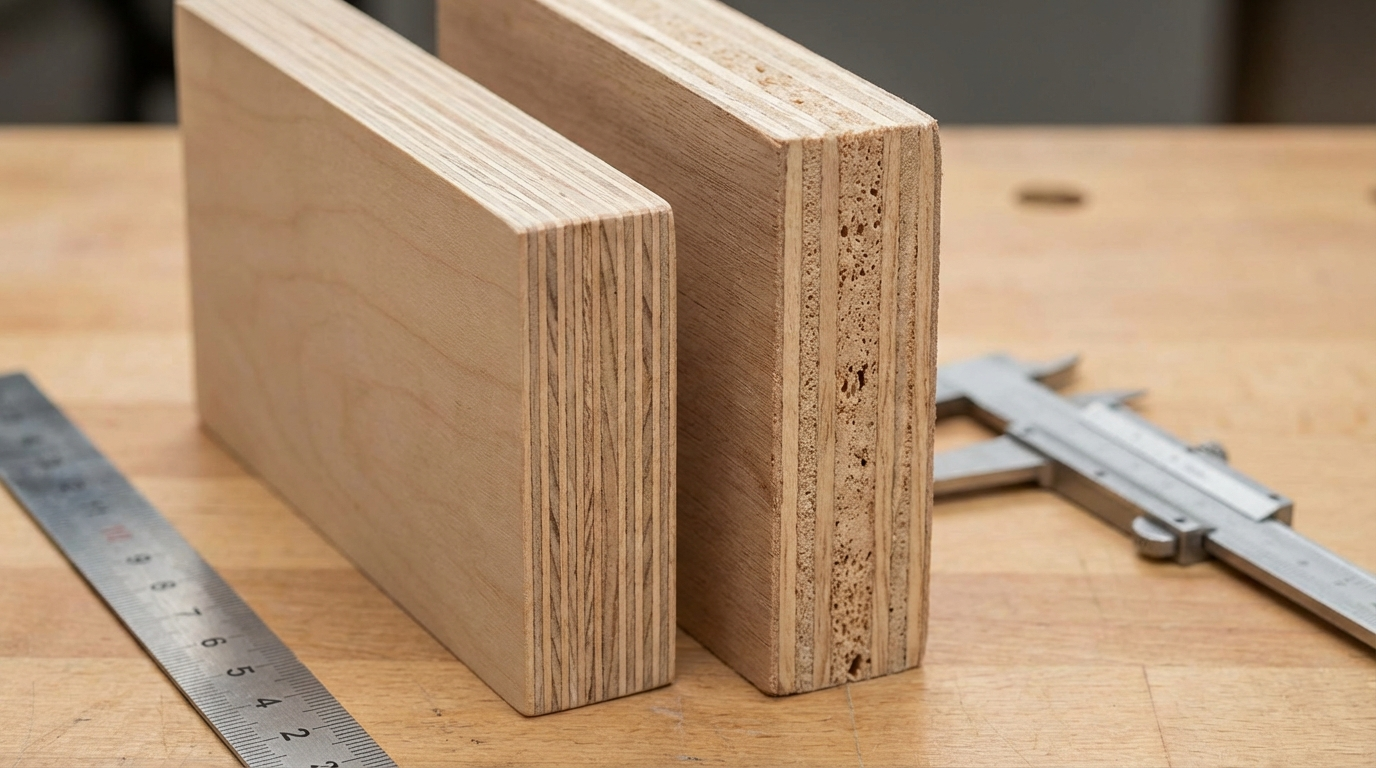
HDHMR (High-Density High-Moisture Resistant) plywood leads for bookshelves, with core densities of 700-850 kg/m³ from hardwood mixes like poplar/eucalyptus. Unlike standard plywood, its compressed core resists compression perpendicular to grain, ideal for horizontal shelves. In India, dealers stock 18-25 mm thicknesses for heavy-duty use.
Why HDHMR Excels:
- Sustains 50+ kg/m without mid-brackets over 1m spans.
- BWR-grade variants handle 20-25% moisture swings without warping.
- Costlier upfront (20-40% premium over MR-grade) due to denser fibers and phenolic resins, but lifespan doubles in humid zones.
Regional note: Southern dealers (Kerala mills) offer consistent quality; North Indian variants vary by mill scale.
Blockboard as a Strong Alternative
Blockboard's solid timber strips (often softwood like pine) in a crossbanded core provide superior screw grip and rigidity for spans up to 1.2m. Density 500-650 kg/m³, but thicker 25 mm versions match HDHMR strength. Better for adjustable shelving where screws anchor repeatedly.
Drawbacks: Higher weight (15-20% more), thirstier for moisture unless BWP-treated. Ideal for contractors building custom wardrobes with integrated bookshelves.
Comparison Table: HDHMR Plywood vs Blockboard for Bookshelves
| Property | HDHMR Plywood (18-25 mm) | Blockboard (25 mm) |
|---|---|---|
| Density (kg/m³) | 700-850 | 500-650 |
| Sag Resistance (1m span, 40 kg load) | Minimal (<2 mm deflection) | Low-moderate (2-4 mm) |
| Moisture Resistance | High (BWR/BWP grades) | Moderate (needs sealing) |
| Screw Holding (repeated use) | Good | Excellent |
| Weight per Shelf (1m x 30 cm) | 8-12 kg | 10-15 kg |
| Cost Driver (relative) | Higher due to density | Moderate, varies by timber quality |
| Best For | Floating/heavy book loads | Adjustable, custom racks |
Selecting Thickness and Grade for Your Load and Span
Match specs to use case. For spans under 80 cm and light books, 18 mm suffices; heavy loads demand 25 mm. Grade logic:
- MR (Moisture Resistant): Budget homes, dry interiors—sags faster in humidity.
- BWR (Boiling Water Resistant): Standard for most Indian bookshelves; survives steam cleaning.
- BWP (Boiling Water Proof): Premium for coastal/high-humidity; overkill for bedrooms but future-proofs.
Rule of thumb: Shelf depth 25-35 cm max to minimize torque. Test deflection formula roughly: Deflection = (load x span³) / (material stiffness). Denser = stiffer.
Span-Specific Recommendations
| Span Length | Light Load (<20 kg/m) | Heavy Load (30+ kg/m) | Support Needed |
|---|---|---|---|
| <80 cm | HDHMR 18 mm BWR | HDHMR 18-21 mm BWP | None |
| 80-100 cm | HDHMR 21 mm BWR | Blockboard 25 mm or HDHMR 25 mm | Mid-bracket optional |
| 100-120 cm | Blockboard 25 mm | HDHMR 25 mm + brackets | Required |
Handling Heavy Book Loads: Design and Reinforcement Tips
Bookshelves for libraries or study rooms pack 50-100 kg total. Distribute via:
- Vertical Stiffeners: 50 mm wide plywood risers at ends/center.
- Bracketing: Heavy-duty metal L-brackets (50x50 mm) into wall plugs; avoid plastic.
- Floating Designs: Use 40 mm thick HDHMR hidden brackets for modern looks, but limit span to 90 cm.
- Layering: Laminate shelves with 1 mm HPL for even load spread.
Indian contractor tip: Pre-drill for expansion; use PU adhesives over PVA for joints.
Practical Buying Guide for Indian Buyers
Dealers quote 20-50% markup over mill rates; compare 3 quotes. Check ISI mark (IS:1659 for blockboard, IS:303 for plywood), but verify core via edge cut—dense should feel heavy, uniform. Avoid "commercial" grades; insist on lab-tested density certs from larger mills.
Cost Variations:
- Thickness drives 40-60% of price; 25 mm = 1.5x 18 mm.
- Grade premium: BWP 30-50% over MR.
- Regional: South cheaper (proximity to plantations); North pricier post-GST logistics.
- Dealer vs Retail: Contractors get 10-20% off bulk.
Alternatives if budget-constrained: Finger-jointed pine boards, but seal meticulously.
Common Buyer Mistakes to Avoid
- Choosing thin MDF for cost—sags 3x faster.
- Ignoring span: Aesthetics over engineering leads to failure in 2-3 years.
- No moisture test: Dip edge in water; quality swells <5%.
Installation Best Practices for Longevity
Anchor to brick/concrete with 10 mm nylon plugs; space screws 15 cm apart. Level shelves precisely—1 mm tilt compounds sag. Apply edge banding to seal ends. For humidity, coat undersides with 2-pack PU varnish.
Maintenance: Dust quarterly; avoid direct water. Expect 15-25 year life from HDHMR/blockboard vs. 5-10 from low-grade.
Which Plywood Should You Buy for Your Bookshelf?
Assess: Load (kg/m), span (cm), humidity zone, budget tier.
- Budget/Open Shelves: HDHMR 18 mm BWR.
- Heavy/Study: Blockboard 25 mm.
- Premium/Humid: HDHMR 25 mm BWP.
Consult local carpenter for load calc; prioritize density over brand hype. This approach ensures shelves stay flat, books secure, and regrets minimal.
Related guides on PlyPrice
Want Plywood Suggestions?
Share a few details and a PlyPrice specialist will suggest suitable brands and connect you to responsive dealers.