Best Plywood for Bathroom Vanity: Marine BWP vs BWR for Indian Homes
Waterproof marine (BWP) plywood is the best choice for a bathroom vanity in India, because it withstands direct splashes, steam and mold where ordinary plywood warps or delaminates within months. See key specs, cost drivers, finishing, alternatives and care tips.
Last updated: . Grades and standards checked against current BIS standards.
Why Indian Bathrooms Require Robust Protection for Vanity Units
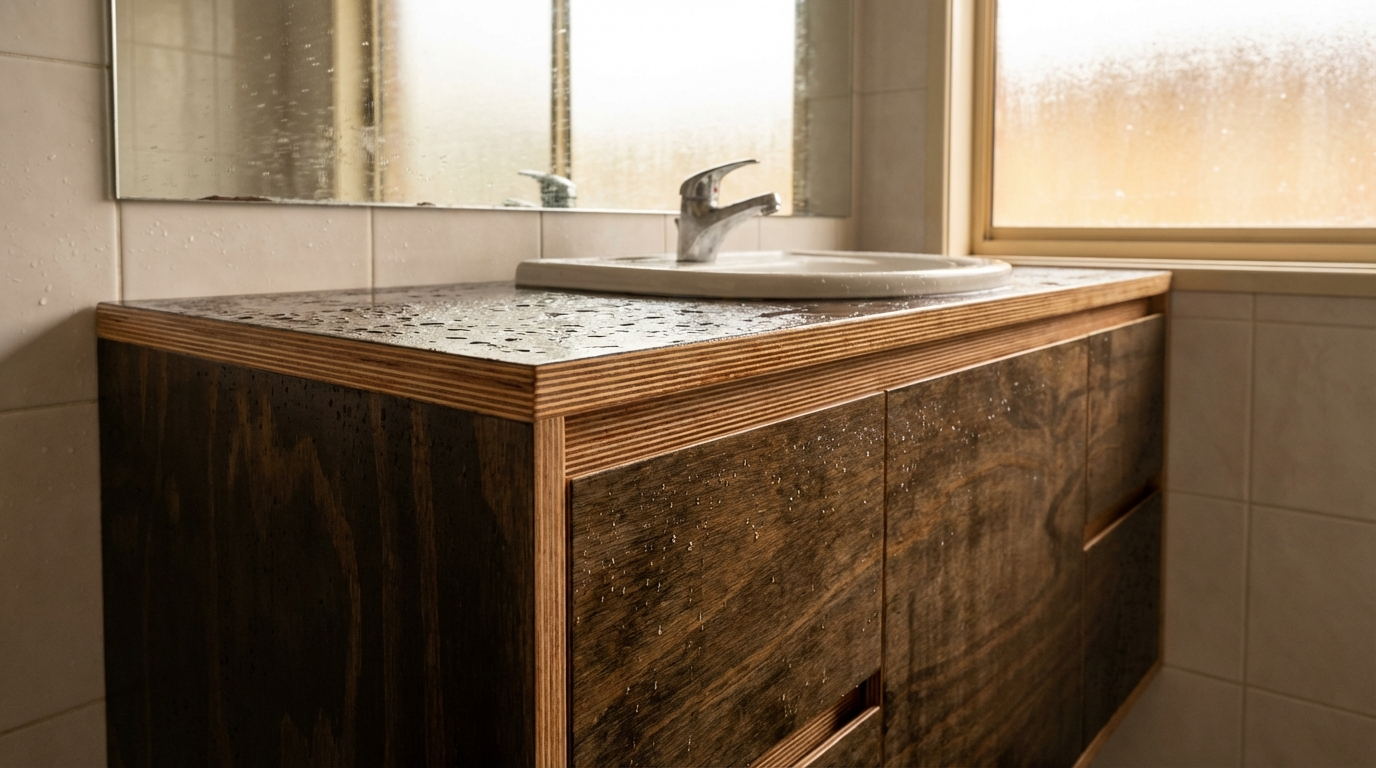
In India's diverse climates, from coastal humidity in Mumbai to monsoon-soaked Kerala and steamy interiors in Delhi summers, bathrooms face relentless moisture challenges. Vanity units—those essential storage hubs under sinks—bear the brunt of direct splashes, steam condensation, and poor ventilation common in compact urban homes and apartments. Ordinary plywood warps, delaminates, or fosters mold within months, leading to costly repairs or complete replacements. Homeowners and contractors must prioritize materials that withstand these conditions without compromising structural integrity or aesthetics.
Selecting plywood isn't just about surface finish; it hinges on core composition, adhesive quality, and grading under ISI standards. Subpar choices accelerate decay in high-humidity zones (above 70% RH), where fungal growth thrives on trapped moisture. A vanity's proximity to water sources amplifies risks, demanding options that resist boiling water, fungal attack, and dimensional changes.
Core Challenges: Humidity, Splashes, and Mold in Bathroom Vanities
Bathroom vanities endure a unique triad of threats:
- Splashes and direct water exposure: Sink overflows, soap runoff, and cleaning routines saturate edges and undersides, testing glue-line bonds.
- Persistent humidity: India's tropical climate keeps RH elevated, especially post-monsoon; enclosed vanities trap steam, swelling cores unevenly.
- Mold and fungal proliferation: Warm, damp environments favor microbes, eroding strength and releasing odors or health hazards in poorly ventilated Indian bathrooms.
Decision logic for buyers: Architects and designers factor in usage intensity—daily family routines vs guest bathrooms—while contractors weigh site conditions like tile-to-plywood gaps that allow seepage. Homeowners prioritize longevity to avoid mid-renovation failures, often consulting local carpenters familiar with regional water quality (hard water accelerates wear).
How Moisture Affects Plywood Performance
From first principles, plywood is layered veneers glued under pressure. Moisture penetrates glue lines, causing hydrolysis in urea-formaldehyde (UF) adhesives used in basic grades. In India, where ambient humidity fluctuates wildly, this leads to 20-30% thickness swelling in non-resistant types within weeks. Vanities, often 18-24 inches deep, amplify leverage points for warping, misaligning doors and drawers.
Identifying the Best Plywood: Waterproof Marine Grade Takes Precedence
For bathroom vanities, marine plywood, certified BWP (Boiling Water Proof) under IS:710, emerges as the optimal choice. Unlike MR (Moisture Resistant) or BWR (Boiling Water Resistant), BWP endures prolonged submersion and cyclic wetting-drying without bond failure. This grade uses phenolic resins, cross-linking for hydrolytic stability, making it suitable for India's wettest regions.
Why marine over alternatives? MR suits dry interiors but fails in steam-heavy bathrooms; BWR handles occasional exposure but delaminates under sustained humidity. BWP's hardwood core (gurjan or sal) ensures minimal voids, vital for load-bearing vanity shelves supporting toiletries.
Key Specifications for Vanity-Grade Marine Plywood
| Attribute | Ideal for Bathroom Vanity | Why It Matters in India |
|---|---|---|
| Grade | BWP (IS:303) or marine (IS:710) | Passes 72-hour boil test; resists monsoon humidity cycles |
| Thickness | 12-18mm | Balances rigidity for cabinets with workability; thinner risks sagging |
| Core Material | Hardwood (100% core) | Minimizes voids from softwood plugs common in cheaper boards |
| Face/Back Veneer | BWR/BWP grade, 1.0-1.5mm thick | Accepts laminates/veneers without telegraphing defects |
| Formaldehyde Emission | E1 or better (CARB compliant optional) | Reduces VOCs in enclosed bathrooms, aligning with green building norms |
| Dimensions | 8x4 ft standard | Fits modular Indian vanity designs; custom cuts add 10-15% cost |
Inspect for ISI mark, batch numbers, and pest-treatment stamps—hallmarks of genuine stock from mills in Assam or Kerala.
Resistance Breakdown: Splashes, Humidity, and Mold Defense
BWP marine plywood's formulations provide layered protection:
- Splash Resistance: Phenolic glue repels water ingress; lab tests show <5% strength loss post-immersion, vs. 40%+ for MR.
- Humidity Tolerance: Low water absorption (under 10% by weight) prevents swelling; ideal for un-airconditioned Indian homes where AC dehumidifies inconsistently.
- Mold Growth Prevention: Dense core and resin additives inhibit fungi; complies with IS:303 fungal resistance, outperforming particleboards that swell and rot.
In practice, coastal users report zero delamination after 5+ years, while inland contractors note superior screw-holding in humid summers.
Comparative Performance Table: Marine vs. Common Alternatives
| Plywood Type | Water Resistance | Suitability for Vanity | Typical Lifespan in Bathroom | Cost Relative to BWP |
|---|---|---|---|---|
| MR (IS:303) | Low (interior use) | Poor—warps quickly | 6-12 months | 40-60% lower |
| BWR (IS:303) | Moderate (kitchen cabinets) | Fair—handles splashes but not steam | 1-2 years | 20-30% lower |
| BWP (IS:303) or Marine (IS:710) | High (100% waterproof) | Excellent—full bathroom exposure | 10+ years | Baseline |
| HDHMR | Moderate-high | Good alternative if laminated | 3-5 years | 10-20% lower |
HDHMR (High-Density Moisture Resistant) offers budget relief but lacks BWP's core density for heavy vanities.
Cost Drivers and Pricing Logic for Indian Buyers
BWP marine plywood costs more upfront due to imported hardwoods, extended pressing cycles, and quality controls—typically 2-3x MR grades. Regional variations stem from transport (North India pays 15-20% premium over South), dealer markups (retailers add 25-40%), and thickness (18mm exceeds 12mm by 30%).
Buyers calculate ROI: A mid-range vanity (4x2 ft sheet) lasts a decade, offsetting replacements. Contractors bulk-buy from wholesalers for 10-15% discounts; homeowners check festival offers but verify against moisture content (<12%). Avoid rock-bottom deals signaling adulterated glue or recycled cores.
Where to Source Reliable Marine Plywood
- Mills/Depots: Direct from Kerala/Assam producers for freshest stock.
- Dealers: Multi-brand outlets offering cut-to-size; insist on test certificates.
- Online: Platforms with return policies, but inspect personally for defects.
Red flags: Excessive glue marks, bow-warped sheets, or missing BIS holograms indicate substandard imports.
Practical Implementation: Sizing, Finishing, and Installation
For a standard 36x20-inch vanity:
- Carcass: 18mm BWP for sides/base; 12mm shelves.
- Finishing: Laminate with 1mm PVC edges; marine-grade paints seal exposed cuts.
- Installation: Elevate 4-6 inches off floor; silicone-seal joints against seepage. In tile-heavy Indian bathrooms, use spacers to prevent capillary action.
Carpenters recommend tongue-groove joints over butt for superior moisture barriers.
Alternatives When Marine Isn't Feasible
Budget constraints push some toward laminated HDHMR or MDF with waterproof coatings, viable in well-ventilated spaces. However, these demand meticulous sealing—any lapse invites failure. For ultra-wet zones, consider solid PVC sheets, though plywood excels in customization and strength.
Maintenance Strategies for Longevity
Even BWP benefits from habits: Wipe splashes promptly, ensure exhaust fans run 30 minutes post-use, and reapply sealant annually on edges. Annual inspections catch early swelling, extending life in India's variable climates.
Frequently Asked Questions on Bathroom Vanity Plywood
Is all marine plywood truly 100% waterproof?
No absolute: BWP withstands boiling, but for marine plywood verify IS:710 certification; fakes abound in unorganized markets.
Can I use BWR for a powder room vanity?
Possible with heavy lamination and ventilation, but upgrade to BWP for reliability in humid India.
How thick should plywood be for a heavy vanity?
Minimum 15mm for 500+ kg loads; test deflection under weight simulates toiletries.
Does brand matter in BWP plywood?
Consistency does—reputable mills outperform generics; cross-check multiple sources.
Related guides on PlyPrice
Want Plywood Suggestions?
Share a few details and a PlyPrice specialist will suggest suitable brands and connect you to responsive dealers.